Six Out of Ten Young People Say "Low Expectations for Employment"
Due to Lack of Skills and Concerns About Not Finding a Job
30% Call for Improved Employment Conditions Through Regulatory Easing
18% Seek Solutions to Job Mismatches Through Strong
Six out of ten university students have been identified as "passive job seekers" with low expectations for employment. They are not actively seeking jobs due to reasons such as a lack of skills or the belief that they will not be able to find employment. Young people believe that urgent policy support is needed to improve hiring conditions at companies in order to address youth unemployment.
According to the Korea Economic Research Institute, which conducted the "2025 University Students' Employment Perception Survey" among 2,492 students and graduates (including those on leave or pending graduation) from four-year universities nationwide, 60.5% of fourth-year students or graduates were found to be "passive job seekers" with low expectations for employment, as announced on December 9. This figure combines responses regarding job search activities, including: ▲ ceremonial job search (32.2%), ▲ almost not searching (21.5%), and ▲ currently taking a break (6.8%).
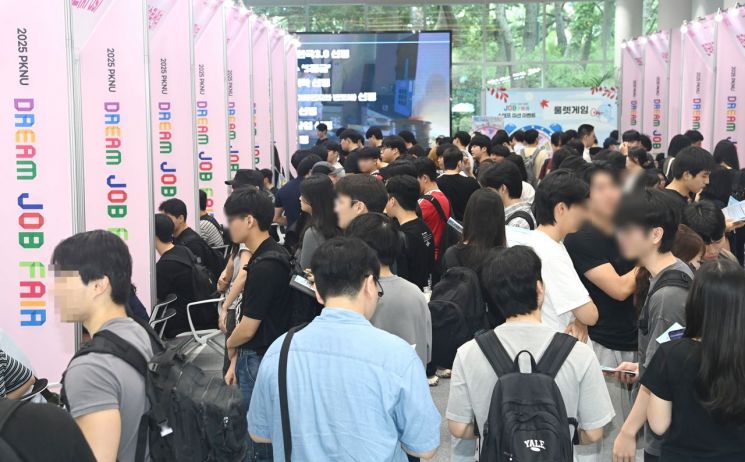
The most common reason these university students are not actively seeking employment was "additional preparation due to a lack of personal skills, technology, or knowledge" (37.5%). Other reasons included the belief that they would not be able to find a job even if they tried (22.0%), a lack of jobs in their major or field of interest (16.2%), and a shortage of jobs with suitable wage levels or working conditions (13.6%). More than half of the respondents pointed to the problem of "job shortages."
Youth perceive this year's job market as more difficult than last year. 37.1% responded that the job market for new university graduates is "more difficult than last year," which is a 0.6 percentage point increase from last year's survey. Only 5.1% said it is "better than last year," indicating that negative perceptions of the job market persist.
Among university students actively seeking employment, the average number of job applications submitted was 13.4, and the average number of successful document screenings was 2.6. The average document screening acceptance rate was 19.4%, a 2.8 percentage point decrease from last year's rate of 22.2%. Regarding the number of job applications submitted this year: ▲1 to 5 times (40.7%) ▲6 to 10 times (15.8%) ▲21 to 25 times (12.0%) were the most common. The number of successful document screenings was: ▲once (25.4%) ▲none (19.1%) ▲twice (16.3%) in order of frequency.
62.6% of university students answered that it would take "more than six months" to prepare for employment. Among them, 32.5% expected the preparation period to be "more than one year." According to a survey by the National Data Office, as of May this year, the proportion of long-term unemployed youth (aged 20-34) who have been unemployed for more than one year was 55.2%, and this figure has been increasing every year.
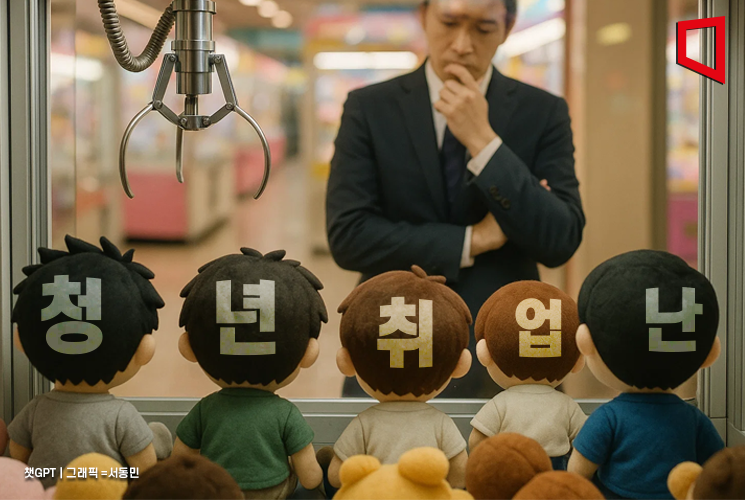
The most common difficulty in the job preparation process was a lack of available jobs (50.1%). Specifically, respondents cited ▲ a decrease in entry-level hiring opportunities (26.9%) and ▲ a shortage of jobs that meet desired working conditions (23.2%).
Many believe that improving companies' employment conditions should be the first step to resolving youth unemployment. The policy changes young people identified as necessary to address youth unemployment were: ▲improving corporate employment conditions through deregulation (29.9%) ▲strengthening career guidance and expanding support for field training to address job mismatches (18.1%) ▲ expanding vocational training opportunities in new industries and technologies such as artificial intelligence (AI) and big data (14.9%), in that order.
Lee Sangho, Head of the Economic and Industrial Division at the Korea Economic Research Institute, stated, "With ongoing external uncertainties such as high exchange rates, high inflation, and the reorganization of global trade order, and with domestic labor market regulations being further strengthened, companies' capacity for new hiring is decreasing. The government and the National Assembly need to boost corporate vitality through deregulation and tax and investment support, while approaching policies that could shrink youth employment, such as extending the retirement age, with greater caution."
© The Asia Business Daily(www.asiae.co.kr). All rights reserved.


















