Securing Major IPs Like DC, HBO, and Harry Potter at Once
A Bold Move Amid Growth Ceiling Concerns... Antitrust Review Inevitable
Paramount: "This Will Never Be Approved"
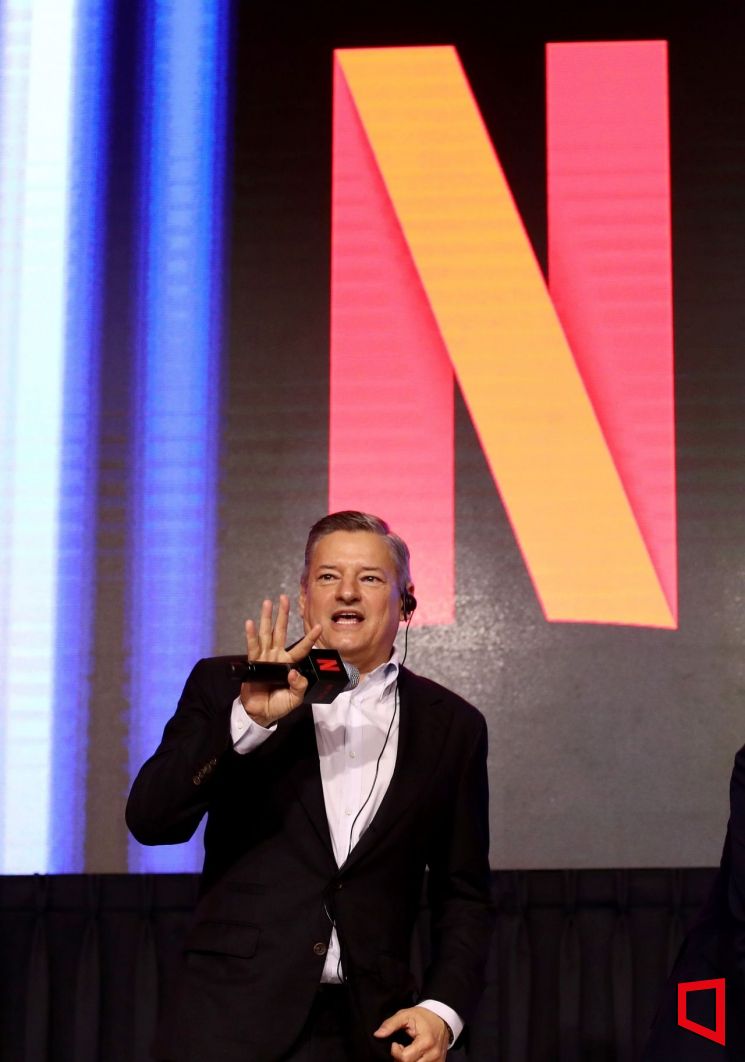 Ted Sarandos, Co-Chief Executive Officer (CEO) of Netflix, is answering questions from the press after concluding a discussion on Netflix and Korean content held at the Four Seasons Hotel in Jongno-gu, Seoul on the 22nd. Photo by Joint Press Corps
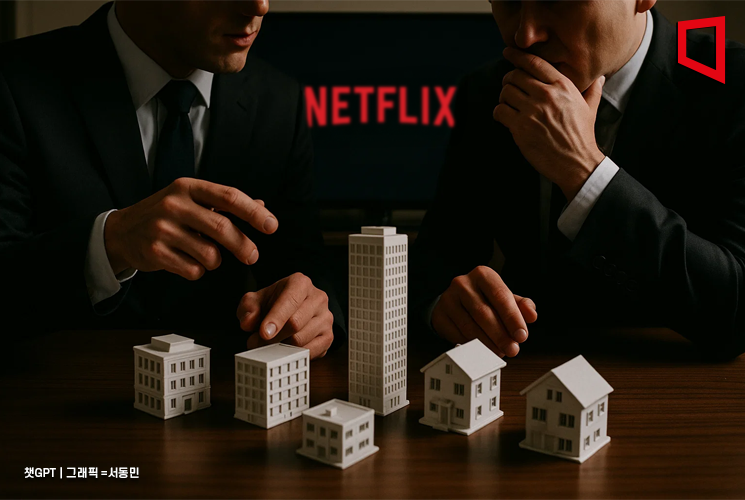
On December 5 (local time), Netflix and Warner Bros. Discovery announced that they had signed an acquisition agreement valuing the company at $82.7 billion, with an equity value of $72 billion. This is the largest "big deal" of the streaming era, following Disney's acquisition of 21st Century Fox in 2019 and Amazon's acquisition of MGM in 2022. Warner shareholders will receive $23.25 in cash and $4.50 worth of Netflix stock per share.
The boards of directors of both companies unanimously approved the deal. After regulatory review and approval at the Warner shareholders' meeting, the acquisition process is expected to be completed between the end of 2027 and the beginning of 2028.
The structure of the deal is clear. Cable networks such as CNN, TNT, and Discovery will be separated into "Discovery Global" (tentative name), while Netflix will acquire only Warner's film and TV studios, HBO, Max, DC Studios, and the gaming business. Warner's flagship franchises, including Harry Potter, the DC Universe, and Game of Thrones, will be added to the Netflix library.
This acquisition presents an ironic twist. In recent years, Netflix has lost the rights to Warner and NBC sitcoms such as Friends, The Office, and Suits, leading the company to increase its reliance on original content. Having experienced the limitations of licensing, Netflix has now shifted toward acquiring entire original studios.
Netflix is the world's largest streaming company, with approximately 300 million paid subscribers worldwide. However, its stock price has fallen by about 20% compared to the all-time high recorded last summer. While Netflix's original IP remains competitive, it has been evaluated as relatively lacking in massive franchise assets built up over decades, such as those held by Warner.
Ted Sarandos, Co-CEO of Netflix, stated, "For a long time, we have been a company that makes things, not one that buys them," adding, "Warner's franchises and production capabilities will accelerate Netflix's growth for decades to come." As a result, there is an interpretation locally that Netflix, which used to predict hits through data and algorithms, has ultimately returned to the traditional method of acquiring "time-tested IP" with money.
This deal also brings back a grudge from 15 years ago. In 2010, then-Time Warner CEO Jeff Bewkes disparaged Netflix, saying, "It's like the Albanian army taking over the world." Now, with the streamer once mocked by the cable and studio giant ultimately acquiring Warner in its entirety, Hollywood is joking about "the Albanian army's revenge."
The bidding war was intense. Paramount-Skydance offered an all-cash purchase at $30 per share, and Comcast also participated. However, Warner's board chose Netflix. If the deal falls through, Netflix will be responsible for a $5.8 billion breakup fee.
This transaction still faces hurdles, including antitrust review by regulatory authorities and shareholder approval. The biggest variable is antitrust regulation. Combining Netflix's approximately 300 million subscribers with Warner Bros. Discovery's 128 million integrated streaming subscribers will inevitably raise concerns about market dominance. CNN reported, "After the merger, the global streaming market share could approach half," and "a rigorous antitrust review by the U.S. Department of Justice is expected."
Rival bidders who lost out have also pointed to regulation as the biggest variable. The Wall Street Journal reported that Paramount-Skydance sent a letter to Warner stating that "this deal is unlikely to go through due to regulatory issues." They argue that the combination of Netflix and Warner's assets would exceed the limits allowed under global competition law.

David Ellison, CEO of Paramount, is reported to have met with Trump administration officials and key lawmakers in Washington to lobby against the deal just before the announcement. The New York Post reported that his father, Oracle founder Larry Ellison, has close ties to former President Donald Trump.
There is also strong opposition from political circles. U.S. Senator Elizabeth Warren criticized the merger as an "antitrust nightmare," stating, "Consumers will ultimately end up paying higher prices for movies and series." Representative Darrell Issa also said, "There are several antitrust red flags," and sent a letter of concern to the Department of Justice. CNBC reported that a senior Trump administration official has a "strongly skeptical view" of the deal.
The theater industry is also pushing back. Netflix has stated that it will "maintain theatrical releases for Warner films," but CEO Sarandos commented at an investor briefing that "an excessively long exclusive window is not consumer-friendly." The theater association Cinema United issued a statement calling it "an unprecedented threat to the global theater industry."
Wall Street's assessment is divided. Immediately after the acquisition announcement, Netflix's stock price fell slightly, while Warner's rose by about 6%. Some analysts raised their target prices, stating, "Absorbing Warner's premium IP will reduce hit volatility and stabilize the supply of high-quality content."
Some believe the real competitor is YouTube. While Netflix is the leader in paid subscribers, YouTube is growing much faster in terms of viewing time and the advertising market. It remains to be seen whether this deal is a defensive move to maintain the throne or a signal of an industry transformation.
© The Asia Business Daily(www.asiae.co.kr). All rights reserved.
![Clutching a Stolen Dior Bag, Saying "I Hate Being Poor but Real"... The Grotesque Con of a "Human Knockoff" [Slate]](https://cwcontent.asiae.co.kr/asiaresize/183/2026021902243444107_1771435474.jpg)


















