Ministry of Land, Infrastructure and Transport Announces Integrated High-Speed Rail Roadmap
Operational Integration First, Institutional Integration to Follow... Target Completion by End of Next Year
The government has decided to deploy KTX trains at Suseo Station starting in March next year. Until now, only SRT trains, which have relatively fewer seats, have operated to and from Suseo Station, but this move is expected to alleviate the chronic shortage of supply. In addition, the government plans to increase seat availability by operating a mix of KTX and SRT trains.
On December 8, the Ministry of Land, Infrastructure and Transport announced an integrated high-speed rail roadmap containing these measures. Currently, high-speed rail services are divided between Korea Railroad Corporation (KORAIL)'s KTX and SR's SRT. Previously, KORAIL held a monopoly, but in 2016, SRT was introduced to foster competition. President Lee Jaemyung pledged to integrate high-speed rail operations as part of his presidential campaign, citing the need to reduce seat shortages and address rail safety issues. Since the launch of the new administration, the government has reviewed a blueprint for integration, considering input from KORAIL and SR labor unions, as well as experts, and has now presented its plan.
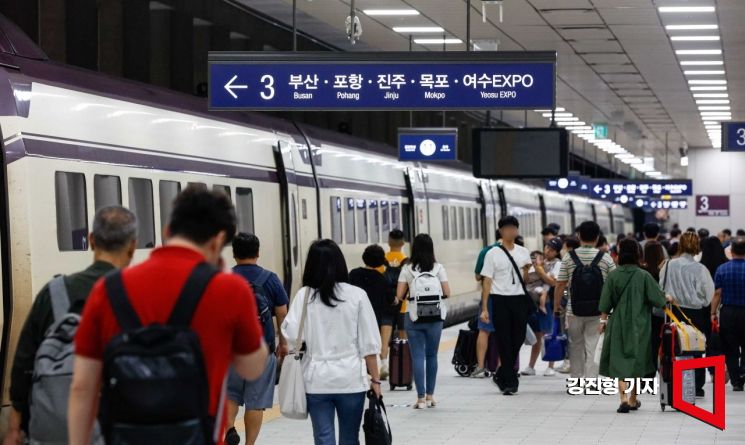 Passengers are boarding the Jeolla Line at SRT Suseo Station in Gangnam-gu, Seoul. Photo by Jin-Hyung Kang aymsdream@
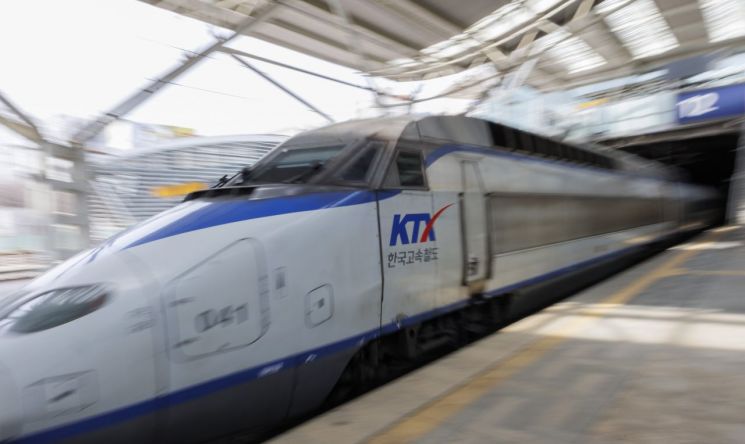
Beginning in March next year, KTX and SRT trains will operate interchangeably, and operations will be integrated. For example, KTX-1 trains, which have 20 cars and 955 seats, will be deployed at Suseo Station. Given that SRT trains have 410 seats, introducing a KTX-1 train can increase capacity by more than 500 seats per train.
The plan includes preparatory runs for engineers on the new section, obtaining section licenses, verifying safety, and preparing for commercial operations. When searching for Seoul in the KORAIL application, Seoul Station, Yongsan Station, and Suseo Station will all appear. The same applies to the SR app. However, since this involves reallocating KTX trains currently operating from Seoul and Yongsan Stations, the number of seats available on those routes will decrease.
By the end of next year, KTX and SRT trains will be operated in mixed formations. Connecting both types of trains in a single service will increase the number of available seats per trip. Currently, for KTX services between Seoul and Busan, the departure and terminal stations are fixed, but after integration, trains may depart from Seoul and return to Suseo. The Ministry of Land, Infrastructure and Transport expects that more flexible management of terminal stations will improve train utilization rates. The reservation system will also be updated to allow ticketing and payment for both KTX and SRT through a single app.
KORAIL estimates that this cross-operation will increase daily seat supply by 16,000 seats. However, this is a preliminary estimate that does not account for additional safety inspections required due to increased operating distances, so the actual net increase will be verified through an upcoming external research study.
During the cross-operation period, the current fare system will remain in place. If a reservation is made through KORAIL, KORAIL fares will apply; if made through SR, SR fares will apply. SRT fares are about 10% cheaper than KTX, but SRT does not have a mileage program. A fare discount system will be introduced for transfers from regular KORAIL trains such as ITX-Ma-eum to SRT. Cancellation fees will be waived for changes between KTX and SRT trains.
Alongside operational integration, the government will also pursue institutional integration. The basic integration plan will be developed, and adjustments to different service standards, unification and strengthening of safety systems, as well as other measures, will be prepared through research studies. Adjustments will be made to salary, personnel, and rank systems, and measures for financial stabilization and IT system integration will be prepared. A tripartite council of labor, management, and government will be formed to coordinate shift work systems and welfare. A task force has been established within the relevant department of the Ministry of Land, Infrastructure and Transport, and a dedicated high-speed rail integration team will be set up in the future.
Legal procedures will also be followed. This includes deliberations by the Public Institution Management Committee and the Railroad Industry Development Committee, as well as amendments to the Railroad Industry Development Plan. Approval of the rail safety management system, business transfer and merger contracts (handled by the Ministry of Land, Infrastructure and Transport), and a business combination review by the Fair Trade Commission will also be required.
A senior official from the Ministry of Land, Infrastructure and Transport explained, "After about a decade of competition between high-speed rail operators, there have been benefits from comparative competition, but also inefficiencies from the dual system. We have determined that the increased efficiency from integration outweighs the benefits of competition."
Regarding criticisms that seat shortages are not a convincing reason for integration, the official stated, "Double-tracking between Pyeongtaek and Osong is scheduled for completion around the end of 2028, and KTX-Cheongnyong will be introduced between 2027 and 2028, so it is not possible to increase train frequency before then. In the meantime, cross-operation will enable more efficient management."
© The Asia Business Daily(www.asiae.co.kr). All rights reserved.
![Clutching a Stolen Dior Bag, Saying "I Hate Being Poor but Real"... The Grotesque Con of a "Human Knockoff" [Slate]](https://cwcontent.asiae.co.kr/asiaresize/183/2026021902243444107_1771435474.jpg)












