Recipients Receiving Over 3 Million Won Emerge
"Long-Term Enrollment and Deferred Pension System Key to Pension Disparities"
For the first time, the number of National Pension recipients receiving more than 1 million won per month has surpassed 1 million, marking the official beginning of the era of high-benefit recipients 37 years after the system was introduced in 1988.
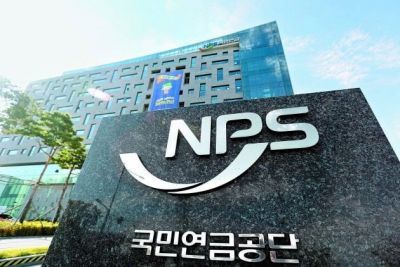
According to Yonhap News Agency on December 7, the National Pension Service reported that, as of the end of August this year, there were 1,004,147 recipients receiving at least 1 million won per month. By gender, men accounted for the vast majority with 942,271 recipients, while women numbered 61,876. This reflects the early structure of the National Pension, where a significant proportion of initial subscribers were male employees.
By benefit range, the largest group was those receiving between 1 million and less than 1.3 million won per month, totaling 435,919 people, followed by ▲ 1.3 million to less than 1.6 million won with 262,130 people ▲ 1.6 million to less than 2 million won with 221,705 people ▲ and those receiving 2 million won or more at 84,393 people. Among those receiving at least 1 million won per month, 989,176 were general old-age pension recipients, while the numbers of disability and survivor pension recipients were comparatively smaller.
The number of high-benefit recipients has also been rising sharply. As of August, the number of recipients receiving more than 2 million won per month surpassed 84,000. In January of this year, for the first time ever, a recipient began receiving more than 3 million won per month. As of August, there were 16 recipients in this group, with the highest monthly pension recorded at 3,185,040 won.
The top recipient had paid contributions consistently for over 30 years since the early days of the system and actively utilized the pension deferral system by delaying receipt for five years to maximize the amount. To receive an old-age pension, one must be enrolled in the National Pension for at least 10 years, and the longer the enrollment period and the higher the income level, the greater the pension amount.
As of this year, for an employee to receive more than 1 million won in old-age pension per month, the average monthly income over a 30-year enrollment period must exceed approximately 3.57 million won. If the enrollment period is short, even a high income does not significantly increase the pension amount, highlighting the importance of long-term enrollment.
With the 40th anniversary of the system approaching and initial subscribers entering the main benefit period, the scale of pension payments is expected to continue rising gradually in the future.
Meanwhile, according to the '2025 KB Golden Life Report' published by KB Financial Group in September, Koreans consider the appropriate monthly living expenses in retirement to be 3.5 million won, with the minimum living expenses at 2.48 million won. These figures are based on a survey conducted from May 30 to June 18 with 3,000 men and women aged 25 to 74 living in major cities nationwide, including Seoul, as well as in-depth focus group interviews with a separate panel.
© The Asia Business Daily(www.asiae.co.kr). All rights reserved.

















