Ongoing Business Challenges at Home and Abroad
60% of Responding Companies Have Yet to Decide on Investment Plans
33% Plan to Reduce Investment Compared to This Year
Due to ongoing challenges in both domestic and international business environments, such as trade risks and high exchange rates, 6 out of 10 major companies (59.1%) have either no investment plans for next year or have not yet established them.
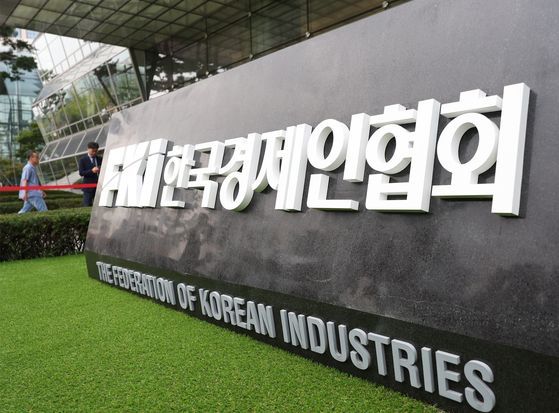
The Federation of Korean Industries (FKI) announced these findings after commissioning Mono Research, a polling agency, to survey the top 500 companies by sales regarding their "2026 investment plans" (with responses from 110 companies).
According to the FKI survey, 59.1% of responding companies said they have not yet established investment plans for next year (43.6%) or have no plans at all (15.5%). Only 40.9% responded that they had established investment plans. Among companies with undecided investment plans (43.6%), the main reasons cited were: organizational restructuring and personnel changes (37.5%), prioritizing assessment of internal and external risks (25.0%), and uncertainty in domestic and global economic outlook for next year (18.8%).
Among the companies that have set investment plans, 53.4% said the investment scale for next year would remain similar to this year. Meanwhile, 33.3% said they would reduce investment compared to this year, and 13.3% said they would increase it.
Companies that plan to reduce investment or have no investment plans cited the following reasons: negative domestic and global economic outlook for 2026 (26.9%), risks from high exchange rates and rising raw material prices (19.4%), and contraction of the domestic market (17.2%). Companies planning to increase investment pointed to securing future industry opportunities and competitiveness (38.9%), as well as replacing or improving outdated facilities (22.2%), as their main reasons.
About 4 out of 10 responding companies (36.4%) said they have either established (12.7%) or are considering (23.7%) investment plans in artificial intelligence (AI). Meanwhile, 63.6% of companies said they have no plans related to AI investment.
The main purposes for AI investment were: improving production and operational efficiency (such as process automation, logistics optimization, and AI agents, 55.1%), enhancing management decision-making (such as data analysis, demand forecasting, and risk management, 15.3%), and innovating products and services (developing new products and improving quality using AI technology, 12.7%). More than half (55.1%) of companies responded that they would focus on applying AI to manufacturing processes and management procedures to improve production efficiency.
For 2026, companies identified the biggest investment risks as: the spread of protectionism such as tariffs and increased supply chain instability (23.7%), economic slowdowns in major countries such as the United States and China (22.5%), and high exchange rates (15.2%).
The main obstacles to domestic investment were cited as: the burden of taxes and various charges (21.7%), labor market regulations and rigidity (17.1%), and regulations related to investment such as site selection and permits (14.4%). The FKI interpreted that the recent environment-including increased corporate tax burdens, amendments to labor union laws, and discussions on extending the retirement age-has weakened companies' investment capacity, leading to more cautious investment decisions.
To improve the domestic investment environment, companies pointed to policy tasks such as expanding tax incentives and subsidies (27.3%), revitalizing the domestic economy (23.9%), and stabilizing exchange rates (11.2%).
Lee Sangho, Head of the Economic and Industrial Division at the FKI, stated, "Supply chain instability, foreign exchange volatility, and various regulations are factors that are discouraging investment." He emphasized, "Along with efforts to stabilize exchange rates, there is a need to promote domestic investment through institutional support such as tax incentives for high-tech industries and regulatory improvements to boost investment momentum."
© The Asia Business Daily(www.asiae.co.kr). All rights reserved.
![Clutching a Stolen Dior Bag, Saying "I Hate Being Poor but Real"... The Grotesque Con of a "Human Knockoff" [Slate]](https://cwcontent.asiae.co.kr/asiaresize/183/2026021902243444107_1771435474.jpg)















