Andong City Ordinance Opens Era of 80% Building-to-Land Ratio
Accelerating Corporate Investment
The building-to-land ratio in the Andong City agro-industrial complexes is expected to be expanded from the current 70% to a maximum of 80%. The 'Partial Amendment Ordinance to the Andong City Urban Planning Ordinance,' sponsored by Assemblyman Kim Sunchung (Pungsan, Pungcheon, Iljik, Namhu, Democratic Party of Korea), passed the Economic and Urban Committee review during the 263rd regular session on December 3, and now awaits only the final approval of the plenary session.
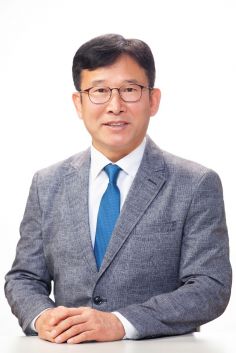 Representative Kim Sunchung (Pungsan, Pungcheon, Iljik, Namhu, Democratic Party)
This amendment is one of the fastest cases of linking the recently revised 'Enforcement Decree of the Framework Act on National Land Planning and Utilization' to a local government ordinance. It allows for the relaxation of the building-to-land ratio only in cases where agro-industrial complexes are fully equipped with essential infrastructure such as roads, water supply, and sewage systems.
Appendix 1-2 and Appendix 25 of the ordinance now clearly define the criteria for infrastructure. A new proviso has been added, allowing the building-to-land ratio to be raised up to 80% if these criteria are met.
This regulatory easing is expected to dramatically increase the utilization of company sites. As factory expansions and facility upgrades within existing sites become more efficient, it is anticipated to have a positive ripple effect across the industry, including reduced investment costs, expanded production capacity, and enhanced competitiveness. In particular, it is being evaluated as a practical measure to resolve expansion constraints in aging agro-industrial complexes and to protect the golden time for corporate investment.
Assemblyman Kim Sunchung stated, "This amendment immediately implements the intent of the higher-level law by reflecting the needs of the agro-industrial complex sites," adding, "As the corporate investment environment improves, it will provide real support for regional industrial growth and job creation." The ordinance is scheduled to be implemented after approval at the second plenary session on December 10.
Agro-industrial complexes are the backbone of the regional economy. As the scope of regulations that have tightened this backbone has been expanded, companies are expected to gain breathing room and the sense of improvement at industrial sites is likely to increase. There is growing interest in how this amendment will reshape the industrial landscape of Andong.
© The Asia Business Daily(www.asiae.co.kr). All rights reserved.
![Clutching a Stolen Dior Bag, Saying "I Hate Being Poor but Real"... The Grotesque Con of a "Human Knockoff" [Slate]](https://cwcontent.asiae.co.kr/asiaresize/183/2026021902243444107_1771435474.jpg)















