Low-Cost Coffee's New Expansion Phase
Combining Value, Standardization, and K-Emotional Appeal
Expanding Reach to Southeast Asia, Mongolia, and North America
Korean low-cost franchise coffee brands are creating new opportunities overseas. As domestic demand weakens and the local market becomes saturated, standardized operations, reasonable pricing strategies, and rapid menu development capabilities accumulated in Korea are proving to be competitive advantages abroad, driving the expansion of 'K-value-for-money' cafes. With Korean content fueling a preference for the Korean lifestyle, these affordable Korean coffee brands are extending their influence not only in Southeast Asia, Mongolia, and Japan, but also in North America.
According to the industry on December 5, major domestic low-cost coffee brands are rushing to enter overseas markets. These brands maintain almost identical store interiors, menu offerings, emotional posters, and music abroad as they do in Korea. Rather than simply selling coffee, they are essentially exporting a 'Korean-style cafe experience.'
This sense of familiarity, experienced by overseas Millennials & Gen Z who have encountered Korean cafe culture through K-dramas and YouTube, has become a key factor in brand selection. Reasonable prices compared to local living costs further enhance their competitiveness.
The most notable example is MegaMGC Coffee. After opening its first store in Ulaanbaatar, Mongolia last year, MegaMGC Coffee expanded to five locations within just one year, establishing a local presence through word-of-mouth as a 'Korean-style emotional cafe.' Paik's Coffee is at the forefront of Southeast Asian expansion, operating a total of 18 stores in the Philippines and Singapore. Compose Coffee opened its third Singapore store this year, while Mammoth Coffee launched its first store in Japan. The Venti has already entered Vietnam and Canada, and plans to open its first U.S. store in Las Vegas in the second half of next year. In the United States, it will pursue a menu strategy that combines regional consumption trends with K-beverages such as yulmu (Job's tears) and misutgaru (grain powder).
While the number of cafes in Korea has already surpassed 100,000 and the pace of new openings is slowing, the same operational model is perceived as novel overseas, leading to rapid expansion, according to industry assessments.
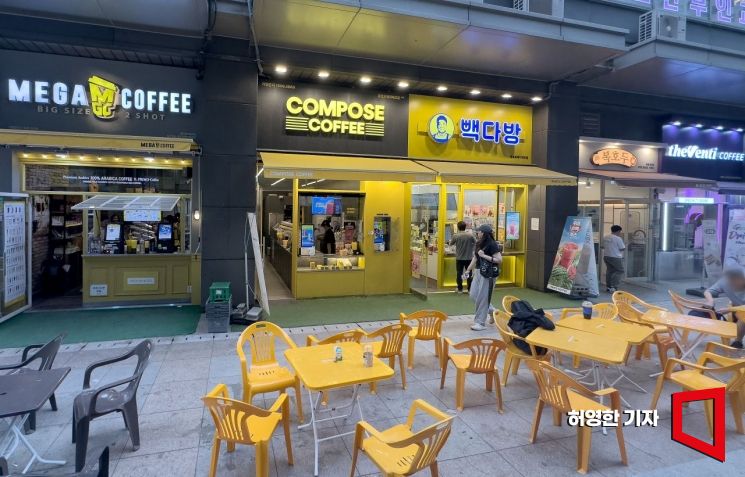 Stores of domestic low-cost coffee brands located in a building in Jongno-gu, Seoul. From the left, Mega Coffee, Compose Coffee, Paik's Coffee, and The Venti Coffee, skipping one. Photo by Hyunghan Heo
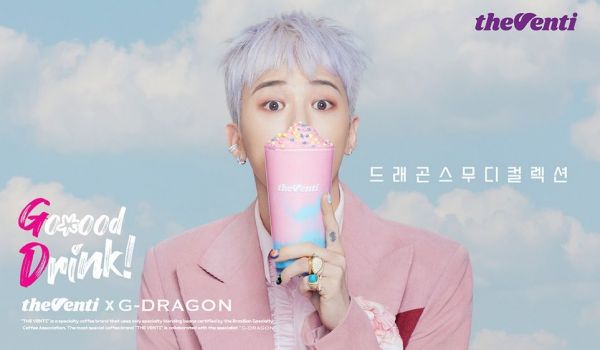
However, there are clear hurdles to overcome in expanding abroad. Building brand recognition, finding local partners, and selecting store locations often require at least a year of preparation. Country-specific regulations and licensing procedures are also variables. For this reason, many brands are actively recruiting globally recognized models. Son Heungmin (Mega Coffee), BTS's V (Compose Coffee), and G-Dragon (The Venti) are representative examples. The strategy is to use them as 'symbolic assets' that can quickly communicate the brand to overseas consumers.
The industry believes that, since Korean cafe franchises already have a 'fully developed operational format,' their business expansion in overseas markets will accelerate further. Based on price competitiveness and responsiveness to trends, there is a strong possibility that 'K-value-for-money cafes' will establish a unique position in the global market.
An industry insider commented, "The reason overseas consumers seek out Korean cafes is not simply because of low prices," adding, "The Korean operational style-fast turnover, consistent quality, and clean store management-is being accepted as a kind of service standard." He added, "Because this operational model is difficult for local brands to easily imitate, it becomes a competitive edge for Korean low-cost coffee brands."
© The Asia Business Daily(www.asiae.co.kr). All rights reserved.


















