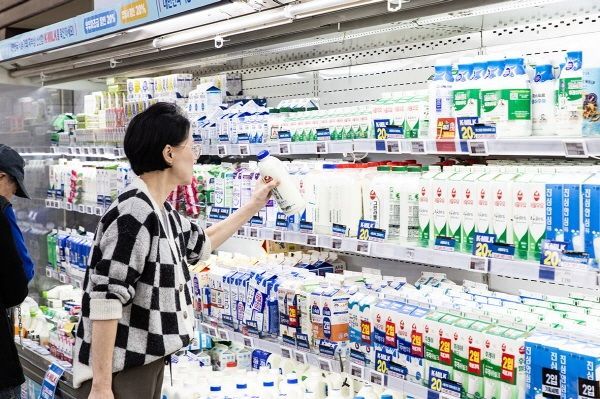
December 5, designated as 'Trade Day,' commemorates South Korea's achievements in economic growth through active trade with the world. The day also serves as a reminder that, even amid the expansion of global markets, the sustainability of domestic industries and food security must be considered together. At this juncture, the recent surge in imported sterilized milk has emerged as a significant issue that could destabilize the domestic dairy industry.
According to Korea Customs Service trade statistics, the volume of imported sterilized milk in the third quarter of 2025 (July-September) increased by 41.3% year-on-year, reaching 10,742 tons-setting a new monthly record for the past three years. With more dairy products expected to enter the country tariff-free from next year due to free trade agreements (FTAs) with major dairy-producing countries such as the United States and Europe, concerns are rising not only about the encroachment of the domestic market but also about heightened food security risks stemming from increased vulnerability to international supply chain fluctuations.
The main reasons for the rise in imported sterilized milk sales are consumer convenience and price. According to a 'milk consumption awareness survey' conducted by the Korea Dairy Committee (Chairman Lee Seungho) in November among 3,000 consumers, the most important factors when purchasing imported sterilized milk were the 'long 12-month shelf life' and 'price.' The ability to store the product for a long time and its relatively low cost are driving purchase decisions.
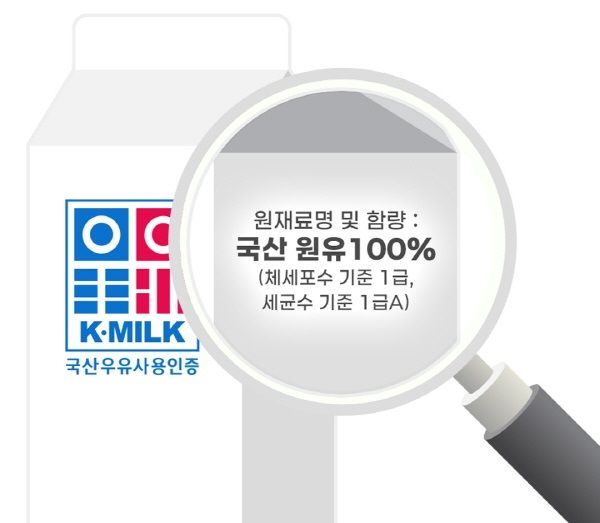
However, experts emphasize that price competitiveness cannot replace the intrinsic value of milk. A recent study published in the international journal ScienceDirect reported that the sterilization process results in greater nutrient loss and more pronounced flavor changes compared to standard pasteurization. Due to the high-temperature treatment that denatures proteins and enzymes, it is fundamentally difficult to fully preserve the essence of milk as a 'fresh product.'
There are also concerns regarding safety. Although most imported sterilized milk sold domestically has a shelf life of about 12 months, it takes more than three months to be shipped from the country of origin and distributed within Korea. As a result, the sterilized milk available to consumers is often several months old by the time of purchase. Nevertheless, 68.5% of consumers are unaware of this fact. In contrast, 60.4% of consumers know that domestically produced fresh milk is delivered within 2 to 3 days after milking, indicating relatively higher awareness of the distribution characteristics of fresh milk.
Experts point out that long-distance transportation and extended storage inevitably lead to potential quality deterioration and storage stability issues. They stress that providing accurate information and ensuring transparency in product history are crucial for food products. They also warn that increasing dependence on imported dairy products could make the country more susceptible to shocks in the international supply chain.
The Korea Dairy Committee (Chairman Lee Seungho) stated, "As the cost of raw milk production rises, the burden on dairy farmers is increasing. If the share of imported dairy products grows, the domestic industry will become even more vulnerable to international price and supply fluctuations." The committee emphasized, "Protecting the value of fresh and safe domestic milk is directly linked to safeguarding food security." On Trade Day, there is a growing call to reflect on achievements in expanding trade with the world while also protecting the domestic production base and establishing a healthy consumption ecosystem.
© The Asia Business Daily(www.asiae.co.kr). All rights reserved.
![Clutching a Stolen Dior Bag, Saying "I Hate Being Poor but Real"... The Grotesque Con of a "Human Knockoff" [Slate]](https://cwcontent.asiae.co.kr/asiaresize/183/2026021902243444107_1771435474.jpg)
















