As International Anti-Corruption Day approaches on December 9, the Anti-Corruption and Civil Rights Commission is making every effort to improve national integrity, including the handling of corruption cases.
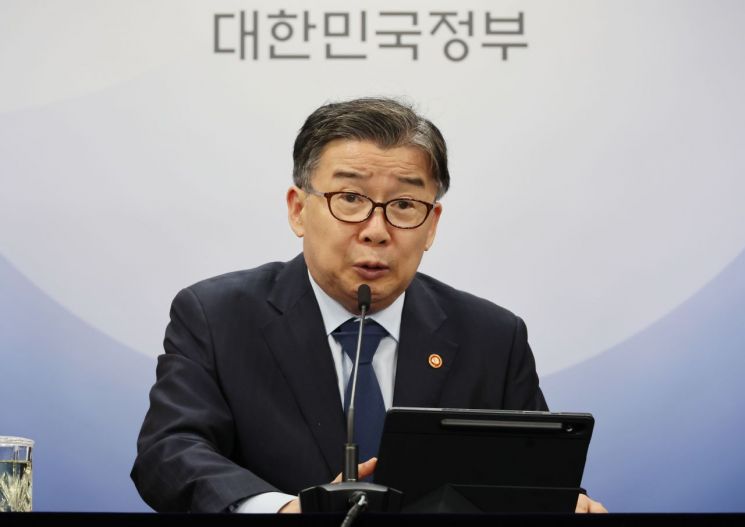 Yoo Cheolhwan, Chairman of the Anti-Corruption and Civil Rights Commission, is speaking at the Government Seoul Office in Jongno-gu, Seoul. Photo by Yonhap News
On December 4, the commission announced its achievements in anti-corruption work this year in recognition of International Anti-Corruption Day. The day was established by the United Nations to commemorate the signing of the UN Convention against Corruption in Merida, Mexico, in 2003.
One of the most notable achievements is the strict handling of fiscal waste and corruption cases. Over the past eight years, the commission uncovered cases such as public institutions that excessively allocated about 600 billion won in labor costs and the misuse of approximately 2.5 billion won in budgets for the purchase of expensive personal items under the guise of training expenses. The commission requested audits from supervisory agencies regarding these cases. In addition, a comprehensive inspection of the 17 metropolitan and provincial offices of education across the country revealed improper practices totaling 300 million won, including overpayments for overseas business trip expenses, mismanagement of facility-related expenses, and operation of recreational facilities.
The commission also strengthened the whistleblower protection system, including compensation payments. Compensation is provided to public-interest whistleblowers and their families to offset losses incurred as a result of their reports. The commission raised the maximum outpatient treatment support from 1 million won to 2 million won. The Public Interest Whistleblower Protection Act was amended to introduce a temporary suspension of disadvantageous measures, thereby preventing harm to whistleblowers.
To ensure the effective implementation of the Conflict of Interest Prevention Act, which came into effect in 2022, the commission introduced a self-assessment service using QR codes to easily check for conflicts of interest, produced and distributed guidelines and quarterly card news for local councils, and held regional briefing sessions for 1,169 public officials from 798 organizations.
Additionally, the commission strengthened integrity education for future generations by operating the “Visiting Integrity Experience Class.” From July 31 to August 1, it hosted the Asia-Pacific Economic Cooperation (APEC) High-Level Anti-Corruption Dialogue in Songdo, Incheon, to discuss cooperation on corruption prevention with member countries.
Meanwhile, in February, Transparency International (TI) announced that South Korea's Corruption Perceptions Index (CPI) reached a record high of 64 out of 100 points, ranking 30th among 180 countries.
Yoo Cheolhwan, Chairman of the commission, stated, “I would like to thank everyone who worked hard to create a fair and transparent society this year. We will continue to do our best next year to further enhance national integrity and strengthen our national competitiveness.”
© The Asia Business Daily(www.asiae.co.kr). All rights reserved.
![Clutching a Stolen Dior Bag, Saying "I Hate Being Poor but Real"... The Grotesque Con of a "Human Knockoff" [Slate]](https://cwcontent.asiae.co.kr/asiaresize/183/2026021902243444107_1771435474.jpg)















