Emergency Inspections for Super High-Rise and Quasi-High-Rise Buildings
Combustible Exterior Materials in Pre-Amendment Structures
Enhanced Education for Building Managers and Residents
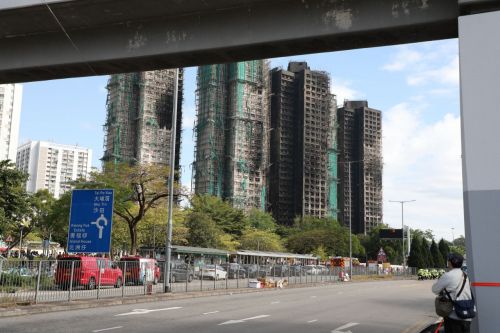
In response to growing public concerns following the recent fire in a high-rise apartment building in Hong Kong, the government is implementing emergency fire safety measures targeting buildings with 30 or more floors.
The National Fire Agency announced on December 3 that, from December 1 to December 12, it will conduct emergency inspections on a total of 223 buildings, including all 140 super high-rise buildings and 83 quasi-high-rise buildings equipped with combustible exterior materials.
Under current law, domestic high-rise buildings are required to use non-combustible exterior materials and install sprinklers and evacuation safety zones. However, some buildings constructed before the law was amended still use combustible exterior materials. Of the 140 super high-rise buildings, defined as those with 50 or more floors or over 200 meters in height, 18 fall into this category.
In addition to the emergency inspections, the National Fire Agency will conduct a comprehensive inspection of 6,280 high-rise buildings nationwide from December 15 to June 30 of the following year. This will include reviewing the results of self-inspections by each facility’s management and identifying vulnerable sites. Joint teams with local governments and building experts will focus on checking the maintenance of evacuation and fire prevention facilities, as well as monitoring for any closure or obstruction of fire safety systems.
The Ministry of Employment and Labor will focus inspections on construction sites vulnerable to fire, especially regarding compliance with safety measures for welding and cutting operations, which are the primary causes of fires. In particular, the ministry will prioritize inspections of construction sites for buildings over 31 meters in height-those required to submit a hazard prevention plan under the Occupational Safety and Health Act-including construction, expansion, and remodeling projects, with a special focus on sites involving buildings with 30 or more floors, among approximately 2,000 such sites.
The Ministry of the Interior and Safety, in cooperation with the Ministry of Land, Infrastructure and Transport, local governments, and the Korea Electrical Safety Corporation and Korea Gas Safety Corporation, will conduct sample inspections of high-rise buildings with combustible exterior materials and those under construction. If necessary, they will also audit the safety management status at construction sites.
On-site communication and safety management will also be strengthened. For two weeks from December 1 to December 12, fire station chiefs will hold meetings with representatives of high-rise buildings with combustible exterior materials to conduct on-site inspections, urging continuous and thorough fire safety management. For buildings undergoing expansion or remodeling, a pre-construction safety consultation will be conducted, and a dedicated fire station officer will be assigned to provide regular on-site guidance and inspections thereafter.
Education and public awareness campaigns will be enhanced for both building managers and residents. Joint public-private disaster response drills will be institutionalized at least once a year for the 101 buildings that use combustible exterior materials. During local governments’ annual “Safe Korea” drills, high-rise fire scenarios will be included to strengthen disaster response capabilities among building managers and related agencies.
Additionally, information on fire evacuation procedures will be prominently displayed in management offices, elevator monitors, and common entrances to ensure residents have easy access to this guidance. The results of fire safety inspections will be posted on the websites of local fire departments and on elevator monitors to expand information sharing.
The government emphasized that, because fires in high-rise buildings spread rapidly vertically and external firefighting activities are limited, early response is critical. Through these emergency measures, authorities aim to proactively eliminate fire hazards and raise safety awareness among stakeholders and residents to prevent casualties.
© The Asia Business Daily(www.asiae.co.kr). All rights reserved.
![Clutching a Stolen Dior Bag, Saying "I Hate Being Poor but Real"... The Grotesque Con of a "Human Knockoff" [Slate]](https://cwcontent.asiae.co.kr/asiaresize/183/2026021902243444107_1771435474.jpg)















