Cho Heedae, Woo Wonsik, Kim Sanghwan, Kim Minseok, and Noh Taeak Attend
Cho Heedae: "I Understand Concerns About the Judiciary, but Legitimacy Is Ensured Within the Three-Tier System"
Expresses Reservations About Judicial Reforms Such as Special Ins
On December 3, President Lee Jaemyung hosted a luncheon at the Yongsan Presidential Office in Seoul, inviting the heads of the five major branches of government to mark the first anniversary of the December 3 Martial Law. Attendees included Chief Justice Cho Hee-dae, who has been at odds with the ruling bloc and the Democratic Party of Korea over judicial reform, National Assembly Speaker Woo Wonshik, Constitutional Court President Kim Sanghwan, Prime Minister Kim Minseok, and National Election Commission Chairperson Noh Taeak.
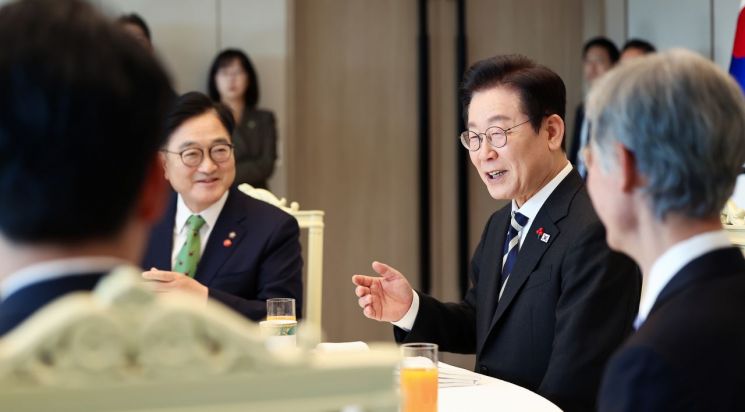
Before his opening remarks, President Lee took a commemorative photo with the five leaders and commented, "It's been six months since I've seen some of you, whom I rarely get to meet." Chief Justice Cho responded, "Thank you for inviting us."
In his subsequent opening remarks, President Lee said, "I should have invited you sooner, but for various reasons, it was delayed. I didn't intentionally choose today, but it turned out to be a meaningful day," adding, "As heads of constitutional institutions, you are all responsible leaders of key agencies tasked with upholding the constitutional order, which makes this occasion particularly significant."
President Lee continued, "Originally, I wanted to share the outcomes of my overseas trips and discuss the state of national affairs, as well as seek your advice. I hope to invite you more frequently in the future and have candid discussions about the challenges each institution faces in its operations."
Speaker Woo Wonshik began his remarks by saying, "I sincerely thank the President for inviting us to this luncheon to mark the first anniversary of the lifting of martial law." President Lee said, "Today, as we remember the democracy of light together with the people, I have arranged this luncheon with the five leaders. I hope today's gathering will be a meaningful occasion for the advancement of democracy."
Speaker Woo continued, "I can never forget this day a year ago. The memories of that night are still vivid before my eyes. Many lawmakers, including President Lee, risked their lives and quickly climbed over the walls, and the President called on the people to gather at the National Assembly. The people broke through the darkness to protect the Assembly, and thanks to them, the National Assembly was not isolated and was able to lift martial law."
During the event, a commemorative plaque titled "Democracy of Light, Unfading Memory," made from furniture in the National Assembly that had been damaged by martial law troops, was presented to the President. Speaker Woo explained, "The National Assembly created this plaque by recycling furniture damaged by the martial law troops, intending to present it to the 190 members who participated in lifting martial law at the time. I brought it here today specifically to present it to the President as well."
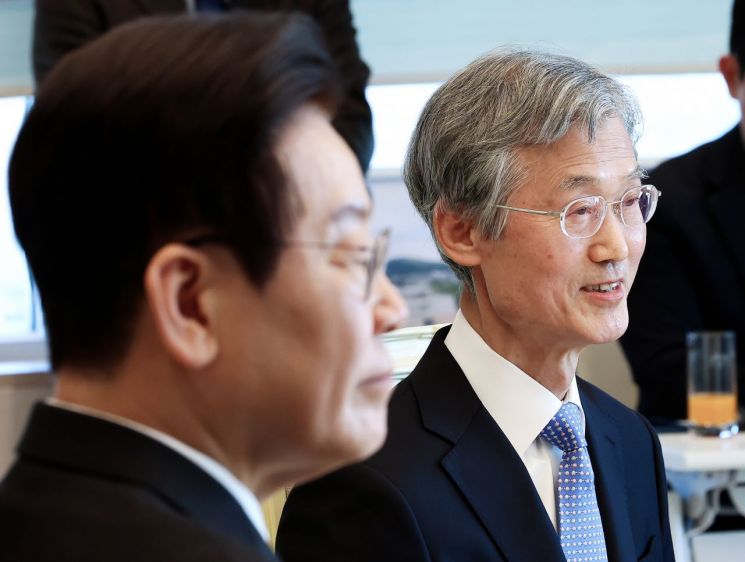
Chief Justice Cho Hee-dae emphasized the role of the judiciary. He stated, "Looking back, as both the President and the Speaker mentioned, the past year has been a time when every state institution did its utmost to fulfill its constitutional duties for the complete restoration of constitutional order. All members of the judiciary, including myself, have been making continuous efforts to protect the foundation of the rule of law and to safeguard the rights of the people through swift and fair trials, in line with our constitutional mission." Chief Justice Cho added, "The judiciary made it clear immediately after the December 3 Martial Law that it was an unconstitutional act. However, since related cases are currently ongoing in the courts, it would not be appropriate for me as Chief Justice to comment on them in detail."
Chief Justice Cho also noted that not everyone may agree with the judiciary's decisions, but "the conclusions of individual trials are ultimately reached through sufficient deliberation and procedure within the institutional framework of the three-instance system prescribed by the Constitution and the law, which ensures their legitimacy and trustworthiness." He requested, "Please pay close attention so that the ongoing discussions on judicial reform can proceed in a way that benefits the people." His remarks were interpreted as expressing his views on various judicial reform proposals being pursued by the Democratic Party of Korea, such as the establishment of a special court for insurrection cases, increasing the number of Supreme Court justices, abolishing the National Court Administration, and introducing a trial petition system.
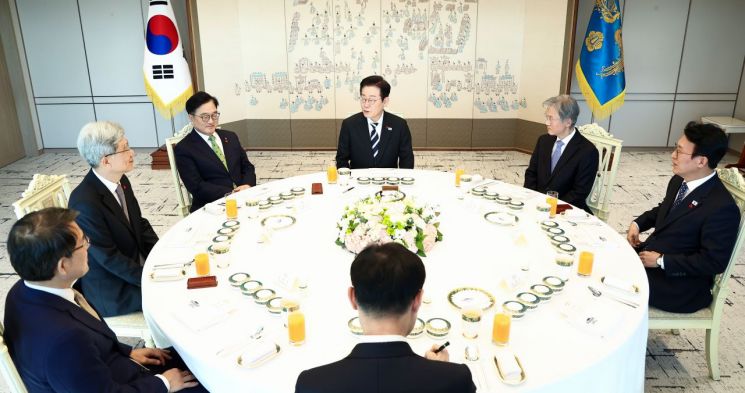
Constitutional Court President Kim Sanghwan recalled that the tenth instance of martial law ended in just "five hours and thirty minutes." He said, "The December 3 Martial Law was lifted in just five hours and thirty minutes, the shortest duration among the ten instances of martial law in our constitutional history. That is why a passage in the Constitutional Court's recent impeachment decision, which states that the National Assembly was able to swiftly demand the lifting of martial law thanks to the courageous resistance of citizens and the restrained actions of the military and police, is widely read and resonating with many people."
Prime Minister Kim Minseok then expressed his determination to see the insurrection trials through to the end. He said, "It was thanks to the people that we were able to stop the insurrection a year ago, and that most of us, who were targets for arrest or elimination, are still here today. We must not forget that it is the historic mission of our constitutional institutions to eradicate the roots of insurrection in all branches-legislative, judicial, and executive-and to restore the nation to normalcy. If we fail in this mission, we have no right to hold our positions, even for a moment, and our lives would be meaningless."
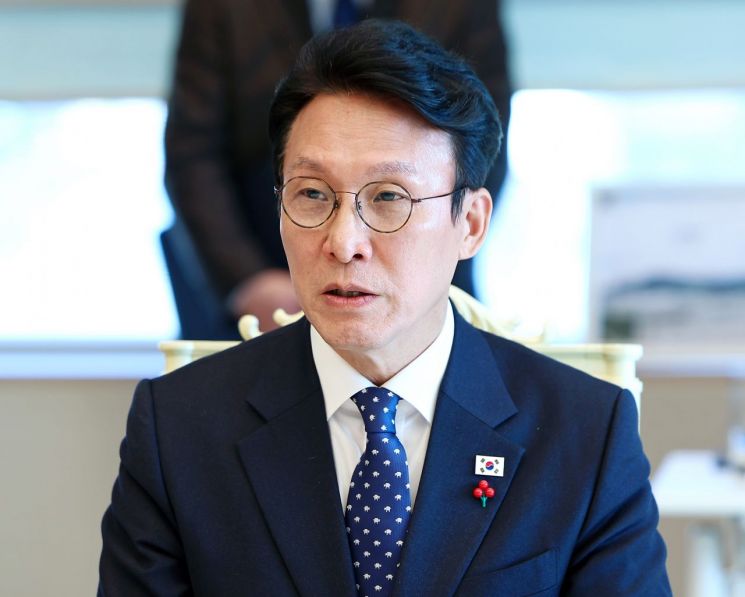
National Election Commission Chairperson Noh Taeak recalled the incursion of martial law troops into the commission and stressed the responsibility of election management. Remembering last year's incident, he said, "Today marks one year since martial law troops stormed the National Assembly and the National Election Commission building. The incursion into constitutional institutions by martial law troops caused great shock and pain to the people."
Chairperson Noh continued, "Even amid this grave crisis and unprecedented turmoil, the Commission did its utmost to manage the 21st presidential election transparently and fairly in accordance with the law and principles. We will also manage next year's 9th local elections with unwavering commitment to transparency and fairness, ensuring that we fully uphold our constitutional duty to realize the sovereignty of the people."
© The Asia Business Daily(www.asiae.co.kr). All rights reserved.
![Clutching a Stolen Dior Bag, Saying "I Hate Being Poor but Real"... The Grotesque Con of a "Human Knockoff" [Slate]](https://cwcontent.asiae.co.kr/asiaresize/183/2026021902243444107_1771435474.jpg)

















