Analysis of Eight-Year Longitudinal Follow-Up of 1,441 Middle-Aged and Older Adults
It has been found that moderate or severe sleep apnea more than doubles the risk of cerebral microbleeds compared to normal sleep.
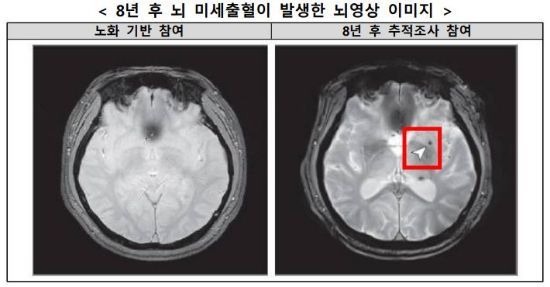
The Korea Disease Control and Prevention Agency's National Institute of Health announced these research findings on December 2. The study was conducted through the Ansan community-based cohort of the Korean Genome and Epidemiology Study (KoGES), led by the National Institute of Health. The research team tracked 1,441 middle-aged and older adults who participated in the in-depth aging study for eight years to analyze the impact of sleep apnea severity on the occurrence of cerebral microbleeds.
Sleep apnea is a condition in which breathing stops or becomes shallow during sleep. It is classified as mild, moderate, or severe depending on how many times breathing disturbances occur per hour. Cerebral microbleeds are caused by damage to small blood vessels in the brain, resulting in bleeding. They are known as a major risk factor for cerebrovascular diseases such as stroke.
According to the study, people with moderate or severe obstructive sleep apnea had approximately a 2.14 times higher risk of developing cerebral microbleeds compared to those without sleep apnea. In contrast, no increased risk was observed in cases of mild sleep apnea. The results of this study were published in the international journal JAMA Network Open.
These findings were shown to be independent of whether or not individuals possessed genes associated with the risk of cerebrovascular disease, confirming that sleep apnea itself is an independent risk factor for cerebral microbleeds.
As a result, experts recommend managing sleep apnea for cerebrovascular health. If you experience frequent loud snoring or episodes where breathing seems to stop during sleep, or excessive daytime sleepiness, it is important to receive an accurate diagnosis and actively pursue treatment from a specialist. Shin Chul, Professor Emeritus at Korea University College of Medicine, stated, "This study is significant as it demonstrates the negative impact of sleep apnea on cerebrovascular health and provides causal interpretation through long-term follow-up over eight years," adding, "Sleep apnea should become an important pillar in stroke treatment strategies."
Im Seungkwan, Commissioner of the Korea Disease Control and Prevention Agency, said, "This study provides scientific evidence that systematic management of sleep health is necessary to prevent cerebrovascular diseases," and emphasized, "Sleep apnea should not be regarded as merely a snoring issue or a matter of sleep habits, but as a condition that must be carefully managed for cerebrovascular health."
© The Asia Business Daily(www.asiae.co.kr). All rights reserved.
![Clutching a Stolen Dior Bag, Saying "I Hate Being Poor but Real"... The Grotesque Con of a "Human Knockoff" [Slate]](https://cwcontent.asiae.co.kr/asiaresize/183/2026021902243444107_1771435474.jpg)
















