Analysts have suggested that if the Bank of Japan (BOJ) raises its benchmark interest rate this month, the so-called "Takaichi trade"-driven pressure for yen depreciation is likely to subside. Concerns in the market about a rapid unwinding of yen carry trades have also been assessed as excessive.
Moon Down, a researcher at Korea Investment & Securities, stated in the report "If the BOJ Raises Rates" on December 3, "On December 1, BOJ Governor Kazuo Ueda mentioned that the pros and cons of a rate hike would be discussed at the upcoming meeting on December 18-19. The market interpreted this as a clear signal for a rate increase." Following these remarks, the yen-dollar exchange rate, which had been rapidly weakening to the 156-yen level per dollar, fell to the 154-yen range immediately after the comments were made public.
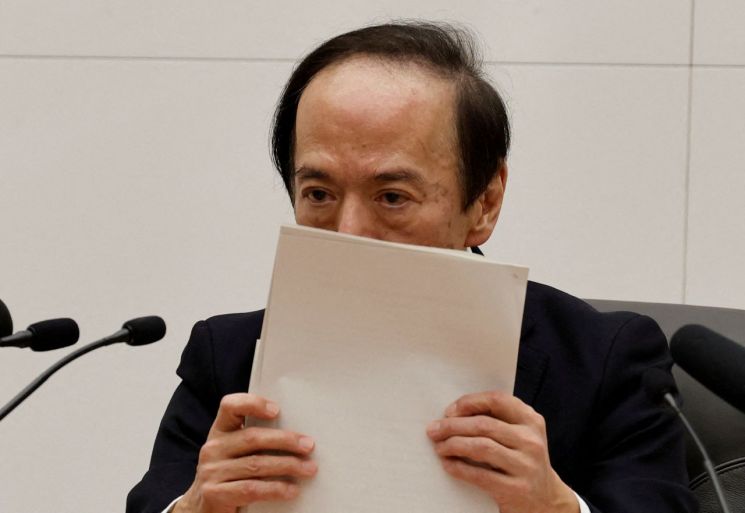
Researcher Moon cited the sharp depreciation of the yen as the background for Governor Ueda's urgency in raising the benchmark rate. He explained, "Since Sanae Takaichi's surprise victory as the Liberal Democratic Party leader in early October, the dollar-yen exchange rate has followed a similar upward trajectory (meaning a decline in the yen's value) as seen after former Prime Minister Shinzo Abe's election. Even though Takaichi's expansionary policies are similar in direction but different in intensity from Abenomics, the current degree of yen weakness is excessive." Previously, the dollar-yen exchange rate had approached the 160-yen level as upward pressure persisted. In response, Governor Ueda also indicated that the impact of the exchange rate on inflation has grown, and he is wary of excessive yen depreciation.
Accordingly, if the BOJ raises its benchmark rate at the December meeting, the yen depreciation pressure stemming from the Takaichi trade is expected to ease. Researcher Moon added, "The depreciation pressure on the Korean won, which has been linked to the yen, is also likely to subside."
However, it is considered unlikely that the BOJ will embark on a series of consecutive rate hikes following this increase. Concerns about a rapid unwinding of yen carry trades due to a sharp yen appreciation are also seen as excessive. The yen carry trade refers to a strategy in which investors borrow yen at low interest rates in Japan and invest in higher-yielding assets abroad to profit from the interest rate differential. Moon dismissed market concerns that a sudden unwinding of these positions-selling assets and buying back yen-could occur all at once.
He noted, "The BOJ is likely to wait and observe economic and inflation trends, as well as the annual spring wage negotiations between labor and management in March-April next year, before considering the next rate hike. Even if the BOJ brings forward a rate increase now due to concerns over excessive yen weakness, it will not change its gradual pace of tightening until a positive inflation cycle is firmly established." A rapid rate hike would also conflict with Prime Minister Takaichi's expansionary policy stance.
He further forecasted, "With the BOJ's gradual rate hikes and the US Federal Reserve's rate cuts, the narrowing of the US-Japan interest rate differential will likely continue gradually until at least the end of 2026." He also predicted that the dollar-yen exchange rate would gradually decline to the low 140-yen range per dollar by the fourth quarter of next year.
© The Asia Business Daily(www.asiae.co.kr). All rights reserved.
![Clutching a Stolen Dior Bag, Saying "I Hate Being Poor but Real"... The Grotesque Con of a "Human Knockoff" [Slate]](https://cwcontent.asiae.co.kr/asiaresize/183/2026021902243444107_1771435474.jpg)
















