Asan's Population Surpasses 400,000 for the First Time in a Decade Since Reaching 300,000
Industrial, Residential, and Transportation Sectors Achieve Balance as Major Corporations Move In
Local Tax Revenue Expected to Hit Record High... "Let's Accelerate Toward a City of 500,000"
The population of Asan City in South Chungcheong Province has surpassed 400,000.
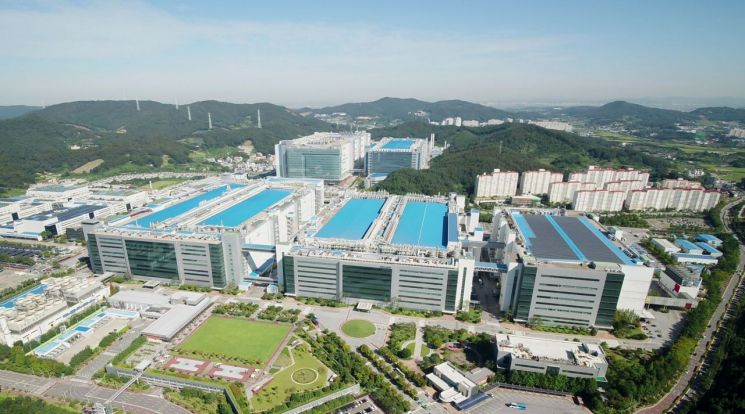
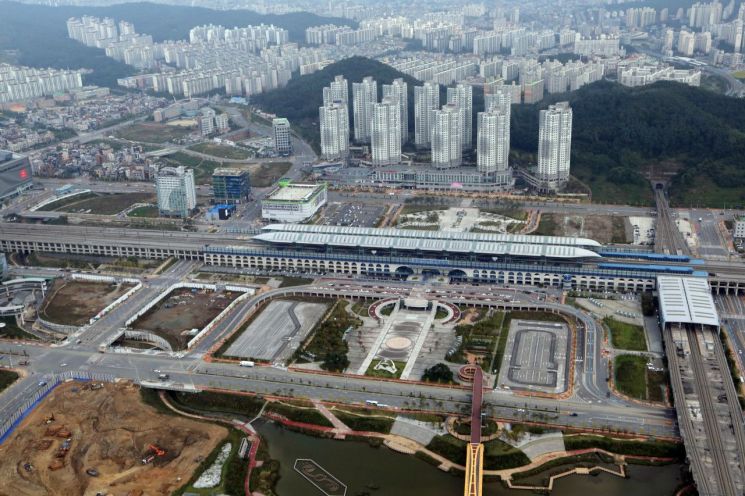
According to the city on December 2, as of the end of last month, the population, including foreign residents, reached 400,162. The city's population exceeded 200,000 in 2004 and 300,000 in 2014, and has now grown by another milestone in just 10 years and 9 months. This population growth in Asan is considered unusual given the nationwide trend of declining birth rates and population decrease. The main reason for this trend is the city's urban structure, which harmoniously integrates industry, housing, and transportation. Asan is a major hub for advanced manufacturing, home to leading companies such as Samsung Electronics, Samsung Display, and Hyundai Motor, and its share of local income tax (50.9%) is significantly higher than the national average (34.5%). Large-scale urban development and apartment construction projects are ongoing in areas such as Baebang and Tangjeong 2 District. In 2023 alone, 10,000 apartment units were completed.
Industrial growth has attracted new residents, and as administrative efficiency has improved, the city's finances have also strengthened. Asan City expects local tax collections to reach a record high this year. Recently, in its second supplementary budget, the city set its municipal tax budget at 557.5 billion won. The total amount of local taxes collected, including provincial taxes, is expected to reach 852.2 billion won. This figure far exceeds last year's final tally of 514.3 billion won. The city's tax revenue has steadily increased over the past three years: 816.1 billion won in 2022, 878.2 billion won in 2023, and 819.2 billion won last year, with this year's total projected to surpass 850 billion won.
As of the end of September this year, municipal tax collections stood at 500.3 billion won, an increase of 56.6 billion won compared to the previous year. By tax category, local income tax accounted for the largest share at 292 billion won, followed by property tax at 70 billion won, automobile tax at 45.4 billion won, and resident tax at 32 billion won. Notably, local income tax increased by 55.4 billion won year-on-year. This is interpreted as the result of improved operating profits at large corporations combined with proactive strategies to secure tax revenue. Although property tax stood at 70 billion won as of September, the payment deadline was extended due to a fire at the National Information Resources Service, and the final amount is expected to reach 77 billion won. With continued net population inflow, automobile tax, resident tax, and tobacco consumption tax are also showing stable growth.
 At the 6th Asan Citizen Health Walking Competition, Mayor Oh Sehyun is cheering on the citizens. November 15, 2025. Asan City Hall
At a monthly staff meeting on December 1, Mayor Oh Sehyun stated, "While 49 local governments are classified as at risk of extinction, Asan's growth is highly significant," and encouraged, "Let us do our best in the final month to achieve our goal of becoming a self-sustaining city of 500,000, beyond the current 400,000."
© The Asia Business Daily(www.asiae.co.kr). All rights reserved.



















