Revision of Total Project Cost Management Guidelines
The government will ease the feasibility study criteria for large-scale public projects and exempt projects below the preliminary feasibility study (pre-feasibility) threshold from re-examination. The Ministry of Economy and Finance has revised its management guidelines to expand the application of new construction technologies in public works and to rationalize the system.
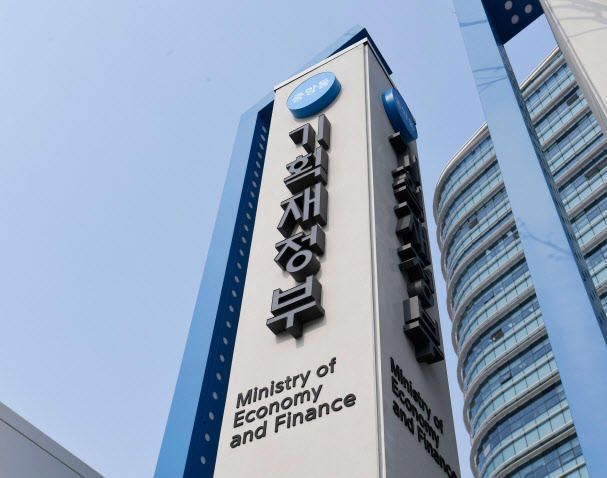
On December 1, the Ministry of Economy and Finance announced that the revised total project cost management guidelines, including these changes, have been in effect since November 28. This is a follow-up measure to the improvements to the total project cost management system announced last month. The ministry explained, "We have expanded the application of new construction technologies in public works, strengthened safety management, and rationalized the system."
The revised guidelines include changing the feasibility study criteria for large-scale public projects from "total project cost" to "total construction cost." Previously, even small- and medium-sized projects with a total project cost-including compensation and design costs-exceeding 50 billion won were subject to feasibility studies. Going forward, projects will only be subject to feasibility studies if the construction cost exceeds 50 billion won. This change is expected to reduce the burden of feasibility studies for small- and medium-sized projects and accelerate project implementation.
The ministry explained that the revised guidelines reflect feasibility study criteria already updated in other laws, such as the Construction Technology Promotion Act. A ministry official stated, "The procedures for feasibility studies are already detailed in relevant laws and have been applied in practice accordingly. The guidelines had not reflected these changes in a timely manner, so this revision was made for consistency."
The scope of total project cost management has also been significantly adjusted. Previously, informatization projects included five years of operation and maintenance costs, as well as additional construction costs, in the total project cost. As a result, even when system upgrades or enhancements were needed after implementation, projects were often delayed due to total project cost limits. The revised guidelines remove the operation and maintenance phase from the relevant provisions.
To promote the spread of new technologies and encourage innovation, the autonomy of relevant ministries to introduce smart construction and transportation technologies will be expanded. The "autonomous adjustment" system, which allows ministries to adjust the total project cost within 10% of the bid amount, will now cover more cases. As a result, technologies such as 3D Building Information Modeling (BIM), Off-site Construction (OSC) for safety and quality through factory production and on-site assembly of high-risk components, and Cooperative Intelligent Transport Systems (C-ITS) for two-way communication between vehicles and between vehicles and infrastructure, have been added to the list of eligible projects for autonomous adjustment.
To expedite project implementation, projects below the pre-feasibility study threshold will be exempt from re-examination, and in cases where rapid progress is needed, such as for natural disaster prevention, demand forecast re-examinations will also be waived. Previously, even if a project’s total cost was less than 50 billion won, a cost increase of 20% or more would trigger a feasibility re-examination. Under the new rules, as long as the total cost remains below 50 billion won, a re-examination is not required even if costs increase. For projects subject to a review of project plan adequacy, overlapping procedures such as the Public Procurement Service’s design adequacy review and demand forecast re-examination will be minimized.
© The Asia Business Daily(www.asiae.co.kr). All rights reserved.
![Clutching a Stolen Dior Bag, Saying "I Hate Being Poor but Real"... The Grotesque Con of a "Human Knockoff" [Slate]](https://cwcontent.asiae.co.kr/asiaresize/183/2026021902243444107_1771435474.jpg)
















