30% Plunge After Record High
"Weakening Political Aura Triggers Price Crash"
Trump Family's Digital Asset Investments Also Hit Hard
Paul Krugman, Nobel Prize-winning economist, recently claimed that the sharp drop in Bitcoin prices is directly related to the weakening political influence of U.S. President Donald Trump. He analyzed, "Bitcoin has essentially functioned as an investment in Trumpism, but as Trump's political aura fades, its foundation is collapsing."
 Paul Krugman, Nobel Prize winner in Economics, recently claimed that the sharp decline in Bitcoin prices is directly related to the weakening political influence of U.S. President Donald Trump.
According to Fortune in the United States, Bitcoin plummeted from its record high of $126,000 last month to just above $80,000 within a month, marking its lowest point in six months. Although it later recovered to around $90,000, a massive sell-off worth $1 trillion occurred in a short period, reportedly resulting in losses of about $1 billion for the Trump family, who hold a significant portion of their assets in Bitcoin.
Krugman has been a consistent critic of both digital assets and the Trump administration. In his personal newsletter, he pointed out, "President Trump has maintained close ties with the digital asset industry and has been clearly intent on returning the favor through policy." In fact, President Trump is estimated to hold Bitcoin worth around $800 million, and 'American Bitcoin,' the mining company in which his sons are involved, was valued at $5 billion immediately after its listing on Nasdaq in September.
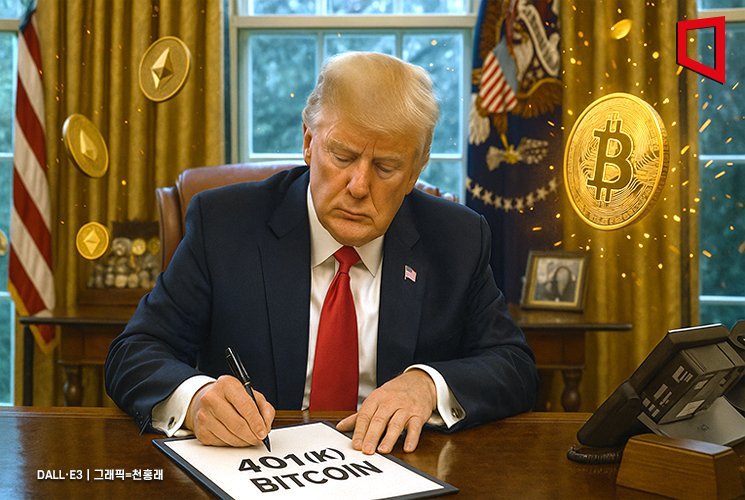
The Trump administration also pushed forward a series of crypto-friendly policies. It proposed the establishment of a U.S. government Bitcoin reserve and pushed through an executive order allowing personal retirement funds to be invested in digital assets. Last month, the administration faced criticism for pardoning Changpeng Zhao, the founder of Binance, who admitted to violating anti-money laundering laws.
However, Krugman interprets the recent market trends as a 'political signal.' He argues that there is growing division within the Republican Party over Trump’s policies, and that Trump’s political presence is weakening as progressive candidates have continued to win elections in major cities such as New York and Seattle. He asserted, "Bitcoin is an asset that grew on the policy aura of the Trump era," adding, "Once that aura disappears, it will be difficult for the price to hold up."
Similar observations are emerging from both academia and the market. Some investors note that, in recent years, Bitcoin has been regarded as a 'pro-Trump asset,' and that political events have been excessively reflected in its price. They point out that Bitcoin prices have swung wildly in response to each political variable, such as tariff reviews, pardon announcements, and regulatory signals. Experts have also criticized that "in an environment of increasing political uncertainty, it is difficult to rely on Bitcoin as a safe haven."
The White House, however, immediately refuted these claims. Kush Desai, a White House spokesperson, stated, "It is absurd to connect Bitcoin price fluctuations to non-economic issues involving the President," emphasizing, "The Trump administration has consistently pursued policies to foster the digital asset ecosystem."
Currently, Bitcoin is trading just above $90,000, which is about 30% lower than its peak in October. The market remains mixed, with expectations for a rebound and concerns about entering a bear market coexisting.
© The Asia Business Daily(www.asiae.co.kr). All rights reserved.
![Clutching a Stolen Dior Bag, Saying "I Hate Being Poor but Real"... The Grotesque Con of a "Human Knockoff" [Slate]](https://cwcontent.asiae.co.kr/asiaresize/183/2026021902243444107_1771435474.jpg)
















