Two Months After BMCC Launch
Will Public Broadcasting Governance Reform and Pay TV/Platform Regulation Discussions Accelerate?
Minimizing Operational Vacuums Without Controversy Over Rushed Appointments
Attorney Ryu Sinhwan Appointed as BMCC Member
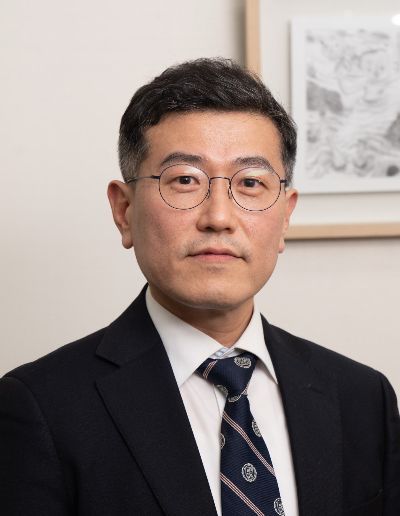
President Lee Jaemyung has nominated Kim Jongcheol, a professor at Yonsei University Law School, as the chairperson of the Broadcasting Media and Communications Committee (BMCC), which oversees policies on broadcasting, telecommunications, and online platforms. The BMCC, which had been in a state of near shutdown for almost two months since its launch due to the absence of committee members, is now drawing attention as to whether it can accelerate discussions on public broadcasting governance reform and regulations on pay TV and platforms, following the completion of personnel verification procedures and the appointment of its first chief.

Presidential spokesperson Kang Yoojeong stated during a briefing at the presidential office in Yongsan on the 28th, "The nominee for the minister-level position of BMCC chairperson is Professor Kim Jongcheol of Yonsei University Law School." She added, "Nominee Kim is a constitutional scholar and media law expert with a deep understanding of freedom of expression and its limits as guaranteed by the Constitution, having served as president of the Korean Society for Media Law and the Korean Public Law Association."
Kang further explained, "Kim is considered the right person to prioritize popular sovereignty, strengthen the public function and social responsibility of broadcasting and media, adapt to the new digital and media industry environment, and overhaul regulations and legal systems." She added, "We expect him to restore the public nature of broadcasting media and enhance the people's media sovereignty in line with the rapidly changing media environment." President Lee also appointed Ryu Sinhwan, an attorney at Law Firm Jihyang, as a BMCC member representing the presidential quota.
This appointment of the BMCC chairperson comes about two months after the automatic dismissal of former Korea Communications Commission (KCC) Chairperson Lee Jinsook, which occurred with the launch of the committee on October 1. With the enforcement of the BMCC establishment law, the KCC, which had been in place since 2008, was abolished after 17 years. As a result, Lee Jinsook left office without completing her term and immediately filed a constitutional complaint, sparking ongoing controversy.
The BMCC is a newly established central administrative body under the President, created in accordance with the "Act on the Establishment and Operation of the Broadcasting Media and Communications Committee." Its purpose is to unify the broadcasting promotion, new media, and OTT policy functions previously scattered across the Ministry of Science and ICT, as well as the broadcasting regulation and user protection functions formerly handled by the KCC, thereby consolidating the policy control tower for broadcasting and communications.
The inclusion of "media" in its name reflects the intent to encompass the expanded media ecosystem, which now includes not only terrestrial, cable, and satellite broadcasting, but also OTT, online platforms, and social media. The BMCC consists of seven members: the President nominates two members, including the chairperson; the ruling party nominates two; and the opposition party nominates three. The committee holds broad authority over broadcasting and communications, including licensing of broadcasting businesses, blocking of illegal and harmful information, protection of user rights, broadcasting advertising and programming policies, and media diversity policies.
Although some broadcasting promotion-related organizations under the Ministry of Science and ICT were transferred to the BMCC upon its launch, the absence of a chairperson and committee members led to a "zero-member system" for nearly two months. As a result, follow-up measures for the so-called "three broadcasting laws," such as the reorganization of the boards of KBS, MBC, and EBS, as well as discussions on easing pay TV regulations and adjusting the Broadcasting and Communications Development Fund, have all been stalled.
The purpose of establishing the BMCC goes beyond a mere name change; it aims to strengthen the independence and public nature of broadcasting while building an integrated regulatory and promotion system suited to the rapidly changing digital environment. The committee states that its mission is to "create a trustworthy information environment and promote the rights and public welfare of the people by regulating and protecting users in broadcasting media and communications, guaranteeing the independence of broadcasting, and ensuring freedom of expression and user rights."
In particular, the BMCC is expected to serve as the core enforcement body of the so-called "Korean-style DSA (Digital Services Act)," handling transparency and accountability regulations for online video service (OSB) and platform operators, responding to false and manipulated information, and ensuring fairness in algorithm and advertising exposure structures. At the same time, as it must lead follow-up work on amendments to the Broadcasting Act aimed at strengthening the political independence and viewer representation of public broadcasters, there is speculation that the media landscape could be significantly impacted depending on the chairperson's leadership.
The new chairperson faces a host of pressing issues. First, in accordance with the revised Broadcasting Act, the boards of KBS, MBC, and EBS must be reconstituted, and the procedures for appointing CEOs must be adjusted to meet new standards. The committee is also responsible for establishing BMCC regulations, designating entities to recommend board members, and setting candidate verification criteria. Since the reorganization of the KBS board has already missed its legal deadline due to the BMCC's vacancy, a delicate balance is needed to minimize delays without triggering controversy over rushed appointments.
Another task is designing support measures for the pay TV industry, including cable TV and IPTV, which are under pressure to restructure due to declining subscribers and worsening revenues. Key issues under government discussion include lowering the collection rate for the Broadcasting and Communications Development Fund, relaxing advertising regulations, and adjusting mandatory programming for local channels. These issues represent a clash between concerns over undermining public interest and the need to enhance industry competitiveness. In addition, the issue of reverse discrimination against OTT providers is intertwined, putting the committee's ability to coordinate stakeholders to the test.
Securing the independence and neutrality of the committee while managing tensions with the political sphere is another core challenge. Since former chairperson Lee Jinsook filed a constitutional complaint against the BMCC establishment law, calling it "targeted legislation," and both ruling and opposition parties have delayed nominating committee members, the appointment of the new chairperson itself could become another flashpoint for political strife.
© The Asia Business Daily(www.asiae.co.kr). All rights reserved.
![Clutching a Stolen Dior Bag, Saying "I Hate Being Poor but Real"... The Grotesque Con of a "Human Knockoff" [Slate]](https://cwcontent.asiae.co.kr/asiaresize/183/2026021902243444107_1771435474.jpg)
















