Major Corporations and Financial Institutions Halt Calendar Production
Small-Batch, Multi-Variety and K-Culture Merchandise Drive New Demand
The calendar market, once a symbol of the bustling year-end season, is rapidly disappearing. This trend is driven by digital transformation and cost-cutting measures, with major clients such as large corporations and financial institutions successively halting calendar production. In contrast, the spread of K-culture, including K-pop and K-dramas, is fueling demand for small-batch, multi-variety, and merchandise printing, which is emerging as a new source of revenue.
According to industry sources on November 28, the volume of calendars produced for companies and institutions this year has dropped to about 70% of its peak. The rate of decline has been accelerating in recent years. The head of a printing company in Jung-gu, Seoul, explained, "The year-end calendar market used to be the biggest source of revenue for the printing industry, but recently, orders have plummeted, and its share of overall business has become negligible," describing the current atmosphere.
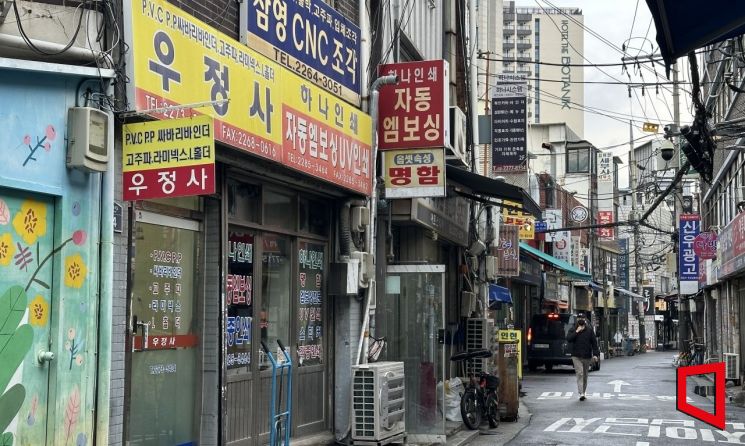
The drop in calendar orders is tied to structural changes across the industry. During the COVID-19 pandemic, large corporations gradually reduced the number of calendars distributed at year-end, with many eliminating them altogether. Small and medium-sized enterprises also stopped or reduced the practice of importing ready-made calendars from China and simply adding their company name, in an effort to cut costs. Mr. A, who has worked in Euljiro Printing Alley in Jung-gu, Seoul for over 30 years, commented, "Hardly anyone hangs wall calendars at home anymore. Only a few desk calendars are occasionally ordered."
As the calendar market disappears, the printing industry has been pushed into cutthroat competition. Since printing is made-to-order, stopping the machines increases the burden of fixed costs. The industry explains that it has become standard practice to accept orders even at prices below cost in order to keep work coming in. Another printing industry insider said, "Even if the price doesn't cover the cost, if we don't take the order, the machines will just sit idle. Loss-making orders have become common, to the point where the term 'peak season' is meaningless." For calendars, it has become common to lower prices and take advance orders as early as August, which is typically the off-season.
This does not mean the entire printing industry is shrinking. While demand for mass-produced items such as calendars and promotional materials has dropped significantly, the gap is being rapidly filled by small-batch, multi-variety printing for merchandise, photobooks, and fan art. Despite various economic uncertainties and the impact of U.S.-imposed tariffs, exports of printed materials are performing better than expected.
According to the Korea Customs Service, exports of printed materials reached 337.09 million dollars from January to October this year, up 7.3% from the previous year. Given that year-end typically sees a surge in orders, some expect the annual growth rate to expand to as much as 10%. Not only textbooks and leaflets but also K-culture-based merchandise have driven these exports. Imports of printing equipment, which serve as an indicator of the industry's long-term outlook, also rose 4.8% during the same period, reaching 339.18 million dollars.
Kim Yoonjung, Chairman of the Seoul Printing Information Industry Cooperative, said, "The printing industry is creating new markets through small-batch, multi-variety products such as K-pop merchandise. Printed materials are now distributed not only domestically but worldwide. From textbooks used by foreigners learning Korean to merchandise collected by fans, the Korean printing industry is playing a key role in spreading culture."
© The Asia Business Daily(www.asiae.co.kr). All rights reserved.
![Clutching a Stolen Dior Bag, Saying "I Hate Being Poor but Real"... The Grotesque Con of a "Human Knockoff" [Slate]](https://cwcontent.asiae.co.kr/asiaresize/183/2026021902243444107_1771435474.jpg)















