IP Goes Global, But Profits Stay Out of Korea
Japanese Model Offers Lessons, But Creativity Must Be Protected
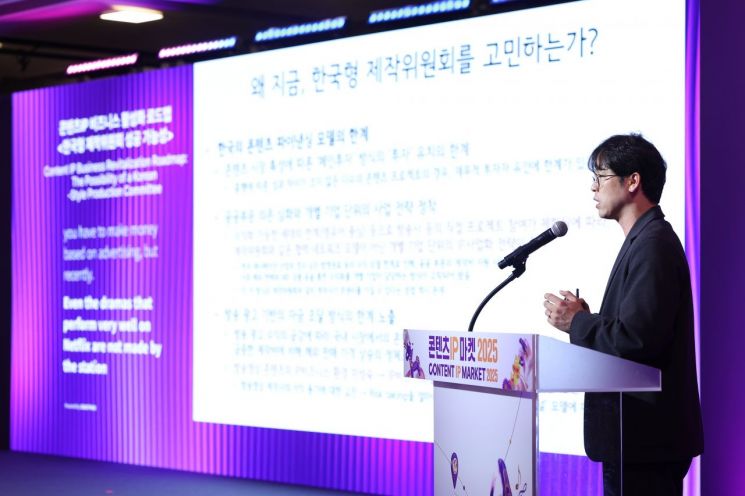
"In the past, it was natural for content created in Korea to be owned by Korea. Now, with partnerships with global OTT platforms, intellectual property (IP) is more often transferred overseas."
At the 'Content IP Market' held by the Korea Creative Content Agency at COEX from November 25 to 27, Sungmin Lee, Professor at Korea National Open University, explained the recent debate over IP sovereignty in these terms. He diagnosed that even when Korean content achieves global success, the structure is becoming entrenched in a way that mid- to long-term profits do not return to the domestic ecosystem.
Korea's traditional production and investment methods have clear limitations. In film, the main investor bears the risk, so if the project succeeds, the returns are significant, but if it fails, the losses are also substantial. In broadcasting, the model is based on advertising, but with the recent market contraction, the recoupment structure is faltering.
On the other hand, global OTT platforms offer short-term stability. Production companies can recover their production costs by handing over completed works. The problem arises afterward. As production companies transfer most of their IP, long-term profits from season-based series, remakes, and merchandising move overseas. Professor Lee pointed out, "If the Korean content industry remains trapped in a short-term commission model, it is inevitable that competitiveness will decline."
As one alternative, Professor Lee mentioned the Japanese-style production committee model. In this structure, multiple companies share production costs through equity investment and divide profits according to their areas of expertise. This reduces the production burden and leverages specialization. However, as more parties participate, decision-making slows, and production companies without equity stakes are excluded from long-term profits. In Japan, this model has also been criticized for stifling creativity.
However, the conditions in Korea are different. The influence of broadcast advertising has diminished, and the supply structure centered on Netflix has solidified a system in which long-term IP profits are transferred overseas. Meanwhile, consumption based on merchandise and fandom is growing even larger.
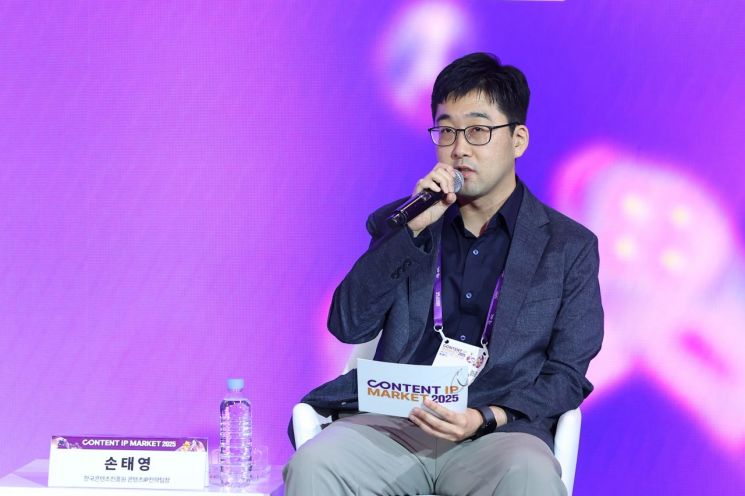
Taeyoung Son, Head of Content IP Strategy Team at Korea Creative Content Agency, explained, "For super IPs, regardless of their origin, the majority of profits come from merchandising," citing Pok?mon (which generates more than 60% of its total revenue from merchandising) as a representative example. He emphasized that while Korea has strong production capabilities, it often stops at 'ending with rights sales,' and stressed the need to design ancillary businesses from the initial planning stages.
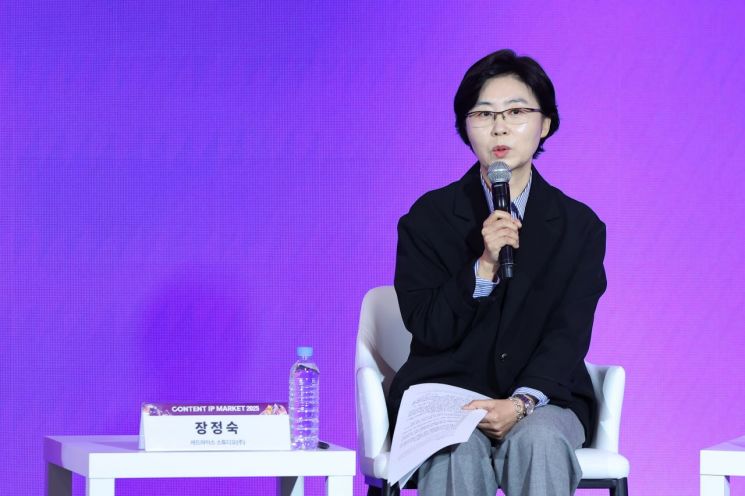
Jang Jeongsuk, CEO of Red Ice Studio, who participated in the production committee for the webtoon "Solo Leveling," said, "It was a significant experience for a Korean webtoon to enter a Japanese-style production committee." As "Solo Leveling" recorded daily sales of hundreds of millions of won on Japanese platforms, the Japanese side gained confidence in forming production committees based on Korean original works.
In the case of the new title "Doglang," a pilot was produced entirely in Korea, and based on this, Japanese broadcasters, publishers, and overseas OTT platforms participated in the production committee. This demonstrated that it is possible for Korea to lead the core creative process while adding overseas partners.
Jung Kijoon, Deputy General Manager at Studio S, said, "For dramas, the production cost per episode often exceeds 1 billion won, so it is not easy to break away from the existing structure." However, he added, "If the Korean-style production committee model becomes established, production companies should initially take on the role of secretary and coordinator to organize the structure."
The direction of the discussion is clear. The goal is not to simply replicate the Japanese model, but to consider how to retain the IP of Korean content, which is rapidly expanding into the global market, within Korea.
Professor Lee emphasized, "The strength of Korean content comes from a free creative process," adding, "If the production committee model is introduced, it should not be a mechanism that restricts creativity, but rather a tool to share post-release risks and design long-term business opportunities."
© The Asia Business Daily(www.asiae.co.kr). All rights reserved.
![Clutching a Stolen Dior Bag, Saying "I Hate Being Poor but Real"... The Grotesque Con of a "Human Knockoff" [Slate]](https://cwcontent.asiae.co.kr/asiaresize/183/2026021902243444107_1771435474.jpg)


















