150 Billion Yen at the Box Office in Just Seven Weeks
Kabuki Reimagined Through a Contemporary Emotional Lens
Reviving Traditional Arts as "Living Emotion"
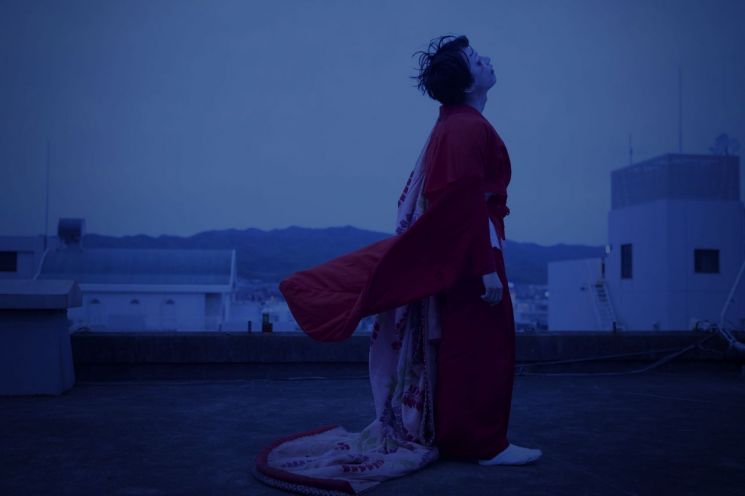
The film "Gukbo," directed by Korean-Japanese director Lee Sangil, has become the highest-grossing live-action film in Japanese history. As of November 24, it had attracted 12.31 million viewers and earned 17.37 billion yen (approximately 163.3 billion won) in box office revenue. It broke the previous record of 17.3 billion yen set by "Bayside Shakedown 2" in 2002, ending a 22-year reign.
This is an unprecedented box office success. In Japan, live-action films are far less popular than animation. Furthermore, "Gukbo" centers on kabuki, a traditional performing art. Films with traditional themes typically have a limited audience and a short box office run. However, "Gukbo" defied these trends. After maintaining steady performance in its early stages, it went on to achieve long-term box office success.
This was possible because the film reinterpreted traditional art through a contemporary emotional lens. Even for Japanese audiences, kabuki is not easily accessible, as its forms, terminology, and stage conventions require considerable prior knowledge.
Japanese films have often approached traditional arts with a documentary style or overly technical explanations. In contrast, "Gukbo" placed the emotions, conflicts, and growth of its characters at the center of the narrative, rather than focusing on stagecraft or customs. Traditional forms were used only as minimal devices to convey emotion.
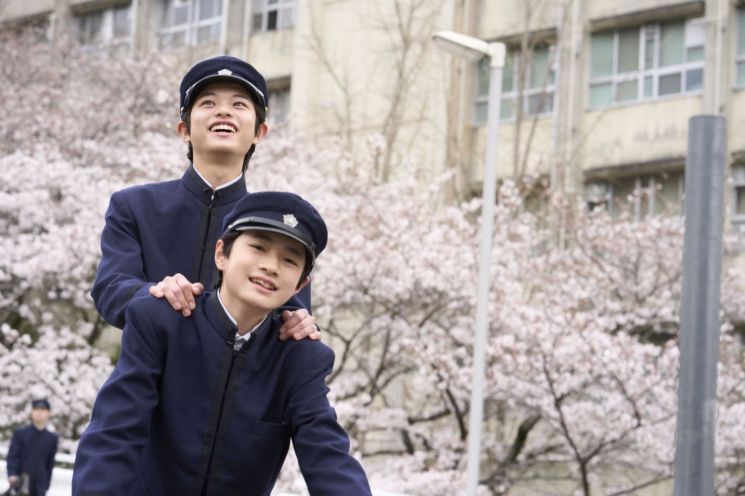
The film calmly depicts the sorrow and fate of an outsider entering the world of kabuki, the pressures and aspirations borne by the heir of a prestigious family, and the conflicts between rivals. It revives traditional art not as "cultural heritage" but as "living emotion," allowing audiences to immerse themselves in the story even without prior knowledge of kabuki.
The film's success was also driven by a star system that attracted younger viewers. Lead actors Ryo Yoshizawa and Ryusei Yokohama are among Japan's most prominent youth stars. Before filming, they underwent over a year of rigorous training with kabuki actors, and this process was used as promotional content.
A significant portion of the initial audience consisted of the two actors' fan bases. However, interest did not end with short-term consumption. As word of mouth spread, the audience expanded to include traditional performing arts fans and then the general public, creating a "three-stage diffusion structure." An unusual trend also emerged, with audience numbers in the second and third weeks increasing compared to the previous week.
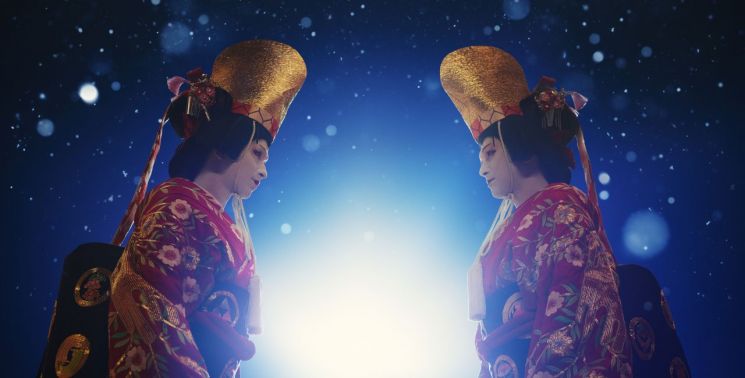
The distinctiveness of the theatrical experience also contributed to the film's success. "Gukbo" reimagines the design and colors of kabuki stages, costume details, and the interplay of lighting and shadow using the language of modern cinema, providing a sensory experience akin to live performance. This direction shines especially in special theaters equipped with large screens and immersive sound.
According to a survey by major Japanese theater chains, about 28% of "Gukbo" viewers chose high-definition screens or premium theaters-almost double the recent average for Japanese live-action films.
While "Gukbo" is being praised as an "entry point" for newcomers to kabuki, the film maintained steady weekday attendance even in its sixth and seventh weeks after release. It has demonstrated precisely what is needed for theatrical films to survive in the OTT era and proved that movies about traditional arts can take center stage in the market.
© The Asia Business Daily(www.asiae.co.kr). All rights reserved.
![Clutching a Stolen Dior Bag, Saying "I Hate Being Poor but Real"... The Grotesque Con of a "Human Knockoff" [Slate]](https://cwcontent.asiae.co.kr/asiaresize/183/2026021902243444107_1771435474.jpg)


















