Gwangju City Implements Citizen-Centric Services Across All Sectors
Transportation, Safety, and Administration Embrace Smart Solutions
Gwangju City in Gyeonggi Province is expanding smart city services that citizens can experience by actively incorporating AI and data technologies across all sectors, including transportation, safety, and administration, in line with the wave of digital transformation.
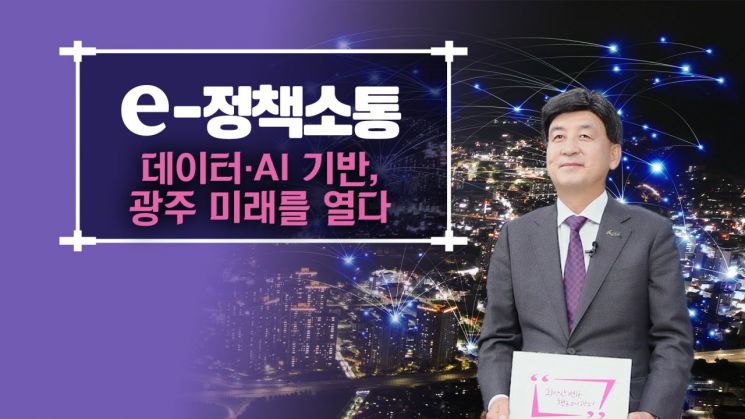 Gwangju City Expands AI and Data-Based Smart City Services Across All Sectors. Courtesy of Gyeonggi Gwangju City.
On November 26, Mayor Bang Sehwan stated through e-policy communication, "AI and data are key urban competitiveness factors that can transform citizens' daily lives," adding, "We will focus all administrative capabilities to create a more convenient and safer city."
Gwangju City is first expanding the introduction of AI-based "smart intersections" in the transportation sector. Smart intersections automatically adjust signals by analyzing real-time traffic flow, reducing stop times and alleviating urban congestion. The collected data is immediately provided to citizens by linking with section detection devices and private navigation apps such as KakaoMap and TMap. The city also plans to establish 14 additional smart intersections and 7 new traffic information CCTV locations next year.
In the safety sector, the expansion of surveillance CCTV equipped with AI video analysis technology is ongoing. Systems that automatically identify abnormal behavior and dangerous situations instantly transmit information to the control center, significantly improving on-site response speed. This year, the city installed 268 new surveillance CCTVs and plans to add 250 more next year to strengthen the smart safety network across the city.
In administrative services, an AI-based civil complaint response system is now fully operational. With the establishment of a 24-hour civil consultation service using chatbots and callbots, the city is seeing qualitative innovation in administration, including the automation of repetitive tasks, improved accessibility for citizens, and enhanced work efficiency for public officials.
Additionally, in accordance with the smart city plan approved by the Ministry of Land, Infrastructure and Transport, the construction of a "Smart City Center" is underway to integrate and manage transportation, surveillance, and fire safety data. Once completed, the center is expected to greatly enhance the efficiency and safety of urban operations management.
Mayor Bang Sehwan emphasized, "Gwangju City is rapidly transforming into an AI-based smart city," and added, "We will continue to pursue innovative services that enhance citizen safety and everyday convenience."
Meanwhile, related policy communications can be found on the official YouTube channel of Gwangju City Hall.
© The Asia Business Daily(www.asiae.co.kr). All rights reserved.
![Clutching a Stolen Dior Bag, Saying "I Hate Being Poor but Real"... The Grotesque Con of a "Human Knockoff" [Slate]](https://cwcontent.asiae.co.kr/asiaresize/183/2026021902243444107_1771435474.jpg)















