Korean Beef Sirloin Surges 38% in One Month
Korean Beef Hit by Reduced Slaughter and Delayed Shipments
U.S. Beef Impacted by Supply Shortages and Rising Exchange Rates
Beef Prices: "Today Is the Cheapest"
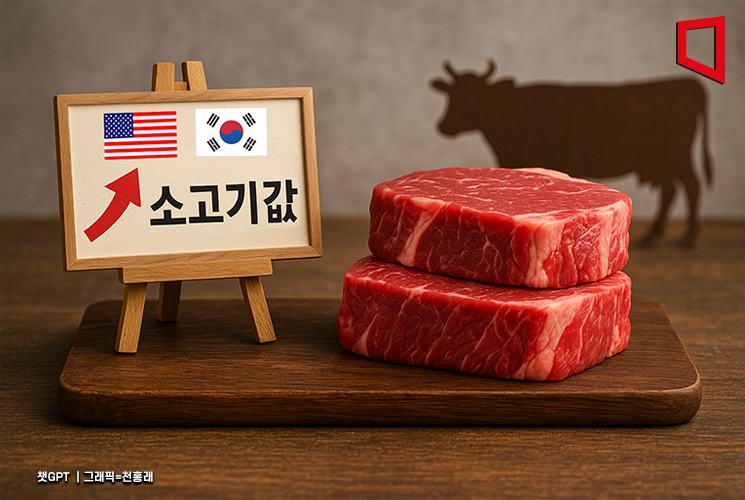
The simultaneous rise in prices of Korean beef and U.S. beef is increasing the financial burden on consumers. The supply of Korean beef has rapidly contracted due to a decrease in the number of cattle raised and slaughtered, compounded by delayed shipments from farms. For U.S. beef, a sharp decline in cattle numbers and the rise in exchange rates are both contributing to stronger prices.
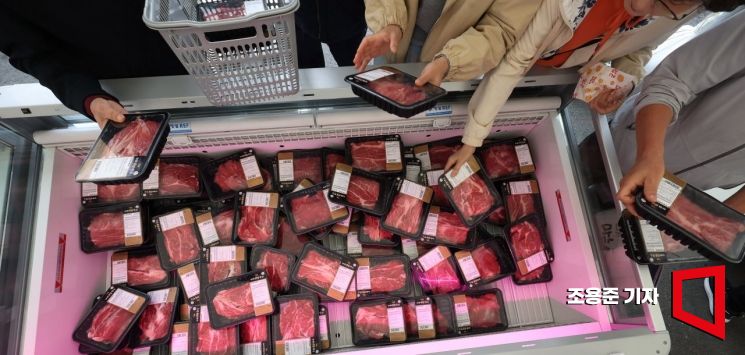
According to the Livestock Products Quality Evaluation Institute on November 27, the price of Korean beef sirloin (grade 1+) as of November 25 was 13,105 won per 100 grams, up 18.67% from the same period last year (11,043 won). Compared to the beginning of this month (9,623 won), it has surged by 38.4%.
The recent increase in Korean beef prices is primarily due to structural factors, namely a reduction in the number of cattle raised and slaughtered, which has led to an overall decrease in supply. Over the past one to two years, the number of calves and breeding cows has declined, shrinking the entire breeding base. As a result, the number of cattle slaughtered has decreased, leading to less beef on the market and pushing prices up from the bottom. Given that it takes more than 30 months for a breeding cow to produce a calf and for that calf to reach slaughter, the supply shortage is unlikely to be resolved in the short term.
Additionally, a temporary supply gap caused by farms adjusting their shipments is also having an impact. More farms are delaying shipments by one to three months in hopes of achieving higher grades and premiums by raising their cattle longer. This is because delaying shipment by one to three months can improve marbling and increase the likelihood of a higher grade, which can result in tens of thousands of won in additional profit per animal if the grade improves by just one level.
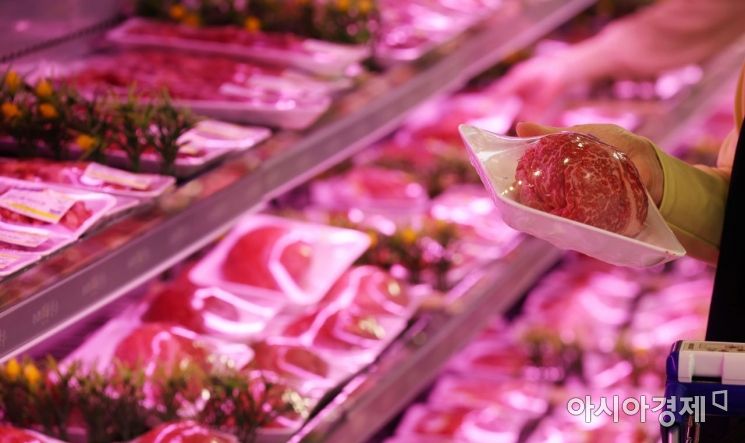
With overall supply shrinking, supply-demand imbalances focused on popular cuts are further driving up perceived prices. When the number of cattle slaughtered decreases, total supply drops, but in the actual market, high-demand cuts such as sirloin, tenderloin, and striploin become scarce first. As a result, even if the average wholesale price rises only 3-5%, prices for popular cuts often increase by more than 10%, leading consumers to feel a much greater impact from price hikes.
As Korean beef prices rise, more consumers are turning to imported beef, but those prices are also increasing. As of November 24, the price of U.S. chilled short ribs was 4,857 won per 100 grams, up 21.8% from the average year (3,988 won), while frozen short ribs were 4,355 won, up 16.6% from the average year (3,734 won).
The rise in U.S. beef prices is also due to a supply shortage, which has dropped to its lowest level in 70 years. As of January this year, the number of cattle raised in the U.S. was about 87.2 million, the lowest since 1951. This is the result of farmers reducing the number of breeding cows and accelerating slaughter due to drought, severe cold, and soaring feed prices. The decrease in cattle numbers has naturally led to fewer animals being slaughtered, pushing local prices in the U.S. to record highs, and these costs are directly reflected in Korea's import prices. In particular, the weakening of the Korean won, with the won-dollar exchange rate rising from the 1,390-won range in early September to the 1,480-won range recently, is acting as an additional factor driving up the price of imported beef.
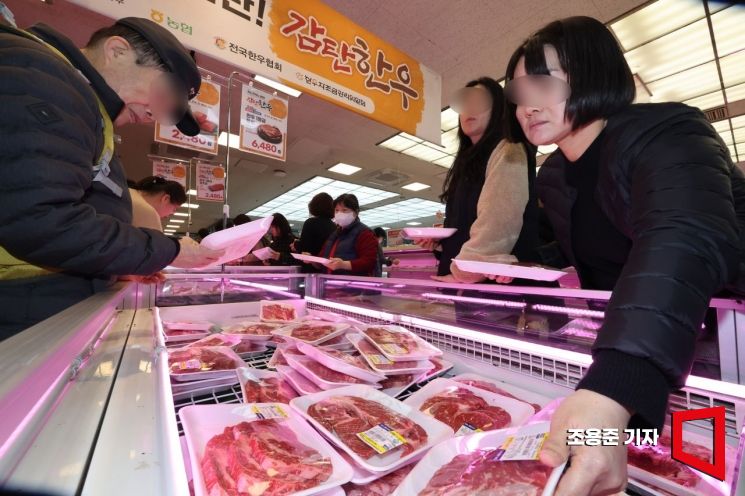
Since the price of Korean beef is fundamentally driven by structural supply reductions, it is expected to remain high for the time being. According to the Korea Rural Economic Institute, the number of Korean cattle slaughtered in the fourth quarter of this year is projected to be 205,000, a 17.5% decrease compared to the same period last year. With supply reductions continuing through the fourth quarter, the total number of cattle slaughtered this year is expected to remain at 929,000, down 6.1% year-on-year. In the medium to long term, the downward trend in slaughter numbers is expected to continue until at least 2028.
However, if consumer sentiment and the economy weaken, demand could fall, which would limit the extent of price increases. Conversely, if there are shocks such as disease outbreaks or a sharp rise in feed prices, there is potential for further price hikes. Additionally, price volatility may be greater for popular cuts, so the perceived price could be higher than the average. For imported beef, considering high local prices, exchange rates, and logistics costs, prices are expected to remain at current levels or rise slightly in the short term, rather than falling.
© The Asia Business Daily(www.asiae.co.kr). All rights reserved.
![Clutching a Stolen Dior Bag, Saying "I Hate Being Poor but Real"... The Grotesque Con of a "Human Knockoff" [Slate]](https://cwcontent.asiae.co.kr/asiaresize/183/2026021902243444107_1771435474.jpg)


















