The conflict between China and Japan, which erupted after Japanese Prime Minister Sanae Takaichi suggested possible "intervention in Taiwan," appears to be spilling over onto the international diplomatic stage.
According to Japanese media outlets such as the Mainichi Shimbun on the 23rd, Fu Cong, China's Permanent Representative to the United Nations, sent a letter to UN Secretary-General Ant?nio Guterres on the 21st criticizing Prime Minister Takaichi. In the letter, he stated that Takaichi "openly challenged China's core interests by expressing ambitions for armed intervention in the Taiwan issue." He also criticized Japan during the annual Security Council reform debate on the 18th, saying, "(Japan) is not qualified to become a permanent member of the Security Council."
On November 7, during the House of Representatives Budget Committee, Prime Minister Takaichi indicated that in the event of a Taiwan contingency, Japan could exercise its collective self-defense rights, stating, "If the use of warships involves the exercise of force, I believe it could constitute a situation threatening our survival." Since then, China has continued its criticism of Japan on the international diplomatic stage.
According to China Central Television (CCTV), Li Song, China's Permanent Representative to International Organizations in Vienna, also expressed concerns about the Takaichi Cabinet's stance on the "Three Non-Nuclear Principles" at the International Atomic Energy Agency (IAEA) Board of Governors meeting on the 21st. He stated, "If Japan attempts to return to the path of militarism, the international community will never forgive it." He also pointed out that Japan is storing a quantity of plutonium far exceeding civilian demand.
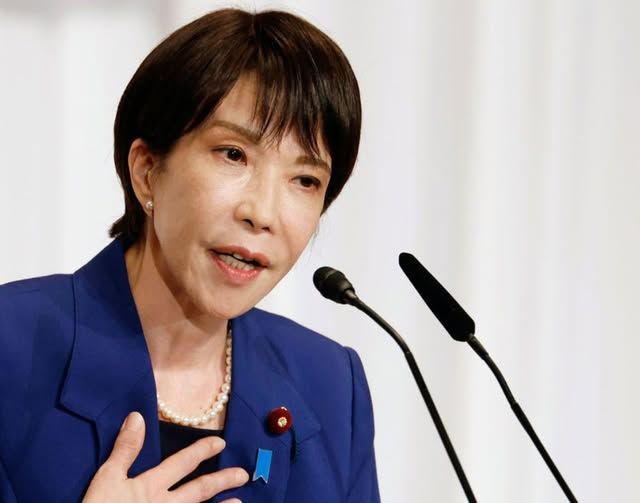
Behind the scenes at the Group of Twenty (G20) summit currently taking place in South Africa, China and Japan are engaged in a subtle diplomatic standoff. The Mainichi Shimbun reported, "After Chinese Premier Li Qiang met with South African President Cyril Ramaphosa, the Chinese Ministry of Foreign Affairs emphasized that South Africa expressed support for China's position on the Taiwan issue," adding, "China appears to be leveraging the G20 stage to showcase support from emerging economies and pressure the Takaichi Cabinet."
It seems unlikely that Prime Minister Takaichi and Premier Li will have direct contact during the G20 summit. According to NHK, during the group photo session, Prime Minister Takaichi was seen greeting President Recep Tayyip Erdogan with a smile and shaking hands with South Korean President Lee Jaemyung, but there was no scene of her approaching Premier Li to converse.
Previously, the Chinese Ministry of Foreign Affairs had demanded that Prime Minister Takaichi retract her related remarks and made it clear in advance that no meeting between Premier Li and Prime Minister Takaichi was scheduled.
© The Asia Business Daily(www.asiae.co.kr). All rights reserved.
![Clutching a Stolen Dior Bag, Saying "I Hate Being Poor but Real"... The Grotesque Con of a "Human Knockoff" [Slate]](https://cwcontent.asiae.co.kr/asiaresize/183/2026021902243444107_1771435474.jpg)















