Hamburger Market to Surpass 5 Trillion Won This Year
Lotteria Set to Return to 1 Trillion Won in Annual Sales
Gimbap Now 10,000 Won... Burgers Available for 5,000?6,000 Won
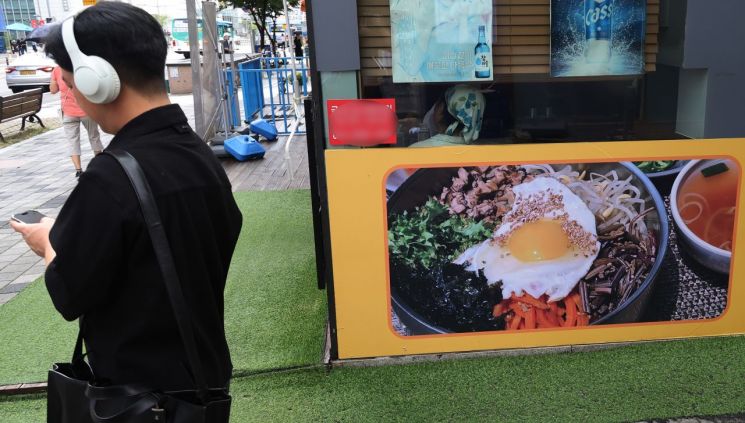
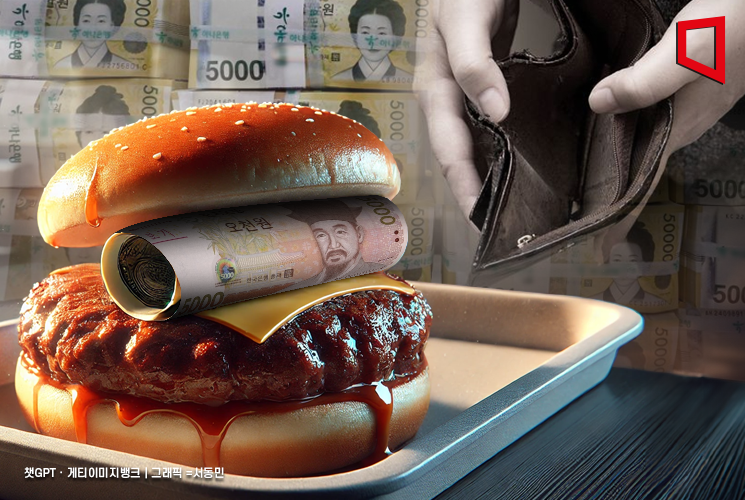
As the prices of major dining-out menu items such as naengmyeon and bibimbap have soared well above 10,000 won, office workers' lunch options are rapidly being reshaped. Amid rising restaurant prices, hamburgers-which have managed to keep prices relatively stable-are regaining attention as a "cost-effective lunch" option. With meals available in the 5,000 to 7,000 won range, and the expansion of premium menu offerings, the domestic hamburger market is expected to surpass 5 trillion won for the first time this year.
 As of last October, the average prices were 12,423 won for naengmyeon, 11,577 won for bibimbap, 20,673 won for samgyeopsal, and 18,000 won for samgyetang, with most items increasing by 4 to 6% over the past year.
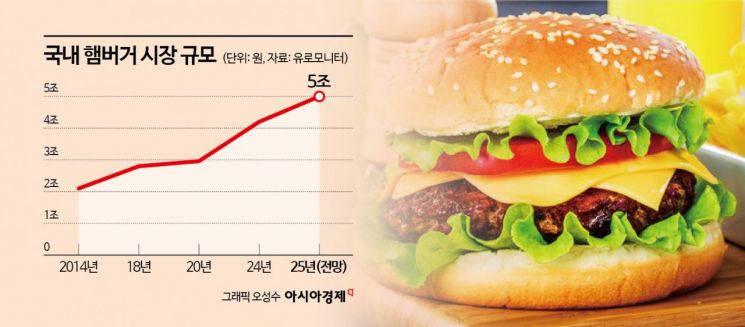
According to global market research firm Euromonitor on November 24, the domestic hamburger market nearly doubled over the past decade, growing from 2.1 trillion won in 2014 to 4.2 trillion won in 2024. This year, the market is likely to exceed 5 trillion won. Major brands such as Lotteria, Burger King, McDonald's, and Mom's Touch are maintaining price competitiveness while strengthening their "dining-out alternative" strategies with new menu items featuring handmade burgers, premium cheeses, and local specialties.
Lotte GRS, which operates Lotteria, is on the verge of rejoining the "1 trillion won sales club" for the first time in eight years since 2017. Last year, the company recorded sales of 995.4 billion won, and the company stated, "We expect to surpass 1 trillion won in sales by next month."
Hamburgers Emerge as 'Cost-Effective Lunch' Amid Rising Restaurant Prices
Experts interpret the growth of the hamburger market not as a simple trend but as a result of changing consumption patterns. Lee Chaerin, Deputy Director of the Economic Research Team at the Bank of Korea, noted in the report "Changes in the Profit Structure of the Restaurant Industry and Implications" that "since the COVID-19 pandemic, consumer culture has shifted from group and event-driven consumption to individual preference-oriented consumption," adding, "As the burden of dining-out costs grows, more people are replacing meals with convenience foods and low-priced menu items."
The burden of dining-out costs is also having a direct impact on the restaurant industry structure. According to "OpenUp," a commercial big data platform by fintech company Finda, 176,258 out of 818,867 domestic restaurants closed last year. This represents a closure rate of 21.52%, meaning one out of every five restaurants shut down. The number of closures last year was 82% higher than in 2020 (96,530 closures), when the impact of COVID-19 was significant.
Rising ingredient costs, labor costs, and rent are simultaneously pushing small business owners to the limit in terms of expenses. In addition, with growing economic uncertainty, consumers are reducing the frequency of dining out and increasingly prioritizing "value for money" when making choices.
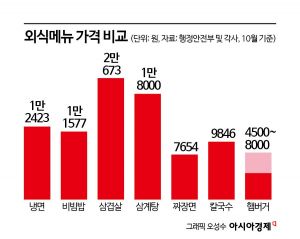
The upward trend in dining-out prices has continued. According to data from the Ministry of the Interior and Safety, as of last October, the average prices were 12,423 won for naengmyeon, 11,577 won for bibimbap, 20,673 won for samgyeopsal, and 18,000 won for samgyetang, with most items rising by 4 to 6% over the past year. So-called "everyday menu" items such as gimbap (3,646 won), kalguksu (9,846 won), and kimchi jjigae set meals (8,577 won) are no exception. At snack bars in Seoul's Gangnam district, a single roll of gimbap costs between 7,000 and 10,000 won.
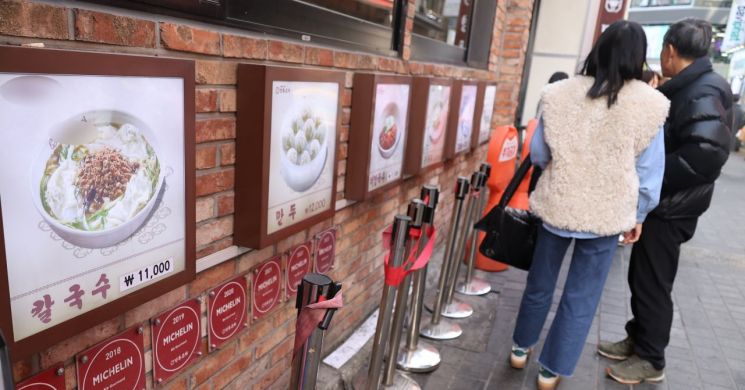 As the prices of major dining-out menu items exceed 10,000 won by a wide margin, office workers' lunch options are rapidly being reshaped.
At well-known restaurants, the prices for Pyongyang naengmyeon and kongguksu have also risen to 16,000 won each, and at a restaurant in Seoul's Jongno district, samgyetang has reached 20,000 won. In contrast, hamburgers are priced between 4,000 and 9,000 won, and during lunchtime discounts, a hamburger, fries, and drink set can be purchased for 5,000 to 6,000 won.
An industry insider commented, "Hamburgers offer a wide range of price options, including single items, sets, and coupons, which helps reduce the financial burden for consumers," adding, "Among office workers, hamburgers have become established as a rational lunch alternative that is both quick and satisfying."
Burger Brand Customers Increase by 7%
Industry analysis shows that the number of customers at burger brands continues to rise. In the third quarter, the top six burger franchises-Lotteria, Burger King, McDonald's, KFC, Mom's Touch, and Subway-saw a 7% increase in customer numbers compared to the same period last year. In contrast, chicken franchises saw a 5% decline during the same period. More than 60% of burger consumers are in their 20s and 30s.
Average sales per 3.3 square meters have also increased. For Burger King, operated by BKR, the average franchise sales per unit area reached 16.11 million won last year, up from 15.99 million won the previous year. Mom's Touch also saw an 8% increase, from 17.92 million won to 19.49 million won.
A representative from the hamburger industry stated, "The number of consumers choosing hamburgers as a meal replacement continues to grow," adding, "The emergence of premium brands is expanding the overall market size rather than cannibalizing the existing market." The representative continued, "With the expansion of premiumization strategies such as collaborations with famous chefs and the introduction of premium ingredients, hamburgers are being reevaluated as a dining-out alternative beyond just fast food."
© The Asia Business Daily(www.asiae.co.kr). All rights reserved.
![Clutching a Stolen Dior Bag, Saying "I Hate Being Poor but Real"... The Grotesque Con of a "Human Knockoff" [Slate]](https://cwcontent.asiae.co.kr/asiaresize/183/2026021902243444107_1771435474.jpg)

















