Reuters reported on the 19th (local time), citing multiple sources, that there is a high possibility the Trump administration in the United States will delay the imposition of tariffs on semiconductors.
According to these sources, officials from the Trump administration have recently informed government and private industry stakeholders that the imposition of semiconductor tariffs may not happen soon.
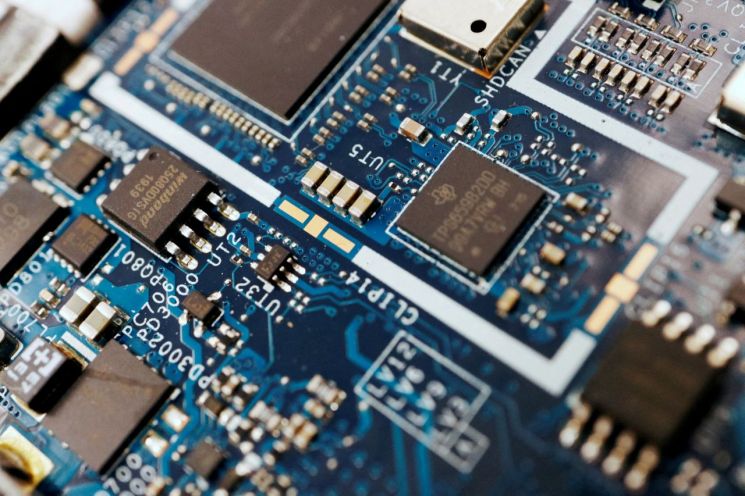
Previously, on August 6, President Trump stated, "We will impose about a 100% tariff on semiconductors," adding that "all integrated circuits (chips) and semiconductors entering the United States" would be subject to the tariffs. On August 15, he further announced, "We will set semiconductor tariffs next week." However, more than three months have passed since then, and the Trump administration has not yet announced tariffs in the semiconductor sector.
Reuters noted that this shift in stance is due to concerns about provoking China and worries over inflation.
Multiple sources explained that the Trump administration is taking a cautious approach to semiconductor tariffs to avoid provoking China. There are concerns that reigniting the currently paused U.S.-China trade war could prompt China to use rare earth export controls as leverage.
In addition, the administration appears to be considering the potential for increased inflationary pressure ahead of the year-end holiday shopping season in the United States if semiconductor tariffs are introduced. Raising semiconductor tariffs could lead to higher prices across a wide range of electronic devices, from refrigerators to smartphones.
Some analysts point out that inflation played a role in the Republican Party's defeat in local elections held in several states on the 4th, as well as in President Trump's recent decline in approval ratings.
However, the White House and the Department of Commerce maintain that there has been no change in government policy regarding semiconductor tariffs.
Kush Desai, Deputy White House Press Secretary, stated, "The Trump administration is committed to using all executive authority to bring back manufacturing essential to national and economic security to the United States," adding, "Any reports to the contrary based on anonymous sources are fake news."
An official from the Department of Commerce also said, "There is no change in the Commerce Department's policy regarding Section 232 tariffs on semiconductors."
However, neither provided any comment on when the semiconductor tariffs might be implemented.
According to sources, no decision regarding semiconductor tariffs is final until the administration gives its approval, and triple-digit tariffs could be imposed at any time.
Meanwhile, the recently released U.S.-Korea summit joint fact sheet stated that, in the case of U.S. tariffs on Korean semiconductors, the United States will not treat Korea less favorably than any other country with which it concludes future agreements. However, the comparison is limited to countries whose semiconductor trade volume with the United States is equal to or greater than that of Korea.
© The Asia Business Daily(www.asiae.co.kr). All rights reserved.
![Clutching a Stolen Dior Bag, Saying "I Hate Being Poor but Real"... The Grotesque Con of a "Human Knockoff" [Slate]](https://cwcontent.asiae.co.kr/asiaresize/183/2026021902243444107_1771435474.jpg)















