A Total of 9.85 km Developed Across Recreational Forests and Parks
Ten More Sections to Be Added by 2026
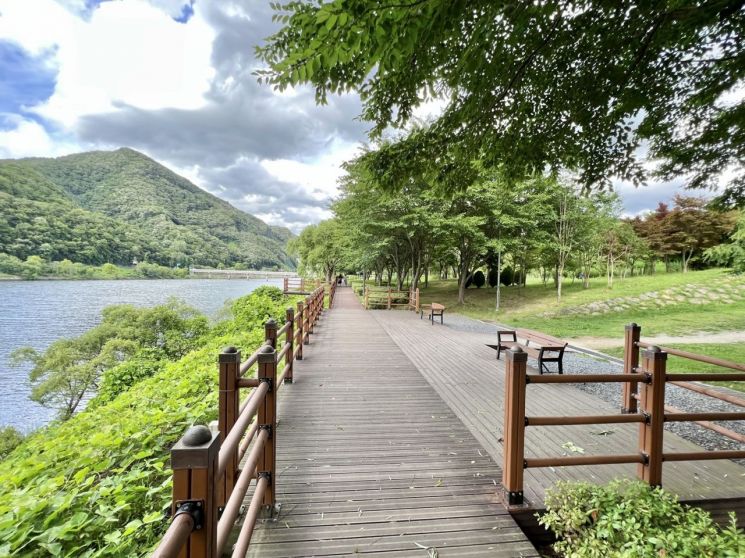
Daejeon City has completed seven sections of the “Barrier-Free Sharing Trail,” designed so that all citizens, including people with disabilities, the elderly, pregnant women, and children-those with walking difficulties-can enjoy them easily and safely.
The total length is approximately 9.85 kilometers, and the city plans to add three more sections by 2026, bringing the total to ten.
The Barrier-Free Sharing Trail organically connects forests, parks, lakes, and recreational forests throughout the city, including Daechung Lake Shore, Dunsan-daero, Gubong District, Namsun Park, and Maninsan Recreational Forest.
Featuring decked paths, rest areas, and seasonal flower beds, this trail has become not only a comfortable walking path for everyone but also a leading example of Daejeon’s green welfare infrastructure in daily life.
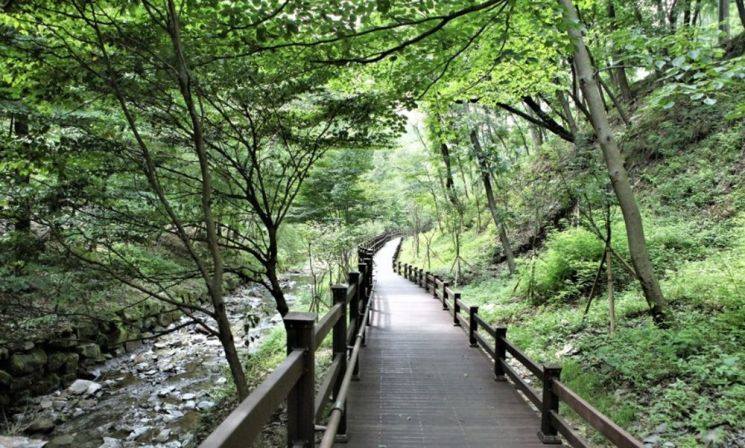
In particular, the Daechung Lake Shore section of the Barrier-Free Sharing Trail is renowned for its hydrangea path along the decked walkway, set against the backdrop of the blue lake and lush forest. It has become a beloved spot where citizens can fully enjoy healing in nature. With ever-changing scenery throughout the four seasons, it offers a unique walking experience for people of all ages.
Building on these achievements, the city is currently expanding the trail this year in two additional areas: Seo-gu Doan Neighborhood Park (4.1 km) and Jung-gu Sanseo Sports Park (0.7 km). This project, with a total budget of 2.8 billion won, is being promoted using both city and district funds, as well as green funds (lottery funds) from the Korea Forest Service and the Korea Forest Welfare Institute.
The “Green Fund” is a fund created from lottery proceeds purchased by the public, operated to support forest welfare and green welfare projects that all citizens can enjoy.
Through this initiative, Daejeon City aims to improve accessibility so that citizens can more conveniently enjoy forests within their daily living areas, and to transform green resources that were previously difficult to access due to topographical constraints into spaces that everyone can enjoy. At the same time, the city plans to restore fragmented green corridors and establish a safe and pleasant healing network, thereby raising the overall level of green welfare throughout the city.
Meanwhile, for the 2026 Green Fund project by the Korea Forest Welfare Institute, the Bangdong Riverside Leisure Forest in Yuseong-gu (2 km, 1.6 billion won) has been newly selected, further expanding the foundation for green welfare in Daejeon.
The Bangdong Riverside Leisure Forest will be developed as a barrier-free sharing trail connecting Yoonseul Street and the Musical Fountain Plaza, set against the beautiful natural environment of the Bangdong Reservoir. Through this project, the existing “viewing-oriented space” of the riverside trail will be reborn as an open healing forest that all citizens can freely enjoy.
The trail will feature a gentle average slope of 5% and convenient facilities, and will be linked with programs for forest healing, forest experiences, and education, creating an inclusive natural cultural space where citizens can enjoy health, leisure, and learning together.
Park Youngcheol, Director of Greenery, Agriculture, and Life at Daejeon City, said, “The Barrier-Free Sharing Trail is a path where all citizens can walk and rest together. It is more than just a walking trail-it is a project that elevates the level of green welfare in Daejeon. We will do our best to add vitality to citizens’ daily lives through the scents of nature along the forest trails.”
© The Asia Business Daily(www.asiae.co.kr). All rights reserved.
![Clutching a Stolen Dior Bag, Saying "I Hate Being Poor but Real"... The Grotesque Con of a "Human Knockoff" [Slate]](https://cwcontent.asiae.co.kr/asiaresize/183/2026021902243444107_1771435474.jpg)
















