Goldman Sachs: "More Similar to 1997 Than 1999"
Nvidia's Earnings Report on the 20th Marks a Turning Point
The debate over the artificial intelligence (AI) bubble is in full swing. Whenever warnings about an AI bubble emerge in the U.S. stock market, Asian markets have experienced deeper declines. Last week, Goldman Sachs presented five criteria to assess the existence of an AI bubble.
On November 18, Hana Securities introduced Goldman Sachs' analysis in its report, "A Closer Look at Goldman Sachs' AI Bubble Diagnosis," stating, "Goldman Sachs believes that while warning signs of an AI bubble collapse are accumulating, the current situation is more similar to 1997 than to the peak of the IT bubble in 1999."
Five 'AI Bubble Detection' Indicators Presented by Goldman Sachs
Goldman Sachs outlined five indicators, emphasizing that when these indicators reach their peak, it could signal the collapse of the AI bubble. Hana Securities reviewed these five criteria from the perspective that the market is still in the early stages of an upward trend amid a paradigm shift.
The first indicator is corporate capital investment. Just before the IT bubble, capital investment was close to 15% of the U.S. gross domestic product (GDP), but it currently stands at 13.8%. The contribution of capital investment to GDP growth was 2% before the IT bubble, whereas it is now 1%. There is still room for capital investment to contribute to growth.
Second, companies are generating profits. The average net profit margin of S&P 500 companies in the U.S. is 13.5%, which exceeds the historical average of 12.7%.
Third, companies are managing their debt well. While debt growth exceeded 10% before the IT bubble, it is now contained within the 2% range. Although the corporate debt-to-GDP ratio is rising on average among G20 countries, it continues to decline in the U.S.
Fourth, the Federal Reserve is pursuing an accommodative monetary policy. In contrast to the period before the IT bubble, when repeated rate hikes and cuts led to higher interest rates, the current environment is characterized by rate cuts. Even if the Federal Reserve decides to hold rates steady in December, the trend of rate cuts is expected to continue next year.
Fifth, credit spreads (the difference between government and corporate bond yields) remain stable. Before the IT bubble, the credit spread widened rapidly, triggering a crisis. Currently, the U.S. high-yield spread is 3.2%. Although the recent increase has been significant, it remains low compared to the 12% seen during past crises.
Kim Dooun, an analyst at Hana Securities, stated, "The stock market is like a flower that blooms amid volatility. The more it wavers, the greater the opportunity for those who maintain their balance," emphasizing that "it is still too early to talk about an AI bubble."
However, There Are Bubble Hints in the Goldman Sachs Report
Contrary to Hana Securities' optimistic interpretation, the Goldman Sachs report, while presenting the five criteria, also reflects market concerns throughout.
First, the increase in the market capitalization of AI-related companies far exceeds the present discounted value (PDV) of actual capital income, meaning valuations are outpacing core economic fundamentals. This suggests that the current AI market is moving beyond a phase of mere technological innovation and entering a speculative overheating stage. However, the Goldman Sachs report also notes that "it is not yet at the level of the bubble just before the dot-com collapse."
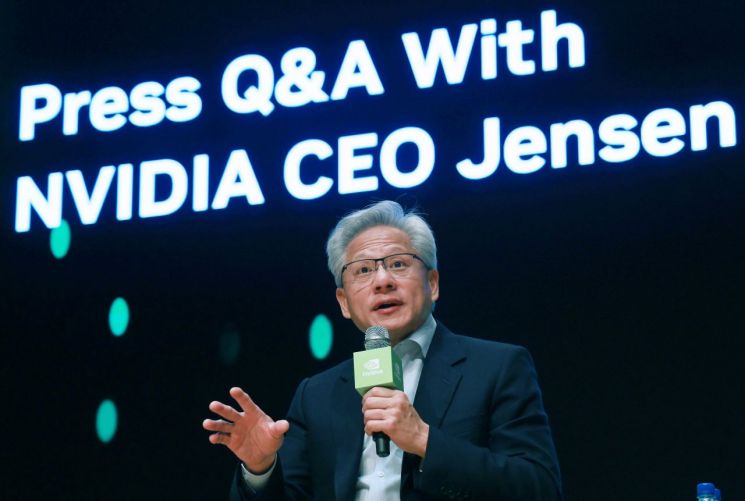
Second, AI-related companies are beginning to prioritize growth and market share over profitability, resulting in increasingly unstable financial structures. If profits decrease or losses mount, investor confidence could erode and financing conditions may deteriorate. Ultimately, this could amplify excessive concerns about AI companies in the stock market, increasing the risk of a bubble collapse. In this regard, Hana Securities explained, "The upcoming earnings announcement by Nvidia, the last of the Magnificent 7 to report (scheduled for November 20, Korea time), is expected to ease concerns about AI capital investment."
© The Asia Business Daily(www.asiae.co.kr). All rights reserved.
![Clutching a Stolen Dior Bag, Saying "I Hate Being Poor but Real"... The Grotesque Con of a "Human Knockoff" [Slate]](https://cwcontent.asiae.co.kr/asiaresize/183/2026021902243444107_1771435474.jpg)
















