China Surpasses Korea in Price, Technology, and Workforce Competitiveness
Minimizing External Risks and Easing Regulations Needed
It has been projected that the corporate competitiveness of Korea’s top 10 export-leading industries will fall behind China in all sectors within five years. There are calls for the government to focus on minimizing external risks and to enhance efficiency through regulatory easing.
The Korea Economic Research Institute announced on the 17th that this result emerged from its “Competitiveness Status and Outlook Survey for Korea, the US, Japan, and China,” conducted among the top 1,000 companies by sales in the 10 leading export industries (with 200 companies responding). The 10 major export industries, based on the Ministry of Trade, Industry and Energy’s export-import trend survey, include semiconductors, displays, electrical and electronic products (such as home appliances), automobiles and parts, general machinery, ships, secondary batteries, petrochemicals, and biohealth.
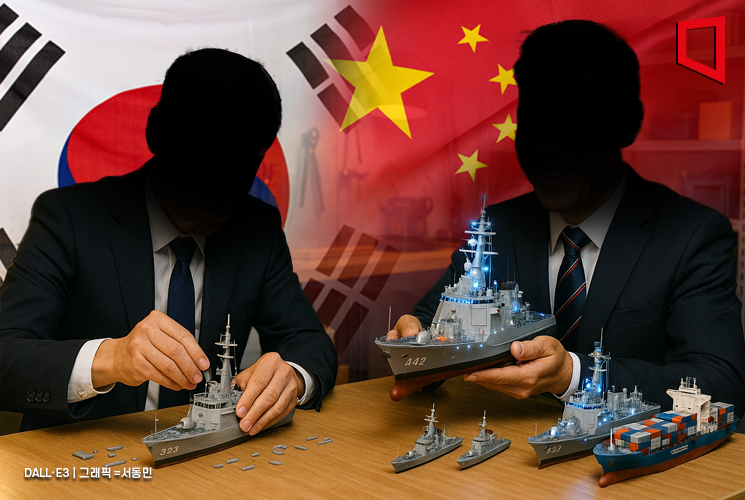
According to the survey, 6 out of 10 companies (62.5%) identified China as their biggest export competitor. The United States (22.5%) and Japan (9.5%) followed. When asked about the top competitor in 2030, China (68.5%) was followed by the United States (22.0%) and Japan (5.0%), with only China’s share increasing. This suggests that export competition with China will become even fiercer in the future.
Assuming Korea’s corporate competitiveness as “100,” respondents assessed the current levels of competitors as follows: United States 107.2, China 102.2, and Japan 93.5. For 2030, the projections were United States 112.9, China 112.3, and Japan 95.0. This indicates that Korea is already lagging behind the United States and China, and the gap is expected to widen even further in five years.
When comparing competitiveness by industry, China currently surpasses Korea in five sectors: steel (112.7), general machinery (108.5), secondary batteries (108.4), displays (106.4), and automobiles and parts (102.4). On the other hand, Korea still leads in semiconductors (99.3), electrical and electronic products (99.0), ships (96.7), petrochemicals (96.5), and biohealth (89.2). However, when asked about competitiveness in 2030, it was projected that China would surpass Korea in all 10 key export industries.
When comparing corporate competitiveness by field, China was found to have an advantage over Korea in areas such as price competitiveness and productivity. Among companies that identified China as their top competitor, China’s competitiveness relative to Korea in 2025 was assessed as follows: price competitiveness (130.7), productivity (120.8), government support (112.6), skilled workforce (102.0), core technology (101.8), and product brand (96.7). By 2030, China is projected to surpass Korea in all areas: price competitiveness (130.8), productivity (123.8), government support (115.1), skilled workforce (112.4), core technology (111.4), and product brand (106.5).
The Korea Economic Research Institute expressed concern over these findings, stating, “Currently, Korea holds a comparative advantage over China only in ‘product brand’ among the six fields, but even this is expected to be overtaken by China within five years.”
Companies cited weakening domestic product competitiveness (21.9%) and increasing external risks (20.4%) as the main obstacles to enhancing competitiveness. Other major concerns included sluggish domestic demand due to population decline (19.6%), shortages of skilled personnel in core technologies such as artificial intelligence (18.5%), and underdeveloped labor markets and corporate legal systems compared to competitor countries (11.3%).
© The Asia Business Daily(www.asiae.co.kr). All rights reserved.

















