Paju Restores Water Supply at 11 a.m. on the 16th
Controversy Over K-water's Lack of Notification and Unilateral Valve Shutdown
Apartment Water Tank Inspections to Take About a Week
City Apologizes for Inconvenience, Vows Preventive Measure
On November 16 at 11:00 a.m., the city of Paju, Gyeonggi Province, announced that the water supply had been fully restored to all areas of Paju, including Gyoha-dong, Unjeong-dong, Yadang-dong, Sangjiseok-dong, Geumchon-dong, and Jori-eup, which had previously experienced a large-scale water outage.
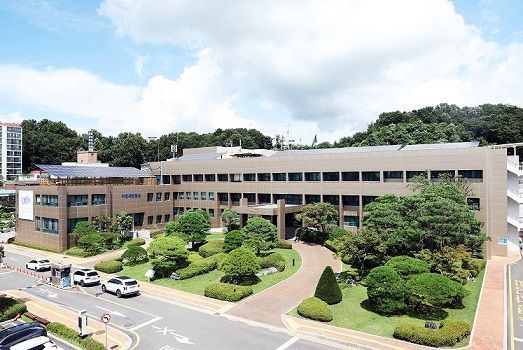
This marks the resumption of tap water supply 46 hours after the first-ever large-scale water outage in Paju’s history. The city stated that the water quality currently being supplied from the Gyoha and Wollong reservoirs is suitable, but as a precaution, water quality inspections will be conducted at major points in the water supply network and in apartment water tanks starting November 16. These inspections will be completed within a week, and the results will be communicated to the public.
The city explained that the restoration was made possible because repairs to the leaking regional water supply pipeline were completed at 1:00 a.m. on November 15. From that point, water began to be supplied to the Gyoha and Wollong reservoirs. However, it took considerable time to fill the 32,800-ton Gyoha reservoir and the 27,500-ton Wollong reservoir. The Wollong reservoir was sufficiently filled to supply water to households by 6:30 a.m. on November 15, and the Gyoha reservoir reached that point at 7:18 a.m. From then on, water supply to households began sequentially, starting with areas closest to the reservoirs.
However, in the case of apartment complexes, the process of filling apartment water tanks took additional time, resulting in delayed water supply to individual households and to areas farther from the reservoirs, according to the city.
The city also explained that, regarding the delayed notification to citizens about the initial water outage, Korea Water Resources Corporation (K-water) was aware of the leak in the regional water supply pipeline but did not notify Paju City. Instead, K-water unilaterally shut off the water supply valve, leaving no time to fill the reservoirs. The city requested that the valve be kept open at least until the reservoirs were filled to maintain water supply without an outage, but this request was not honored.
This large-scale water outage began at around 6:30 a.m. on November 14, when a leak occurred in a 1,000mm main transmission pipeline supplying water to the Gyoha and Wollong reservoirs in Paju. The leak happened during the "Fourth Water Supply System Adjustment Project for the Lower Han River Region" being carried out by Korea Water Resources Corporation in Deogi-dong, Ilsanseo-gu, Goyang City.
However, it was revealed that Korea Water Resources Corporation became aware of the incident internally at around 7:00 a.m. on the day of the accident and unilaterally shut off the water supply valve from the Goyang water purification plant to the Gyoha and Wollong reservoirs at 8:00 a.m., without notifying Paju City. In fact, Paju City only learned of the incident at 9:50 a.m. that day, when the Han River Basin Environmental Office contacted them by phone to ask, "There was a leak at the construction site in Goyang City; what is the current situation?"
As a result, the city immediately contacted Korea Water Resources Corporation to confirm the details of the incident and whether the valve had been operated, and requested related documentation. However, the initial report provided by Korea Water Resources Corporation only stated that there had been a "simple leak as of 8:00 a.m." and did not mention the unilateral and complete shutdown of the supply valve to Paju City.
Immediately after being contacted by the Environmental Office, Paju City checked the water levels at the Gyoha and Wollong reservoirs and confirmed that there was only enough water left for minimal household supply. The city determined that Korea Water Resources Corporation had shut off the supply valve to Paju City without prior consultation.
In response, Paju City officially requested that "the valve be opened to fill the reservoirs first, then temporarily suspend supply again to carry out repairs," in order to minimize inconvenience to residents. However, Korea Water Resources Corporation did not accept this request. As a result, the reservoir water levels quickly dropped to the bottom, and after analyzing the water levels and flow rates, the city determined that a water outage was inevitable. At 12:24 p.m., a water outage notice and disaster safety message were sent out. The water outage began at approximately 1:00 p.m. on November 14.
Regarding this incident, the city explained that citizens have been asking, "If the accident occurred at 6:30 a.m., why did Paju City only issue a water outage notice at 12:30 p.m.?" The city stated that the situation was the result of a combination of structural issues: the lack of notification from Korea Water Resources Corporation about the accident, and the failure to implement the city's requests. Paju City only learned about the incident more than three hours late, and not from Korea Water Resources Corporation but from the Environmental Office. The city's proposed "fill first, then repair" plan to minimize damage was not implemented, so the water outage notice was issued as soon as the reservoir levels reached the bottom and an actual outage became certain.
Upon recognizing the incident, Paju City immediately activated emergency water supply measures, including operating water tankers and distributing bottled water, as well as running an emergency situation room, monitoring reservoir water levels and pressure, and establishing a joint response system with Korea Water Resources Corporation. While water supply has now been normalized throughout Paju, the city is conducting emergency water quality inspections on major pipelines due to concerns about possible temporary turbidity caused by changes in pressure and flow velocity during the resumption of supply. After full normalization, water quality inspections will also be conducted on apartment water tanks, and the results will be communicated to residents.
Park Juntae, Director of Environmental Affairs, said, "We deeply apologize for the great inconvenience caused to citizens and for not being able to provide real-time updates on the restoration process in the early stages as we focused all efforts on recovery. Moving forward, we will strongly pursue all administrative and technical measures to prevent recurrence, including improving the accident notification system, strengthening prior consultation procedures with local governments when operating valves, ensuring water quality safety, and enhancing public communication systems."
© The Asia Business Daily(www.asiae.co.kr). All rights reserved.
![Clutching a Stolen Dior Bag, Saying "I Hate Being Poor but Real"... The Grotesque Con of a "Human Knockoff" [Slate]](https://cwcontent.asiae.co.kr/asiaresize/183/2026021902243444107_1771435474.jpg)















