Response to Medicaid Cuts... Expected to Raise $100 Billion
Opposition from Governor Newsom Amid Controversy Over Wealthy Relocation
In California, USA, a proposal has been raised to impose a one-time "wealth tax" on billionaires. This measure comes in response to the Trump administration's cuts to Medicaid (health insurance for low-income individuals) due to fiscal constraints.
The Wall Street Journal (WSJ) reported on the 13th (local time) that the Service Employees International Union (SEIU) United Healthcare Workers West (SEIU-UHW), a healthcare union, has submitted a ballot initiative that would impose a one-time tax of 5% on the assets of California residents whose net worth exceeds 1 billion dollars (approximately 1.46 trillion won).
The union argues that, if the bill is implemented, it could secure approximately 100 billion dollars in tax revenue, filling the gap created by federal budget cuts. The proposed wealth tax would target most assets, including stocks, bonds, artwork, intellectual property, and vehicles, but would exclude real estate. The tax would apply to California residents as of January 1, 2026, with payment allowed in five annual installments.
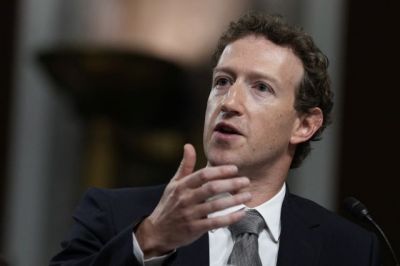 Billionaire Mark Zuckerberg, CEO of Meta, living in the affluent Crescent Park neighborhood in Palo Alto, California, USA. Photo by Yonhap News
California is home to the largest number of billionaires in the United States. Asset management firm Altrata estimates that more than 220 billionaires, about 22% of all U.S. billionaires, reside in the state. Emmanuel Saez, an economist at UC Berkeley, described the proposal as "the world's first experiment with a net wealth tax directly targeting the ultra-wealthy."
Recently, some regions in the United States have seen moves to increase taxes on high-income earners. Zohran Mamdani, Mayor of New York City, has proposed an additional 2% tax on those with annual incomes exceeding 1 million dollars, and Massachusetts has already implemented a similar 4% surcharge. However, analysts note that California's proposal is more aggressive, as it targets total net assets rather than just income.
To be placed on the ballot, the initiative requires signatures from approximately 875,000 residents, with the signature campaign set to begin in January next year. However, the WSJ assessed the likelihood of passage as low, citing the high possibility that the wealthy may relocate out of state. There are concerns that the wealth tax could face practical obstacles and ultimately fail.
Matt Mahan, the Democratic Mayor of San Jose, pointed out that "more than one-third of the state's tax revenue relies on the top 1% of income earners," warning that increased taxation could actually drive away the tax base. The office of Democratic Governor Gavin Newsom has also formed an opposition PAC (Political Action Committee), calling the wealth tax "a dangerous attempt to tax virtually all assets."
© The Asia Business Daily(www.asiae.co.kr). All rights reserved.
![Clutching a Stolen Dior Bag, Saying "I Hate Being Poor but Real"... The Grotesque Con of a "Human Knockoff" [Slate]](https://cwcontent.asiae.co.kr/asiaresize/183/2026021902243444107_1771435474.jpg)















