Blue-Furred Dogs Spark Controversy Last Month
Ukrainian Authorities Clarify: "Spray Used as Neutering Marker"
The controversy surrounding the "blue-furred wild dog," which was discovered near the Chernobyl nuclear power plant in Ukraine and sparked speculation about possible radioactive mutations, has been resolved for now.
According to reports from international media outlets such as the Daily Mail and the New York Post, Ukrainian environmental authorities recently explained that the blue color on the wild dog was simply due to spray paint used as a neutering marker.
The controversy began when the Chernobyl stray dog protection group, Clean Futures Fund (Dogs of Chernobyl), released a photo last month via social media. The organization cares for about 700 dogs within the exclusion zone.
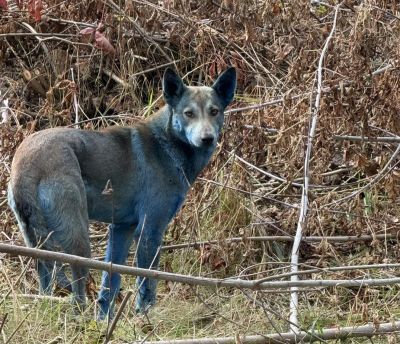 A blue-furred wild dog found near the Chernobyl nuclear power plant in Ukraine. Clean Futures Fund Instagram
The organization stated, "During a recent capture operation, we identified three dogs whose entire bodies appeared blue," adding, "The exact cause is unknown, but there is a possibility of chemical exposure." The mystery deepened as local residents testified that "just a week ago, the dogs' fur color was normal."
After the photo was released, some foreign media outlets alluded to the possibility of radioactive mutations, recalling the Chernobyl disaster. There were even claims that the organization had dyed the dogs or manipulated the photos, but the group refuted these allegations, stating, "We have neither the reason nor the time for that," and released additional photos.
As the controversy spread, the Chernobyl environmental monitoring agency, EcoCenter, issued an official statement clarifying, "These dogs have no connection to radiation." They explained, "The Ukrainian government simply used blue spray paint to distinguish dogs that have undergone neutering surgery."
The Chernobyl nuclear disaster occurred on April 26, 1986, at the Chernobyl nuclear power plant, located 130 kilometers south of Kyiv in the former Soviet Union (now Ukraine). The accident resulted in the release of 53 quadrillion becquerels (Bq) of radiation, which is about ten times the amount released during the Fukushima nuclear disaster in 2011. As a result, hundreds of thousands of people suffered from radiation exposure and its aftereffects, with many either dying or being injured.
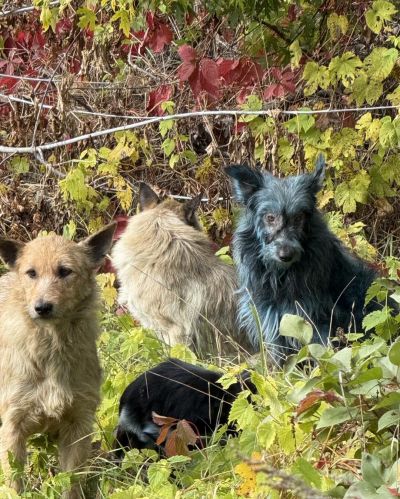 A blue-furred wild dog found near the Chernobyl nuclear power plant in Ukraine. Clean Futures Fund Instagram
Although all residents evacuated at the time of the accident, the descendants of the pets they left behind have continued to live in the wild. Scientists have focused on these dogs, studying genetic changes as they have survived for generations in a highly radioactive environment.
In a 2023 paper, a research team led by Elaine Ostrander, Senior Investigator at the U.S. National Human Genome Research Institute, revealed that the Chernobyl dogs have formed an independent population that has not mixed with outside groups. The team collected blood samples and analyzed the dogs’ genes, confirming that the dogs living around the Chernobyl plant are genetically distinct from those in residential areas such as Slavutych.
This proves that the abandoned dogs near the power plant survived by breeding among themselves without mixing with outside dogs. However, it has been confirmed that the recent case of the blue-furred dogs is not directly related to these genetic studies.
© The Asia Business Daily(www.asiae.co.kr). All rights reserved.


















