Recently, efforts to attract general hospitals in the Seoul metropolitan area have been gaining momentum. In particular, Paju City in Gyeonggi Province is scheduled to hold a bid this month to attract the "Unjeong General Hospital" (tentative name), raising expectations for an increase in regional value through the expansion of medical infrastructure.
Additionally, following the government's "October 15 Real Estate Policy," there has been a trend of genuine homebuyers moving to non-regulated areas to avoid regulated zones. Paju, as one of these non-regulated areas, is recognized as a region with a clear trend of transactions driven by actual demand.
Paju City plans to hold a bid this month to attract a university hospital-level "Unjeong General Hospital" (tentative name) within the Paju Medical Cluster.
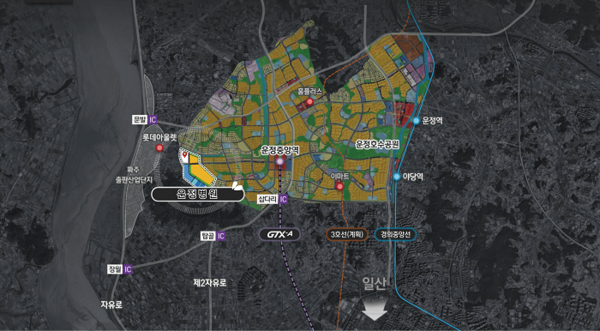
The Paju Medical Cluster is a large-scale project that will combine 3,250 residential units, a general hospital, and an innovative medical and bio-convergence complex. It is a core initiative aimed at transforming the northwestern part of the Seoul metropolitan area into a major medical hub. Paju City has already secured approximately 40,000 square meters of land for the hospital and completed the necessary permits and financial arrangements. The city is currently pursuing the following timeline: hospital bid in 2025, business agreement in 2026, and opening in 2032.
With the push for Unjeong General Hospital and the added non-regulation premium, the real estate market in Paju is heating up. Since the government's "October 15 Real Estate Policy," Paju has emerged as a focal point for the positive effects of being a non-regulated area. While transactions in major cities of the metropolitan area under regulation have slowed, Paju has seen a clear increase in transaction volume, strengthening its market trend centered on genuine demand.
According to an analysis of data from the Ministry of Land, Infrastructure and Transport's actual transaction price disclosure system, apartment transactions in Paju increased from 86 cases between October 1 and 14 to 124 cases between October 20 and 31, representing an increase of about 44.2%. This is seen as a result of the combined effects of the non-regulation premium and inflow of genuine buyers, as well as the excellent accessibility to Seoul via GTX-A Unjeong Jungang Station and the positive outlook for the development of the Medical Cluster.
Amid these developments, as the process to attract Unjeong General Hospital gains momentum, attention is also focusing on "Unjeong I-Park Forest," which will be located within the Paju Medical Cluster.
This complex is a large-scale branded apartment project located in the prime A2 block of the Paju Medical Cluster urban development zone. It will consist of 25 buildings, ranging from two basement levels to a maximum of 29 floors above ground, with exclusive areas from 63 to 197 square meters, totaling 3,250 units. Directly in front of the complex, Unjeong General Hospital and the innovative medical and bio-convergence complex are planned, positioning it at the heart of a new medical convergence city that combines medical, research, and industrial functions.
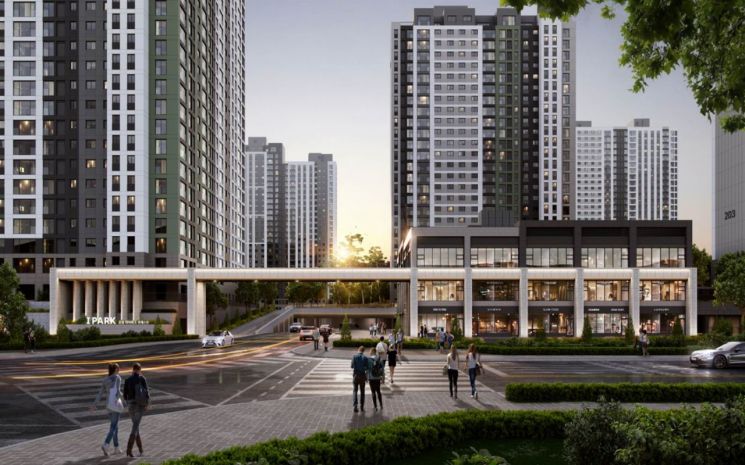
In particular, "Unjeong I-Park Forest" is expected to see expanded demand from hospital and research facility staff, medical industry professionals, and other specialized professionals, highlighting the future potential for a "medical zone premium."
In fact, apartment prices near general hospitals are typically higher than those of neighboring complexes. For example, in September, an 84-square-meter unit in Kyunghee Palace Xi (Phase 2) in Jongno-gu, Seoul, was sold for 2.56 billion won. In contrast, a unit of the same size in the nearby Kyunghee Palace Lotte Castle was sold for 1.75 billion won. Although both complexes are located near subway stations, Kyunghee Palace Xi is evaluated as benefiting from the "medical zone premium" due to its proximity to Kangbuk Samsung Hospital and Seoul Red Cross Hospital.
A sales representative stated, "Attracting Unjeong General Hospital is a symbolic project for the Paju Medical Cluster and will be a turning point for expanding Paju City's medical infrastructure and advancing its industrial base. 'Unjeong I-Park Forest,' which occupies a central location in the medical convergence complex, offers unparalleled access to medical facilities, enhancing its residential value and long-term future value thanks to the medical zone premium."
Furthermore, the accessibility to Seoul via GTX-A Unjeong Jungang Station, extensive landscaping and community facilities, and the stability of a large branded complex are all contributing to the high level of interest from genuine homebuyers.
"Unjeong I-Park Forest" allows residents to reach Seoul Station and the planned Samseong Station in about 20 minutes via the nearby GTX-A Unjeong Jungang Station. It also shares the Unjeong New Town living area, offering excellent convenience. Various shopping and cultural facilities such as Emart, Homeplus, Lotte Premium Outlet, and Lotte Cinema are also located nearby.
In addition, the complex will feature a large-scale landscaped area of approximately 64,000 square meters, as well as community facilities such as a swimming pool, sauna, and indoor gymnasium befitting a large complex. The landscaped areas within the complex will be created with diverse themes, including Signature Field, Art Field, Community Field, Nature Field, and Forest Field, enabling residents to enjoy a "forest life" with pleasant green spaces and leisure throughout all four seasons. Differentiated residential services such as concierge services and non-face-to-face medical consultations for residents are also planned.
"Unjeong I-Park Forest" will conduct official contract signings for four days from Tuesday, November 25 to Friday, November 28. With a 5% down payment and a fixed first installment of 10 million won, the initial financial burden is low. As a non-regulated apartment, up to 60% of the sale price can be financed through interim loans, and the resale restriction period is only six months. The introduction of a guaranteed resale system allows for resale before the first interim payment, which is also attracting attention.
The model home is located in the Wadong-dong area of Paju City, Gyeonggi Province.
© The Asia Business Daily(www.asiae.co.kr). All rights reserved.
![Clutching a Stolen Dior Bag, Saying "I Hate Being Poor but Real"... The Grotesque Con of a "Human Knockoff" [Slate]](https://cwcontent.asiae.co.kr/asiaresize/183/2026021902243444107_1771435474.jpg)
















