KITA Releases Report on 'Export Competitiveness of K-Drone Industry'
Global Drone Trade Doubles in Past Two Years
Korea Ranks 20th in Drone Exports, Facing Structural Limitations
Need for Diversification Through High Value-Added Exports and
As competition intensifies among advanced countries to gain an edge in the drone market-a sector directly linked to national security and industrial competitiveness-there are growing calls for South Korea to implement measures to boost the export competitiveness of its drone industry.
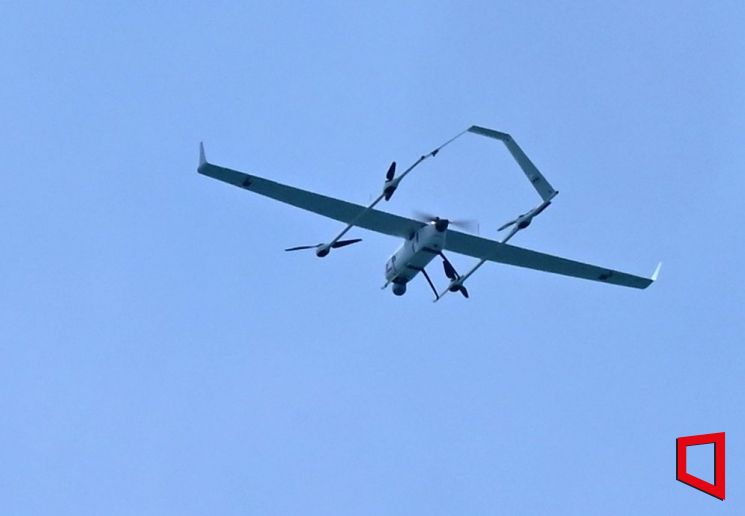
According to the report "Analysis of Export Competitiveness and Future Tasks of the K-Drone Industry" released by the Korea International Trade Association's Institute for International Trade and Commerce on November 14, the global drone trade volume more than doubled from 2.47 billion dollars in 2022 to 6.11 billion dollars in 2024. Notably, Poland (from 33 million dollars, 1.2% to 550 million dollars, 9.6%), the United States (from 144 million dollars, 5.1% to 309 million dollars, 5.4%), and Israel (from 52 million dollars, 1.9% to 190 million dollars, 3.3%) showed remarkable growth.
In contrast, South Korea's drone exports increased nearly tenfold from 2.81 million dollars in 2022 to 27.54 million dollars in 2024, but the country's share of the global export market remained at just 0.48%. South Korea ranked 20th in export volume, trailing behind Denmark and Thailand. The report also found that the Korean drone industry faces significant comparative disadvantages and a high concentration of imports, with more than 80% of drone and component exports going to the top five countries, indicating a high degree of regional export concentration. The report pointed out that structural issues such as a shortage of skilled personnel, underdeveloped research and development infrastructure, and high dependence on Chinese components are hindering the industry's export competitiveness.
The report went on to propose four key strategies to overcome these limitations and enhance the export competitiveness of K-Drone. These include expanding exports of high-value-added products such as heavy-lift transport drones and artificial intelligence (AI)-powered drones; diversifying exports by entering emerging markets; improving component productivity by leveraging advanced services such as AI and cloud technologies; and expanding into drone-as-a-service (DaaS) fields, such as aerial photography, data analysis, and wildfire monitoring. In particular, the report suggested that DaaS represents a next-generation business model that goes beyond simply selling drone hardware, proposing a strategy of exporting both drone operation and data analysis services tailored to customer needs.
The report also noted that since South Korea's drone industry ecosystem is centered on small and medium-sized enterprises and startups, it is essential for the government to provide institutional support. This includes expanding opportunities for new product demonstrations, increasing support for K-Drone marketing in emerging countries, creating domestic demand through large enterprise-SME cooperation models, and supporting the adoption of AI.

Kim Moohyun, Senior Researcher at the Korea International Trade Association, stated, "With advancements in autonomous flight technology and deregulation in major countries, global demand for drones is expected to continue growing." He emphasized, "To enhance export competitiveness, it is necessary to strengthen component self-sufficiency and build an export ecosystem based on services, with government policy support and corporate investment in technology development."
© The Asia Business Daily(www.asiae.co.kr). All rights reserved.
![Clutching a Stolen Dior Bag, Saying "I Hate Being Poor but Real"... The Grotesque Con of a "Human Knockoff" [Slate]](https://cwcontent.asiae.co.kr/asiaresize/183/2026021902243444107_1771435474.jpg)
















