"Prosecution Did Not Appeal in Cases Involving Jang Donghyuk and Others from People Power Party"
Jinwook Jung, a National Assembly member from the Democratic Party of Korea, recently criticized some prosecutors for collectively protesting the prosecution's decision not to appeal in connection with the Daejang-dong case. He stated, "The collective backlash from the People Power Party and pro-Yoon prosecutors, refusing to accept the outcome, can only be seen as an act of organized resistance by 'political prosecutors.'"
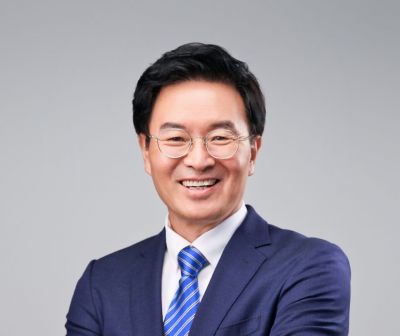
During a session of the Special Committee on Budget and Accounts at the National Assembly on November 12, Assemblyman Jung said, "The Daejang-dong case is a prime example of a politically exploited incident that misled the public. Now that the prosecution's leadership has decided not to appeal in order to correct this, the 'pro-Yoon political prosecutors' are collectively rebelling. This is the essence of the matter," adding, "It is a symbolic example of how deeply prosecutorial power has been intertwined with political power."
He continued, "This is not the first time the prosecution has decided not to appeal," citing specific examples: "In the case of People Power Party lawmaker Jang Donghyuk's violation of the Public Official Election Act, the prosecution did not appeal after a not-guilty verdict in the first trial. Similarly, in Park Sooyoung's violation of the Political Funds Act, although a fine of 900,000 won was imposed in the first trial, the prosecution did not appeal."
Furthermore, he pointed out, "It is standard procedure for the prosecution to comprehensively review the case details and the intent of the ruling before deciding whether to appeal. Yet, only in this Daejang-dong case are chief prosecutors collectively protesting," adding, "Such behavior demonstrates that political tendencies within the prosecution are still at play."
He went on to say, "This case is an opportunity for the prosecution to break away from past political practices such as targeted investigations, fabricated cases, and public disclosure of suspects’ information, and to restore public trust. If political prosecutors continue to organize resistance, it will only make the need and justification for prosecutorial reform even clearer."
In conclusion, he emphasized, "Just as the people of the Republic of Korea did not waver even during the 12·3 Martial Law, they will not be shaken by the reckless words and actions of political prosecutors," and added, "Restoring public trust is the starting point for the prosecution to regain its reason for existence, and this must be kept in mind."
© The Asia Business Daily(www.asiae.co.kr). All rights reserved.
![Clutching a Stolen Dior Bag, Saying "I Hate Being Poor but Real"... The Grotesque Con of a "Human Knockoff" [Slate]](https://cwcontent.asiae.co.kr/asiaresize/183/2026021902243444107_1771435474.jpg)















