Ministry Analyzes Non-Compliance Records and Environmental Data
to Conduct Precision Inspections of High-Risk Foods
The Ministry of Food and Drug Safety announced on November 13 that it will apply an artificial intelligence (AI) risk prediction model, developed to reflect the characteristics of agricultural and marine processed foods among processed foods, to import customs inspections starting in January next year, in order to preemptively block the entry of high-risk imported foods into the country.
The agricultural processed food category includes products such as starches, flours, peanut or nut processed products, and cereals. The marine processed food category includes fish and seafood processed products, salted seafood, dried fish, and seasoned seaweed.
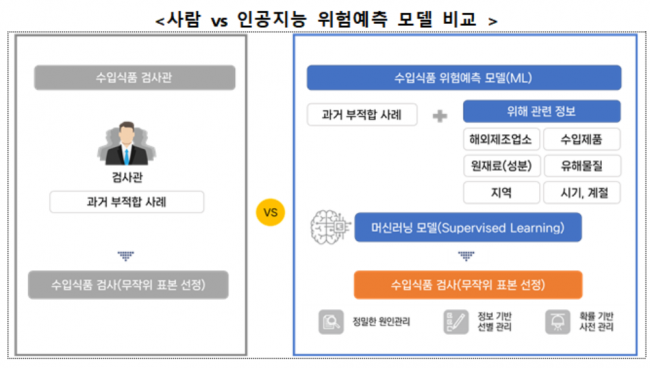
The AI risk prediction model automatically identifies foods with a high likelihood of non-compliance during the customs clearance process by having AI analyze big data that integrates accumulated information on previous non-compliance cases and raw materials from import food inspections, overseas environmental data such as weather and water quality, and overseas risk information such as recalls and disease outbreaks.
Since 2023, the Ministry has been developing prediction models tailored to the risk characteristics of seven categories, including processed foods and health functional foods. Since December last year, the model has been used to select random inspection targets at the customs clearance stage for snack foods and seasoning products among processed foods, in order to more precisely identify high-risk foods.
The AI risk prediction model developed this year will be piloted through December to check for stable system operation, and will be fully implemented in import food customs inspections starting in January next year. The Ministry plans to further advance the system by expanding the development of detailed models that reflect the characteristics of processed food types with high import volumes and high rates of non-compliance.
The Ministry of Food and Drug Safety stated, "We will continue to promote innovation in import food safety management using digital technologies such as AI and big data, in order to create an environment where the public can safely consume imported foods with peace of mind."
© The Asia Business Daily(www.asiae.co.kr). All rights reserved.
![Clutching a Stolen Dior Bag, Saying "I Hate Being Poor but Real"... The Grotesque Con of a "Human Knockoff" [Slate]](https://cwcontent.asiae.co.kr/asiaresize/183/2026021902243444107_1771435474.jpg)















