Production Cost of a Single Penny Reaches 1.69 Cents
Annual Savings of Approximately $56 Million Expected with Discontinuation
With U.S. President Donald Trump ordering a halt to the production of the one-cent (penny) coin, this iconic American coin is effectively disappearing into history after 232 years.
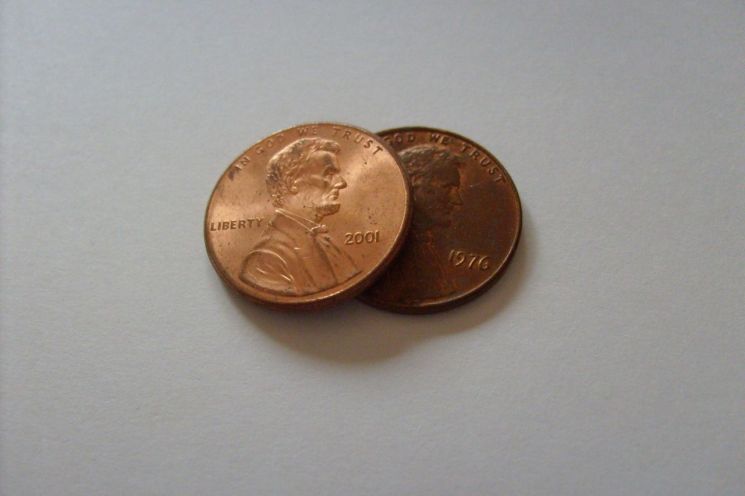
On November 12 (local time), Reuters reported that the U.S. Mint in Philadelphia had completed the final production of one-cent coins for circulation. In February, President Trump instructed the Secretary of the Treasury to stop new production of the one-cent coin, stating that the cost of making the coin exceeded its face value.
The U.S. Treasury Department estimated that it costs 1.69 cents to produce a single one-cent coin and analyzed that halting production would save approximately 56 million dollars (about 74 billion won) annually.
Even with the suspension of new production, the one-cent coin will retain its status as legal tender. Currently, about 300 billion one-cent coins are in circulation, so they are not expected to disappear from the market in the short term. However, the Treasury Department predicted that as supply diminishes over time, some industries may move to adjust prices in five-cent increments.
First issued in 1793 and in use for 232 years, the one-cent coin is the longest-standing coin in U.S. currency history. While production for general circulation will end, a limited number of one-cent coins will continue to be produced for collectors.
Meanwhile, Reuters noted that several countries, including Canada, Australia, Ireland, and New Zealand, have also discontinued issuing their lowest-denomination coins due to the burden of manufacturing costs.
Previously in South Korea, there were also concerns about the manufacturing cost of coins exceeding their face value. In the mid-2000s, as copper and zinc prices surged, the cost of producing the existing brass (copper + zinc) 10-won coin rose significantly above its face value. As a result, the Bank of Korea changed the material of the 10-won coin to copper-coated aluminum in 2006. This reduced the weight from 4.06 grams to 1.22 grams-one-third of the original-and significantly lowered production costs.
© The Asia Business Daily(www.asiae.co.kr). All rights reserved.
![Clutching a Stolen Dior Bag, Saying "I Hate Being Poor but Real"... The Grotesque Con of a "Human Knockoff" [Slate]](https://cwcontent.asiae.co.kr/asiaresize/183/2026021902243444107_1771435474.jpg)















