Gimbap, Kimchi, Sundae, Cup Noodles, and Even Beer
A Surge in Complaints Over Eating and Drinking in the Subway
"It Is Time to Consider an Institutional Ban on Eating and Drinking"
Recently, there have been a growing number of cases where people consume foods with strong odors, such as bossam or kimchi, as well as potentially hazardous foods like hot cup noodles, inside the subway. As public discomfort and safety concerns increase, calls are mounting for a systematic ban on eating and drinking inside subway trains.
4,200 Complaints About Eating in the Subway Over the Past Five Years
According to data received by Assemblywoman Yoon Younghee of the People Power Party from Seoul Metro on November 12, there were 1,009 complaints related to eating and drinking inside subway trains in 2021, 620 in 2022, 833 in 2023, 907 in 2024, and 828 from January to September 2025, totaling 4,197 cases. Most complaints were about consuming foods with strong smells, such as gimbap, kimchi, sundae, and sweet potatoes, as well as hot cup noodles, French fries, dumplings, squid, canned beer, and lunch boxes. Numerous cases also involved the consumption of alcoholic beverages in the subway.
Complaints filed between July and September this year included reports of people drinking beer, soju, and Makgeolli inside trains, with passengers expressing physical and emotional distress, saying things like, "The smell is so bad I feel like vomiting," and "It's unbearable, especially when I'm with my child." Some complaints noted that "Even after announcements are made, people continue to eat and no one stops them." Others repeatedly pointed out, "The person eating is wearing earphones, so the announcements are useless," and "Even if I report it, the person has already gotten off, making it difficult to take action."
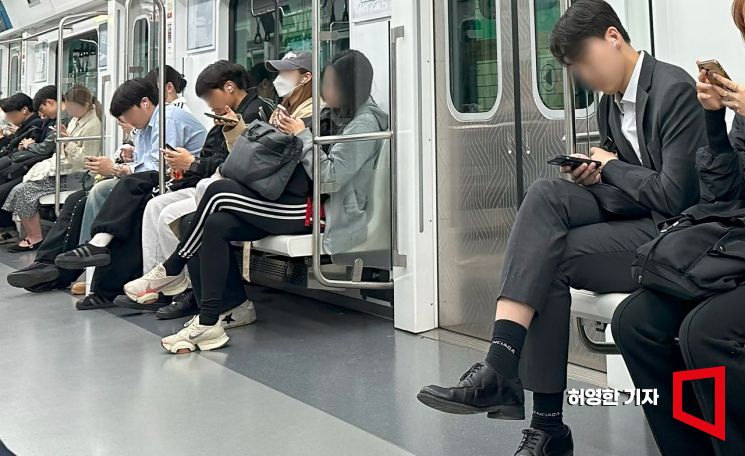
Buses Have a Ban, Subways Remain a Blind Spot
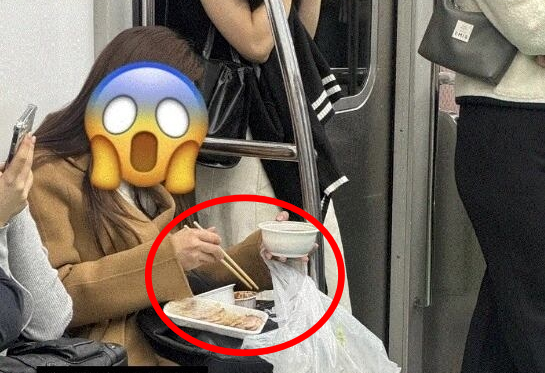
The controversy over eating and drinking in the subway has been ongoing, especially on social media. On October 25, a photo of a woman sitting in a seat on Line 2, taking out bossam, soup, and kimchi to eat, spread online and sparked debate. Food scraps scattered under the seat shocked many. Last year, a passenger eating cup noodles during the morning rush hour on Line 2 was criticized after a photo was released. Other incidents, such as people taking out lunch boxes or drinking alcohol on the subway, have also been publicized, fueling ongoing controversy.
Since 2018, eating and drinking have been completely banned on city buses in Seoul following a revision of the relevant ordinance. However, there are still no clear regulations prohibiting eating and drinking in the subway, leaving announcements as the only means of discouragement. Assemblywoman Yoon Younghee emphasized, "Although there was controversy when the ban on eating and drinking on buses was first introduced, it has now become widely accepted. It is time to seriously consider institutionalizing a ban on eating and drinking, including alcohol, in the subway by gathering broad public opinion."
© The Asia Business Daily(www.asiae.co.kr). All rights reserved.
![Clutching a Stolen Dior Bag, Saying "I Hate Being Poor but Real"... The Grotesque Con of a "Human Knockoff" [Slate]](https://cwcontent.asiae.co.kr/asiaresize/183/2026021902243444107_1771435474.jpg)
















