S&P 500 Ranks 41st Among 60+ Countries in Returns
AI Lifts U.S. Market Amid Polarization Concerns
"Korea's Leading Position in Semiconductors and AI Drives KOSPI Growth"
There is growing consensus that the S&P 500, the leading U.S. stock index, will underperform major global stock markets for the second time in the past decade. According to NBC News on November 11 (local time), the S&P 500's annual return as of the previous day stood at 16%, ranking only 41st among stock indices from more than 60 countries worldwide. In contrast, over the same period, Korea's KOSPI posted a return of approximately 70%, making it the top performer globally.
The S&P 500's performance is also more than 10% lower than the return of the MSCI World Index, which tracks the stock markets of 46 countries excluding the United States. Even the most optimistic projections on Wall Street expect the S&P 500's return at the end of 2025 to be only on par with most overseas markets. The S&P 500 also lagged behind other global indices in 2017.
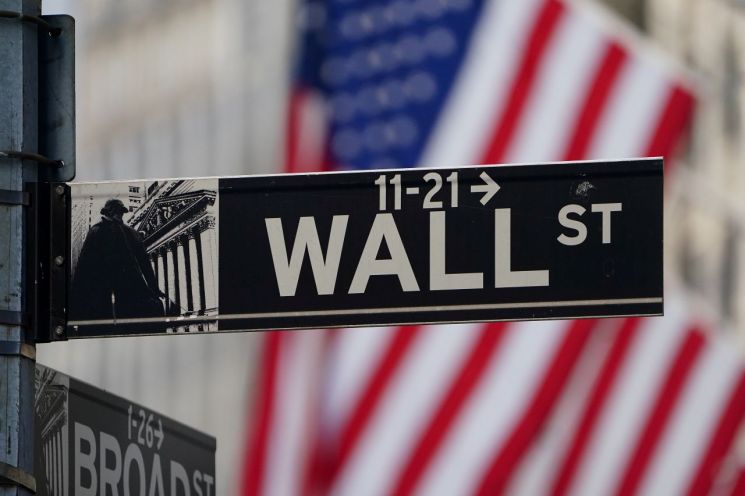
NBC analyzed that this gap is due to several factors: trade uncertainty stemming from President Donald Trump's tariff policies, the U.S. fiscal deficit, a weaker dollar, and President Trump's attacks on the Federal Reserve (Fed).
After President Trump won the 2024 presidential election, the U.S. stock market hit an all-time high in mid-February this year. However, concerns over President Trump's tariff policies led to a sharp decline in March. When he announced a "Liberation Day" reciprocal tariff policy on April 2, the market became even more volatile, and within a few days, $5.8 trillion (about 8,490 trillion won) was wiped out from the S&P 500. On April 9, when he announced a halt to reciprocal tariffs targeting the entire world, the market soared, and the S&P 500 recorded its third-highest daily gain ever.
While the S&P 500 fluctuated due to tariff policies, technology stocks related to artificial intelligence (AI) helped support the market. Companies such as Nvidia, Apple, Amazon, and Alphabet saw their combined market capitalization soar to $5 trillion. Currently, there are nine companies in the United States with a market capitalization of over $1 trillion. However, the concentration in AI stocks is severe. As of the third quarter, the profit growth forecast for the seven leading AI stocks is 15%, whereas the remaining 493 companies have a growth rate of only 6.7%.
Rogier Quirijns, Chief Economist at ABN AMRO, commented, "The economy is moving at two different speeds. While AI-related sectors are thriving, most other sectors are stagnating or shrinking."
Meanwhile, Korea's KOSPI index has shown record-breaking growth this year, posting a return of about 70%. Following Korea, Kenya, Nigeria, Chile, and Poland have also reported high returns. Dina Ting, Senior Vice President at Franklin Templeton, stated regarding the KOSPI, "Globally, the rebound in demand for memory chips has led to a recovery in the technology sector, including semiconductors. Korea's leading position in semiconductor manufacturing and AI-related investments is a key driver behind this upward trend."
© The Asia Business Daily(www.asiae.co.kr). All rights reserved.
![Clutching a Stolen Dior Bag, Saying "I Hate Being Poor but Real"... The Grotesque Con of a "Human Knockoff" [Slate]](https://cwcontent.asiae.co.kr/asiaresize/183/2026021902243444107_1771435474.jpg)















