Foreign Tourists Surge on the Back of Global K-Content Success
Government Sets Sights on 40 Million Visitors by 2033
Shortage of Luxury Hotels in Busan, Strong Demand for 3- and 4-Star Properties
Jeju City Hotels Gain Popularity Due to Accessibility
The so-called "K-content," including K-pop, K-dramas, K-movies, and K-beauty, is captivating audiences worldwide. Since the global sensation of Psy's "Gangnam Style" in 2012, the international success of BTS and Blackpink, the Academy Award for Best Picture won by the movie "Parasite" in 2020, the Best Supporting Actress award for "Minari" in 2021, the massive success of "Squid Game" in 2021, and this year's craze for "K-Pop Demon Hunters" have all elevated the status of K-content to a new level. As a result, the number of foreign tourists visiting Korea has increased significantly.
On November 12, IBK Investment & Securities released a report titled "The Magnetic Pull of Korea's Golden Wave," projecting that the number of foreign arrivals in Korea will grow at an average annual rate of 7.1%, from 16.37 million last year to 23 million in 2029. The report also predicted that the hotel industry, which has benefited mainly in Seoul, will see this advantage spread to other regions such as Busan and Jeju. Meanwhile, the Korean government has announced plans to focus on developing not only tourism centered on famous attractions but also medical tourism, wellness tourism, and MICE tourism, setting a goal to attract 40 million foreign tourists to Korea by 2033.
Longer Stays by Foreign Tourists, Increasing Visits to Regional Areas
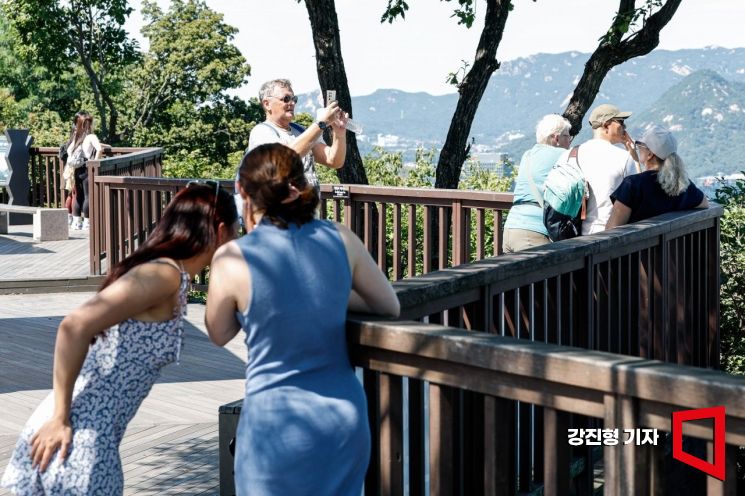
The hotel industry is one of the main beneficiaries of the surge in foreign tourists. In Seoul, a "super cycle" is anticipated, with demand for hotel rooms expected to outpace supply for at least the next four years due to the rapid increase in foreign visitors. In particular, the trend has shifted from shopping-focused tourism by Chinese visitors to tourism and experiential activities by travelers from Southeast Asia, Europe, and the United States, resulting in more foreign tourists staying in Korea for longer periods.
According to IBK Investment & Securities, the combined proportion of European and American tourists among all foreign visitors rose from 14% in 2019 to 17.6% as of July this year. The average length of stay for American tourists is 8.8 days, while European tourists stay even longer-12.2 days for French visitors, 11.6 days for Germans, and 9.5 days for British travelers-exceeding the overall average by two to five days.
Additionally, the main purpose of visiting Korea among foreign tourists has shifted: the percentage citing shopping dropped from 71.5% in 2019 to 58.0% last year, while those citing culinary experiences surged from 47.3% in 2019 to 62.8% last year.
According to Korail, the number of foreign railway passengers increased from 3.49 million in 2023 to 5.62 million last year. Cumulatively, in the first half of this year, 2.79 million foreign tourists used the railway, meaning that one out of every three foreign visitors traveled by train. This reflects a growing number of foreign tourists traveling beyond Seoul to other regions for long-distance trips.
Rising Demand for Luxury Hotels in Busan and Jeju City
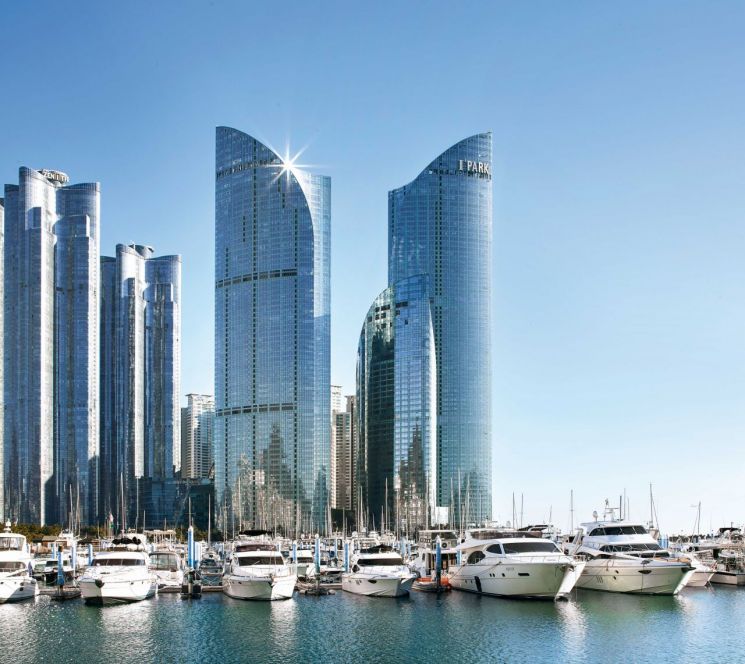
Busan has traditionally been a domestic market, with 80% of tourists and 80% of hotel guests being Korean. However, with the rapid increase in foreign tourists, the expansion of BEXCO, and the hosting of more global MICE events, the fundamentals of Busan's hotel market are expected to strengthen. Compared to Seoul, Busan is seeing a relative increase in accommodation supply. Nevertheless, there is a lack of global brands favored by foreign visitors, and the supply of three- and four-star hotels remains limited.
Jeju Island's tourism market has been centered on domestic visitors and Chinese tourists, with 85% of arrivals being Korean and 70% of foreign visitors coming from China. Since the COVID-19 pandemic, Jeju's tourism market has seen a decline in domestic tourists but an increase in foreign visitors. As a result, Jeju City, which is popular among foreign tourists, is thriving, while Seogwipo, which relies on domestic visitors, is struggling. Recently, the increase in foreign tourists has begun to outpace the decrease in domestic travelers. If the influx of foreign tourists continues, it is expected that this positive trend will spread, especially in Jeju City.
IBK Investment & Securities recommended Hotel Shilla and GS P&L as companies to watch. Nam Sung-hyun, an analyst at IBK Investment & Securities, said, "Hotel Shilla has recently streamlined some of its duty-free operations at Incheon Airport, increasing the profit contribution of its hotel division. With aggressive expansion of its domestic and international pipeline, we expect a sharp improvement in performance." He added, "For GS P&L, the full reopening of The Westin Seoul Parnas after remodeling will be fully reflected in fourth-quarter results, and record-high performance is anticipated in the fourth quarter, with this trend likely to continue into next year."
© The Asia Business Daily(www.asiae.co.kr). All rights reserved.
![Clutching a Stolen Dior Bag, Saying "I Hate Being Poor but Real"... The Grotesque Con of a "Human Knockoff" [Slate]](https://cwcontent.asiae.co.kr/asiaresize/183/2026021902243444107_1771435474.jpg)

















