Korea Institute of Finance Points Out: "Bank of Korea Responds to Inflation Without Distinguishing Between Demand and Supply Shocks"
Factors Behind Less Effective Monetary Policy Compared to Advanced Economies
Need to Strengthen Response to Demand S
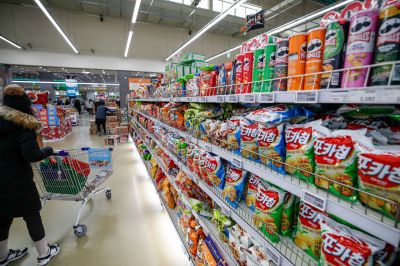 Citizens are shopping at a large supermarket in Seoul amid continuing inflation. Photo by Kang Jin-hyung
There have been criticisms that South Korea's monetary policy is less effective in addressing inflation compared to advanced economies, as it does not distinguish between demand shocks and supply shocks in its response.
Jang Min, Senior Research Fellow at the Korea Institute of Finance, stated in the report "Supply and Demand Shock Inflation and South Korea's Monetary Policy" released on November 11 that South Korea's monetary policy shows little differentiation in the intensity of its response to demand shock and supply shock inflation.
Demand shock inflation occurs when there is a rapid increase in domestic demand, such as consumption, investment, or government spending. In contrast, supply shocks arise when supply decreases due to factors like surging international commodity prices, such as an oil shock, or a decline in production capacity.
The report estimated the intensity of the government's inflation response using the Taylor rule and found no significant difference in how it addresses demand and supply shocks. The Taylor rule is a method used by most central banks worldwide to determine the base interest rate based on economic growth and inflation rates.
This is in stark contrast to the findings for major advanced economies, where monetary policy responded much more strongly to demand shock inflation than to supply shock inflation. In these countries, the response to demand shock inflation was about four times stronger than to supply shock inflation.
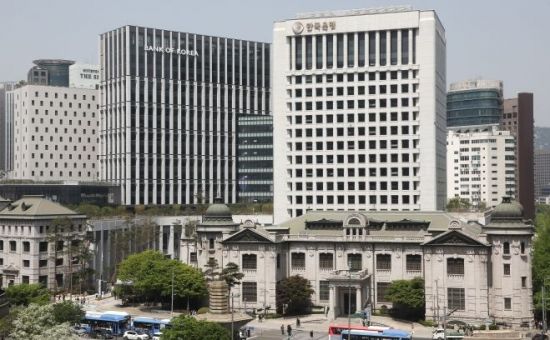
The report analyzed that the reason South Korea's monetary policy has responded to supply and demand shock inflation with similar intensity, without differentiation, is due to the country's industrial structure, which is vulnerable to supply shocks such as surges in international oil prices. South Korea's price structure is highly sensitive to supply shocks, such as changes in raw material prices, leading the monetary authorities to react more sensitively to supply shocks than their counterparts in advanced economies.
The report also pointed out that the increased responsibility of monetary authorities for price stability may have motivated them to manage overall inflation at a certain level, regardless of the underlying factors, rather than tailoring their response to each cause of inflation.
However, the report criticized the effectiveness of South Korea's monetary policy, noting that, given the nature of monetary policy, which influences prices primarily through demand control, its effect is weaker compared to major economies that have responded more strongly to demand shocks. If South Korea had differentiated its response to demand shock inflation to the same extent as other countries, the path of the base interest rate would have been higher, and inflation could have been controlled more effectively.
Jang emphasized, "The lukewarm response of our monetary authorities to demand shock inflation may have limited the effective achievement of the two main objectives of monetary policy: price stability and financial stability," adding, "To effectively control inflation, it is necessary to gradually move toward differentiating the intensity of policy responses according to the specific causes of inflation."
He further stated, "In order to achieve this, it is important to analyze the impact of responses to different inflation factors through policy simulations and to build policy capacity accordingly," and added, "Significant efforts should also be made to improve transparency and effectiveness in communicating with economic agents regarding the causes of inflation, reasons for responses, and policy intensity."
© The Asia Business Daily(www.asiae.co.kr). All rights reserved.
![Clutching a Stolen Dior Bag, Saying "I Hate Being Poor but Real"... The Grotesque Con of a "Human Knockoff" [Slate]](https://cwcontent.asiae.co.kr/asiaresize/183/2026021902243444107_1771435474.jpg)
















