Thousands Suffer Food Poisoning After Free Meal Program Launch in Indonesia
Over 1,300 Cases Reported in One Region in September
Indonesian Government Faces Parental Backlash, Says "Improvements Underway"
Controversy is spreading over the free school meal program promoted by the Indonesian government. As thousands of students across the country have reported vomiting and abdominal pain, with a series of food poisoning incidents, critics argue that the government’s aggressive push for the policy has led to negative side effects.
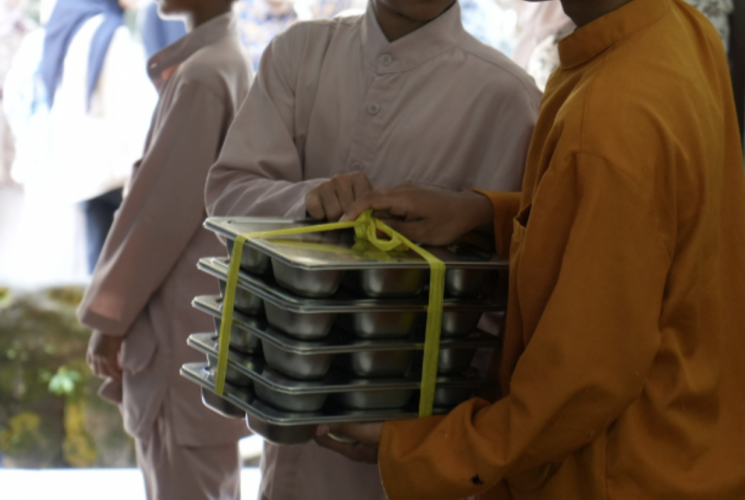 Controversy is arising in Indonesia, where the free school meal policy is being implemented, as food poisoning incidents continue to occur. The Indonesian National Nutrition Agency (BGN)
On November 10 (local time), The Guardian reported, "As Indonesia launches a massive free school meal program, concerns are mounting due to a series of food poisoning outbreaks."
The free meal program was introduced by Indonesian President Prabowo Subianto in January this year as a policy to address malnutrition and stunted growth. According to the Indonesian National Nutrition Agency (BGN), 3.2 trillion rupiah (6.1135 trillion won) has been invested in the program, providing food daily to 39 million students, infants, and pregnant women. The government plans to expand the target to 83 million people by the end of the year.
However, since the program's implementation, thousands of people have shown symptoms of food poisoning after eating government-provided meals, fueling criticism that "children's safety is being threatened."
In fact, photos of tempeh (a fermented soybean product) infested with maggots, rice containing glass shards, and trays washed with contaminated water have spread across social media platforms, prompting parent groups to launch collective protests.
According to the non-governmental organization Indonesia Education Watch Network, there have been more than 15,000 cases of food poisoning nationwide. In the Cibungkur region of West Java alone, over 1,300 children received hospital treatment in September.
Nutritionist Dr. Tan Shot Yen warned, "The government has put children's lives at risk by focusing solely on expanding the number of recipients," and added, "If contamination by salmonella or E. coli is left unchecked, it could spread like an endemic disease."
However, the government maintains that food poisoning cases are extremely rare. President Prabowo downplayed the situation, stating, "Out of more than 1 billion meals served, the food poisoning rate is just 0.0017%, which is a commendable achievement."
Nevertheless, as public opinion worsened, the government announced plans to introduce new regulations to strengthen food hygiene. The BGN plans to expand hygiene inspections and education, and increase the number of cooking facilities to 32,000 by next year. BGN Director Dadan Hindayana stated, "The ultimate goal is zero accidents," and emphasized, "We will strengthen hygiene management standards."
There has also been criticism of the government's belated response. Dia Saminarsi, head of the Indonesia Strategic Development Initiative Center, pointed out, "In West Java, a single kitchen is responsible for 3,500 meals," and added, "It is impossible for a nutritionist to control quality in such an environment."
Visiting fellow at Singapore’s ISEAS-Yusof Ishak Institute and Indonesian political researcher Made Supriatma noted, "This program, which was promoted as one of the Prabowo administration's 100-day achievements, has instead become a political liability."
Although the Indonesian government has begun implementing improvement measures, distrust remains. One parent whose child suffered from food poisoning said, "I just hope that no other parents or children have to go through this again."
© The Asia Business Daily(www.asiae.co.kr). All rights reserved.
![Clutching a Stolen Dior Bag, Saying "I Hate Being Poor but Real"... The Grotesque Con of a "Human Knockoff" [Slate]](https://cwcontent.asiae.co.kr/asiaresize/183/2026021902243444107_1771435474.jpg)















