TF Launches
Reorganizes Key Target Institutions and Begins Attraction Efforts
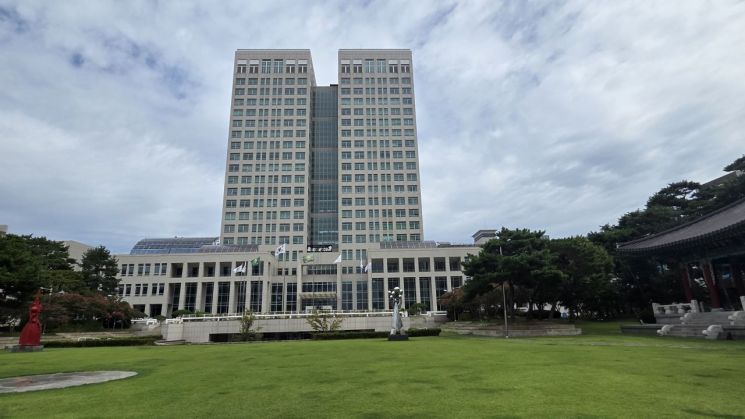
The city of Daejeon has identified the government's second round of public institution relocations to regional areas as a new growth engine. In response, the city has formed a task force (TF) and is officially launching efforts to attract these institutions.
The city’s task force, initially headed by the Director General of the Administration and Autonomy Bureau, will transition to a system led by a director-level official starting in December. The TF will collaborate with relevant departments such as the Balanced Development Division, Urban Regeneration Division, Urban Maintenance Division, Strategic Industry Policy Division, Policy Planning Office, External Cooperation Headquarters, and the Spokesperson’s Office. The Daejeon Research Institute will also participate, taking responsibility for work related to public institution relocations.
The main functions of the task force include: ▲reorganizing the list of target institutions for attraction ▲enhancing strategies to attract institutions in the second round of relocations ▲visiting target institutions and signing MOUs ▲urging the government to prioritize the allocation of public institutions ▲forming and operating a pan-citizen attraction committee, and ▲promoting these efforts both internally and externally.
The launch of the task force follows the official announcement of the second round of public institution relocations by the National Policy Planning Committee in August. The goal is to respond effectively to the government’s schedule, establish a dedicated response system in advance, and ultimately maximize the benefits of public institution relocations by successfully developing Daejeon Innovation City.
Upon its launch, the task force will immediately reorganize the existing list of 39 key target institutions. It will also conduct a detailed analysis of public institutions in the Seoul metropolitan area that are eligible for relocation, reselect targets, and then carry out focused efforts to attract them.
Target institutions will be selected based on their ability to generate synergy with Daejeon’s regional characteristics and industrial structure, as well as their potential for significant economic impact. Only institutions above a certain size will be considered.
The city plans to visit target institutions directly to actively promote the advantages of Daejeon Innovation City, including its location, residential environment, and infrastructure. For institutions that express willingness to relocate, Daejeon will sign memorandums of understanding (MOUs), which will be used as a basis for negotiations with the National Assembly and the government when the second round of relocations becomes active.
In addition, the city will strengthen promotional activities both internally and externally. By utilizing the city’s website, social media, news outlets, and broadcast media, Daejeon aims to build public consensus for the development of the innovation city and the attraction of public institutions, while also demonstrating the region’s commitment to the government and political circles.
In particular, the city plans to strongly urge the government and political circles to prioritize the allocation of public institutions, taking into account that Daejeon was excluded from the innovation city initiative during the first round of relocations, which resulted in relative disadvantages for its citizens. To this end, Daejeon will work in solidarity with local politicians and residents.
Depending on the progress of government policy, Daejeon will also establish a pan-citizen attraction committee involving the city government, local residents, political leaders, business community, and academia, in order to build a joint public-private response system for public institution relocations.
Yoo Deukwon, Deputy Mayor for Administrative Affairs of Daejeon, stated, "The government’s second round of public institution relocations is a very important opportunity for Daejeon to secure a new growth engine. All departments will work closely together around the task force to respond strategically, and we will do our utmost to attract public institutions and develop the innovation city by fully leveraging Daejeon’s regional strengths."
© The Asia Business Daily(www.asiae.co.kr). All rights reserved.