Seoul Conducts Survey of 1,000 Citizens
Tap Water Consumption Expands Both In and Outside the Home
Water Quality Satisfaction at 82.2%... Growing Trust
It has been found that 75% of Seoul citizens drink Arisu. This increase in the number of people using tap water as drinking water is attributed to positive changes in satisfaction and perception regarding Arisu.
On November 10, the Seoul Metropolitan Government announced the results of the "2025 Seoul Citizens’ Drinking Water Consumption Pattern Survey," which was conducted with 1,000 Seoul residents. According to the survey, 75% of citizens use tap water as drinking water, an increase of 5.4 percentage points compared to last year.
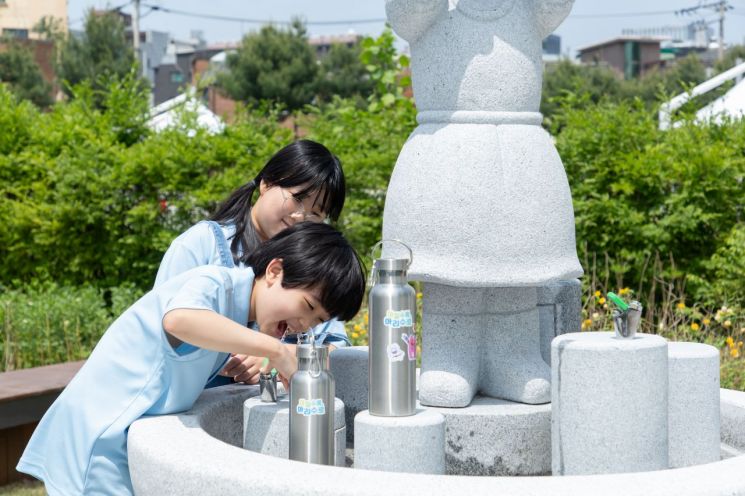 According to a survey conducted by the Seoul Metropolitan Government, 75% of Seoul citizens use tap water as drinking water. The photo shows children drinking Arisu at an outdoor water fountain. Photo by The Asia Business Daily
This survey was commissioned by the Seoul Metropolitan Government to the polling agency Korea Research and conducted online from August 13 to 19 with 1,000 Seoul citizens aged 18 and older. The survey focused on six topics, including the current status of tap water consumption, perceptions, and satisfaction. It applied the "Seoul-style tap water consumption rate standard," which includes both in-home and out-of-home consumption rates.
The Ministry of Environment conducts a "Tap Water Consumption Status Survey" every three years, calculating the consumption rate based on the proportion of people who drink tap water directly or after boiling it at home. However, since this scope is limited to the home, it does not fully reflect citizens’ actual usage patterns. Therefore, last year, the city established a new "Seoul-style tap water consumption rate" standard, which includes both in-home and out-of-home consumption, following expert consultations and citizen forums.
The survey results showed that 75% of respondents use tap water as drinking water, up 5.4 percentage points from last year (69.6%). This means that more than 7 out of 10 Seoul citizens drink tap water, indicating that the culture of drinking tap water is gradually becoming established in daily life. The 75% figure is the sum of the in-home consumption rate (56.3%) and the out-of-home consumption rate (18.7%, excluding those who already drink it at home).
In particular, the increase in in-home tap water consumption was identified as the main factor driving the overall rise in consumption rates. The in-home consumption rate reached 56.3%, up 6.7 percentage points from the previous year (49.6%). Indirect consumption rates were also high, with 63.7% using tap water for tea or coffee and 63.9% for cooking rice or food.
The main places where tap water is consumed outside the home were "parks, sports fields, and sports facilities" (27.5%), followed by "streets, walking trails, and promenades" (20.3%). This demonstrates that tap water consumption is spreading beyond the home to various living spaces.
The tap water consumption rate among Seoul citizens was high even compared to major cities around the world. When applying the same survey standards as other countries, the rate was 80.8% in Seoul and 65% in the United States under the American standard; under the Paris standard, it was 81.2% in Seoul and 83% in Paris, showing similar levels.
Additionally, 8 out of 10 Seoul citizens (79.9%) were found to be generally satisfied with tap water. Satisfaction with water quality was 82.2%, up 4 percentage points from last year. Satisfaction for drinking and cooking purposes was 91.6%, and for daily use as water, it was 94.2%. Furthermore, Arisu, as Seoul’s representative tap water brand, is gaining greater trust from citizens in terms of quality and public value. More than 7 out of 10 Seoul citizens agreed that Arisu is "world-class tap water" (73.1%) and "a public asset that all citizens should protect" (79.9%).
Lee Hoeseung, Head of the Seoul Arisu Headquarters, stated, "Based on the 'Seoul-style consumption rate standard' that reflects citizens’ usage patterns, we will continue to strengthen scientific water quality management and information disclosure to create an environment where everyone can safely drink tap water."
© The Asia Business Daily(www.asiae.co.kr). All rights reserved.

















