Easing of Strong Dollar Expected; No Korean Credit Risk
Foreign Investors Merely Taking Profits from Surging Korean and Japanese Markets
High Exchange Rate Contributing to Strengthening Korea's Economic Fundamentals, Including Exports
The won-dollar exchange rate surged to the 1,460 won range during overnight trading on the 7th. This marks the first time since April 9 that the rate has reached the 1,460 won level. As the exchange rate soared, the KOSPI index underwent a significant correction and government bond yields spiked, highlighting a so-called 'triple weakness' phenomenon that has triggered exchange rate fears across the domestic financial market.
On the 10th, iM Securities analyzed in its report titled "Is the Exchange Rate Rise Really a Negative Factor?" that "the rise in the exchange rate is not a major negative factor that will deal a fatal blow to the domestic financial market, especially the stock market, and could actually serve as a positive factor."
US Fed Rate Cut and Liquidity Expansion Expected to Ease Dollar Strength
One of the key factors behind the strong dollar is the tightening of the short-term funding market in the United States. The sharp decline in fiscal spending due to the prolonged federal government shutdown, as well as increased funding by hyperscalers (large cloud companies), has led to a shortage of dollar liquidity, triggering the dollar's strength. However, the federal government shutdown, which has caused this short-term funding squeeze, is highly likely to be resolved before Thanksgiving on the 27th. Therefore, the funding squeeze is also expected to gradually ease.
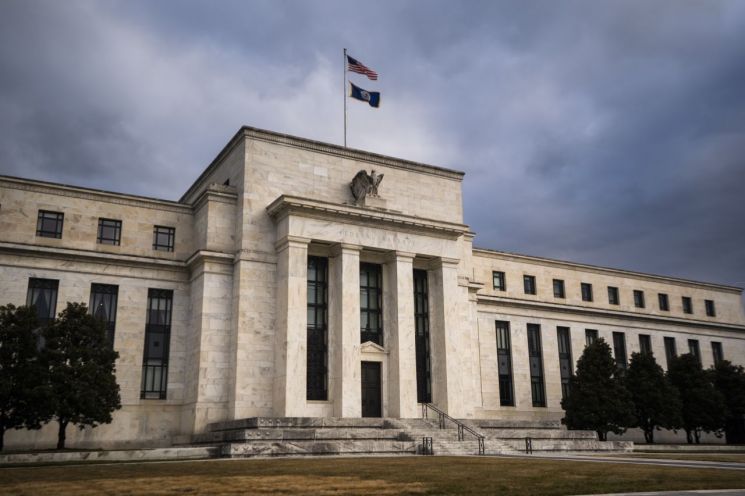
Additionally, the US Federal Reserve's expected rate cut in December and other liquidity expansion policies are likely to exert downward pressure on the dollar. Park Sanghyun, an analyst at iM Securities, stated, "The slowdown in fourth-quarter growth due to the prolonged federal government shutdown, along with the funding squeeze, supports the view that the Fed's additional rate cut cycle will not end in December." He added, "John Williams, President of the Federal Reserve Bank of New York, mentioned that the Fed may need to expand its balance sheet through bond purchases if liquidity is needed, which suggests that the Fed could once again move to expand liquidity to ease the short-term funding squeeze."
The primary concern about the recent sharp rise in the won-dollar exchange rate has been the risk of capital outflows due to domestic and external credit risks. Analyst Park commented, "Although there is some tightening in the US short-term funding market, it is not at a level that warrants concern over external credit risk," and "domestic credit risk also shows no particular warning signals when looking at various domestic credit indicators." The domestic credit spread is showing a downward stabilization trend, and the domestic CDS premium also remains at an absolutely low level.
So, what is the reason for foreign investors' exit from the Korean stock market? Analyst Park explained, "This can be interpreted as some profit-taking in major asset markets where dollar liquidity surged due to the tightening of the US short-term funding market." He added, "Since early October, Korea and Japan, which saw the largest stock market gains among major countries, became the main targets for profit-taking, which led to the won and yen experiencing the largest declines compared to other currencies since early October." The sharp rise in domestic government bond yields also appears to have added pressure to the exchange rate. The Bank of Korea's strengthened stance on holding rates steady has led to profit-taking by foreign investors in the bond market, which in turn has put upward pressure on the exchange rate.
High Exchange Rate Could Play a Positive Role for Korean Economy and Financial Markets
The current exchange rate in the 1,400 won range should not be evaluated by the same standards as in the past. The strong dollar is not due to a credit or debt crisis in Korea or the global economy, but rather to the situation of the G2 economies. The United States' prioritization of domestic interests, the strengthening of its leadership in the digital economy and artificial intelligence (AI), and China's deflationary risks have all contributed to the structural strength of the dollar.
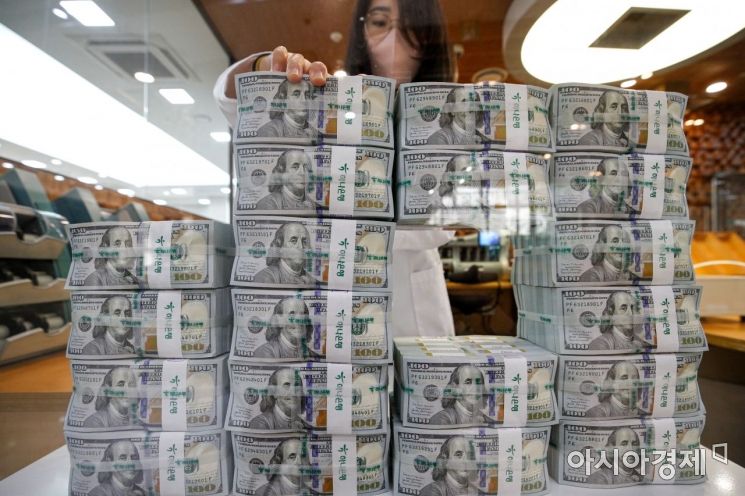
The fact that the US policy rate remains higher than those of other major countries, even as the Fed has entered a rate-cutting cycle, also supports this logic. In short, the high US interest rates indicate that the US economy is more robust than other countries. Korea is no exception. The US policy rate is higher than Korea's, and the US growth rate is also higher. From a fundamental economic perspective, a strong dollar and a weak won have become the so-called 'new normal.'
Another factor fueling this new normal of a weaker won is the expansion of overseas investments by domestic funds. Both pension funds and individual investors in Korea have rapidly increased overseas investments since the pandemic, structurally contributing to the weak won from a supply-demand perspective. The United States has become a black hole for global capital, absorbing liquidity from around the world.
The current high exchange rate could actually help the recovery of domestic economic fundamentals, such as export performance. Oil prices continue to fluctuate around $60 per barrel, and semiconductor prices, a major export item, are experiencing an unprecedented surge. In addition, the weak won could improve Korea's terms of trade, thereby strengthening the export competitiveness of domestic companies.
Analyst Park stated, "While a higher exchange rate could lead to increased import costs, falling oil prices could offset the cost increases associated with the exchange rate rise. At the same time, the higher exchange rate, combined with the sharp rise in semiconductor prices, will lead to increased profit margins for companies." He added, "Although the Korean economy and stock market cannot achieve the 'super weak yen' effect seen in Japan, unlike in the past, the current phase is creating an internal and external environment where a weaker won could have a positive impact on the domestic economy and stock market."
In conclusion, if some foreign investors' profit-taking comes to an end and the US funding squeeze is alleviated, there is a high possibility that foreign capital will flow back into the domestic stock market. Furthermore, the weaker won is expected to boost the export competitiveness of Korean companies, which could partially cushion the impact of high US tariffs and serve as a positive factor for domestic exporters.
© The Asia Business Daily(www.asiae.co.kr). All rights reserved.
![Clutching a Stolen Dior Bag, Saying "I Hate Being Poor but Real"... The Grotesque Con of a "Human Knockoff" [Slate]](https://cwcontent.asiae.co.kr/asiaresize/183/2026021902243444107_1771435474.jpg)

















