Government Issues Management Improvement Recommendation to Lotte Insurance under PCA
Credit Rating Agencies Including Korea Ratings and Korea Investors Service Review Downgrades
Suspension of Hybrid Capital Securities Interest Payments Raises In
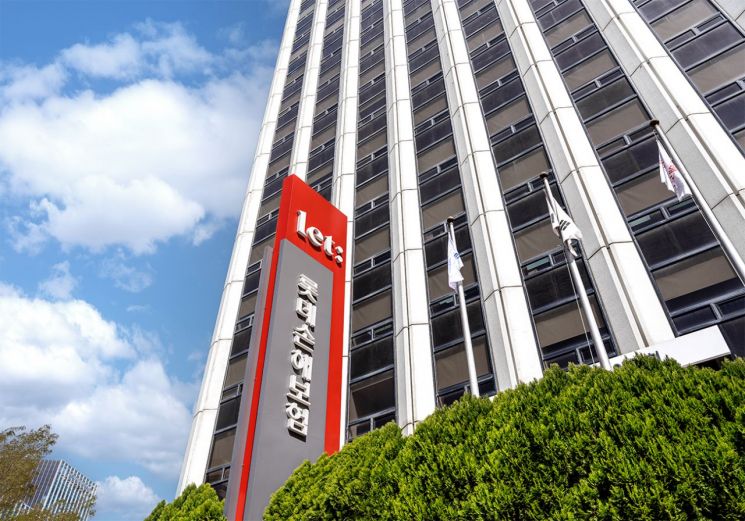
Concerns over a decline in corporate value have grown after the government imposed Prompt Corrective Action (PCA) on Lotte Insurance. Following this regulatory measure, credit rating agencies are collectively reviewing downgrades of Lotte Insurance’s credit ratings, citing the potential deterioration of the company’s business foundation and management.
Credit Rating Agencies Lower Outlooks Following Lotte Insurance’s Prompt Corrective Action
According to the financial sector on November 10, Korea Ratings changed its outlook for Lotte Insurance’s credit rating from “Negative” to “Under Review for Downgrade” on November 7. As a result, the rating for Lotte Insurance’s subordinated bonds was adjusted from “A- (Negative)” to “A- (Under Review for Downgrade),” and the rating for hybrid capital securities was changed from “BBB+ (Negative)” to “BBB+ (Under Review for Downgrade).”
Korea Investors Service also changed its outlook on the insurance financial strength rating (IFSR), subordinated bonds, and hybrid capital securities of Lotte Insurance from “Negative” to “Under Negative Review” on the same day. Accordingly, the IFSR rating was changed from “A (Negative)” to “A (Under Negative Review),” subordinated bonds from “A- (Negative)” to “A- (Under Negative Review),” and hybrid capital securities from “BBB+ (Negative)” to “BBB+ (Under Negative Review).”
This follows the Financial Services Commission’s decision on November 5 to issue a management improvement recommendation to Lotte Insurance as part of PCA, citing the company’s weak capital adequacy. PCA is a regulatory sanction imposed by financial authorities to improve management when a financial institution’s financial condition falls below a certain threshold or there are concerns about insolvency. The measures are implemented in stages depending on the severity of the situation, such as “Management Improvement Recommendation-Requirement-Order.”
The Financial Services Commission explained that, based on the Financial Supervisory Service’s management evaluation, Lotte Insurance met the criteria for a management improvement recommendation. In the FSS assessment, Lotte Insurance received an overall grade of 3 (Average) and a provisional capital adequacy grade of 4 (Weak). Its risk-based capital ratio (K-ICS) also dropped from 173.1% at the end of June last year to 129.5% at the end of June this year, falling below the industry average.
Korea Ratings pointed out, “Despite the government’s management improvement recommendation, Lotte Insurance can still normally accept premium payments, process insurance claims and payments, and sign new contracts. However, there is a possibility that its business foundation could weaken due to an expansion of reputational risk.” The agency further analyzed that, since the adoption of the new accounting standard (IFRS 17), securing high-quality new contracts has become a key factor for profitability, and a decline in new contract sales could lead to a long-term deterioration in profitability.
Korea Ratings also noted that the high proportion of retirement pension liabilities among Lotte Insurance’s insurance liabilities could significantly undermine its business foundation if there is a large-scale net outflow. Of Lotte Insurance’s retirement pension reserves, approximately 3 trillion won are set to mature by the end of this year, accounting for about 45% of the total.
Chae Youngseo, Senior Analyst at Korea Ratings, stated, “If Lotte Insurance’s currently weak capital adequacy and profitability persist, and if the management improvement recommendation further weakens its business foundation and increases liquidity risk, downward pressure on its credit rating will intensify. We will monitor the company’s new business trends and liquidity management in the retirement pension segment.”
Liquidity Concerns Due to Year-End Capital Outflows, Suspension of Hybrid Capital Securities Interest Payments
Korea Investors Service also stated, “The management improvement recommendation is inevitably having negative effects on insurance operations, capital raising, and liquidity due to reputational deterioration. Downward pressure on Lotte Insurance’s credit rating is increasing.” The agency particularly cited the risk that, if outflows of funds significantly exceed inflows at the end and beginning of the year when retirement pension maturities are concentrated, liquidity risk could be amplified.
Song Mijeong, Senior Researcher at Korea Investors Service, said, “If there is no meaningful improvement in capital adequacy following this measure, or if deterioration in business performance and financial statements due to PCA becomes evident, we will consider a downgrade of the credit rating.”
Another concern is Lotte Insurance’s suspension of interest payments on its hybrid capital securities as a result of this measure. Starting December 17, Lotte Insurance will suspend interest payments on a total of 46 billion won worth of hybrid capital securities. In 2021, Lotte Insurance selected Meritz Securities as the lead manager and issued 40 billion won in hybrid capital securities and 6 billion won in privately placed hybrid capital securities at an interest rate of 6.8%.
It is understood that the issuance terms included a clause stating that dividends or interest payments would be suspended until the reason for PCA is resolved if the company is subjected to PCA. As interest payments are suspended, investors who purchased these hybrid capital securities at the time face a higher risk of losses.
Song, the Senior Researcher, added, “Lotte Insurance already sparked market concerns in May by postponing early redemption of subordinated bonds, and now, with the suspension of hybrid capital securities interest payments, it will become even more difficult to attract demand in the bond market. If capital raising is not smooth in a situation where refinancing is necessary, it will be difficult to avoid a further decline in the K-ICS ratio.”
© The Asia Business Daily(www.asiae.co.kr). All rights reserved.


















