Discovered in a Cave Near the Greece Border
An enormous spider web, covering an area of approximately 106 square meters (about 32 pyeong), has been discovered in a sulfur cave located near the Greece-Albania border. Created by a total of 110,000 spiders, this is the largest spider web ever reported.
On November 7 (local time), Yonhap News, citing French dailies Le Figaro and Lib?ration, reported that Professor Istv?n Ur?k, a biologist at Sapientia Hungarian University of Transylvania, and his research team recently published a paper on this discovery in the journal Subterranean Biology.
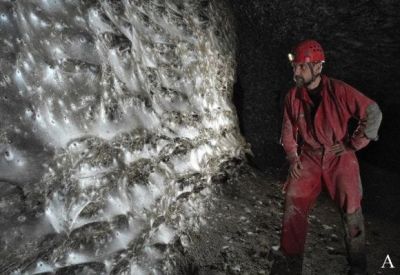
The spider web found this time consists of thousands of funnel-shaped webs interconnected to form a single massive structure. The cave itself is a unique environment formed by sulfuric acid eroding the rock, making human access extremely difficult. The existence of the giant spider web was first confirmed by Czech explorers in 2022.
According to the research, the web was created by two different species of spiders working together. The team found that approximately 69,000 Tegenaria domestica and about 42,000 Prinerigone vagans formed a vast colony within the same space.
Although these two species typically inhabit different environments such as houses and wetlands and are usually competitors, in the dark cave environment, their eyesight has degenerated, and they appear to have chosen coexistence over competition. The researchers noted that this is the first known case of different species sharing the same web structure, highlighting its significant academic value.
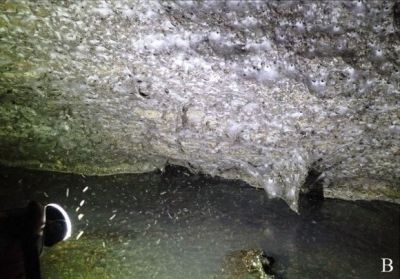
The cave's internal ecosystem also supports the existence of the spider colony. Streams containing sulfur nurture microorganisms, which in turn become food for gnats, and the gnats serve as the main prey for the spiders. The research team analyzed that the stability of this food chain enabled the spider population to increase. Additionally, the cave spiders showed genetic differences from outside populations, which appears to be the result of long-term adaptation to the dark environment.
The researchers emphasized, "This cave provides important clues for ecological and evolutionary studies," stressing the need for its protection.
© The Asia Business Daily(www.asiae.co.kr). All rights reserved.


















