Gyeongbuk Office of Education Administrative Audit
Operational System Found Lacking Overall
Assemblyman Ju-Sik Cha (Independent, Gyeongsan 1) of the Gyeongbuk Provincial Council pointed out during the Education Committee's administrative audit held on November 7 that the overall operational system of the specialized high school employment support officer program remains insufficient. He emphasized the need to establish selection criteria based on expertise, standardize roles, and set up a performance verification system.
According to data from the Gyeongbuk Office of Education, approximately 2.8 billion won is spent annually on employment support officer salaries, and about 250 million won is allocated for the operation of employment support centers, totaling an annual budget of 3 billion won. Assemblyman Cha stated, "Given that a significant amount of resources is already being invested, it is essential to select personnel with the professional expertise to genuinely support students in their career choices and employment planning, and to build a robust system that enables these competencies to be effectively demonstrated in the field."
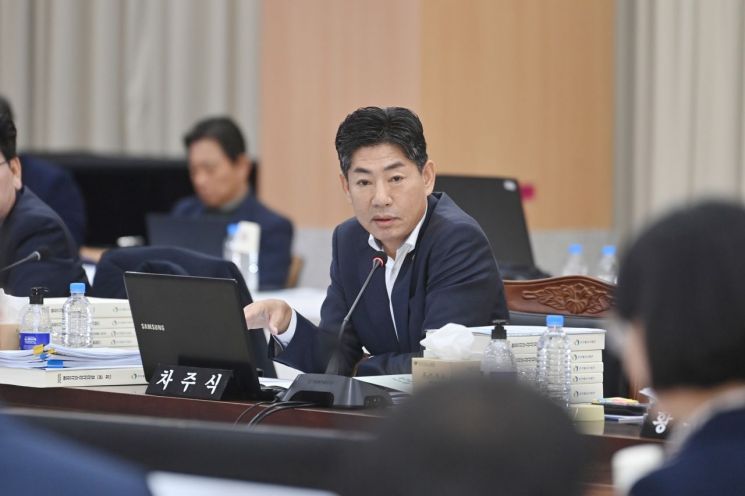
He specifically pointed out that the age range of employment support officers is extremely broad, spanning from 24 to 69 years old. He expressed concern that such disparities in age and experience could result in differences in student counseling capabilities, understanding of industry trends, and the ability to identify employment opportunities. Assemblyman Cha stated, "Those in their early twenties may lack practical employment networks or an understanding of industrial structures, while older personnel may find it difficult to respond promptly to rapidly changing industries and job requirements." He clarified that the issue is not simply age diversity itself, but rather that employment support officers must be individuals with the job competencies necessary to effectively connect students with companies.
Assemblyman Cha also presented the employment support officer recruitment criteria from other regions such as Seoul, Daegu, Gyeongnam, and Jeonnam. He noted that these regions clearly specify requirements such as career counselor certification, youth counselor certification, and practical experience in corporate HR and employment linkage, whereas Gyeongbuk only offers broad conditions like "ability to drive and discover employment opportunities," effectively lacking any standard for verifying expertise. He stated, "While other regions have a structure where experts are selected and deployed to schools, Gyeongbuk still follows a model where people are hired first and their roles are naturally shaped in the field," emphasizing that this variance could ultimately be passed on to students.
Additionally, Assemblyman Cha mentioned that while Gyeongbuk vocational high schools achieved the highest national employment rate this year at 69.5%, this is a valuable accomplishment attributable to a combination of factors such as the local industrial structure and school types, and should not be interpreted as a direct indicator of the effectiveness of the employment support officer program. He stressed, "When I requested performance data for the employment support officers, the submitted materials were merely basic employment statistics." He underscored the need for a systematic performance evaluation framework, including counseling outcomes, employment linkage, and post-employment follow-up management.
Finally, Assemblyman Cha asserted that the employment support officer program is not simply an operational policy of assigning a single staff member to a school, but a core educational policy supporting students' career choices and employment planning. He stated, "For Gyeongbuk vocational high schools' top employment rate to become a sustainable competitive advantage rather than a temporary result, now is the time to further strengthen the system."
© The Asia Business Daily(www.asiae.co.kr). All rights reserved.