Ministry of Justice: "No Need for Appeal"
Investigation Team: "Supreme Prosecutors' Office and Seoul Central District Prosecutors' Office Blocked Appeal"
Han Donghoon: "At Midnight on November 8, the Prosecution of the Republic of Korea Committed Suicide"
Case Also Linked to President Lee Jaemyung's Trial
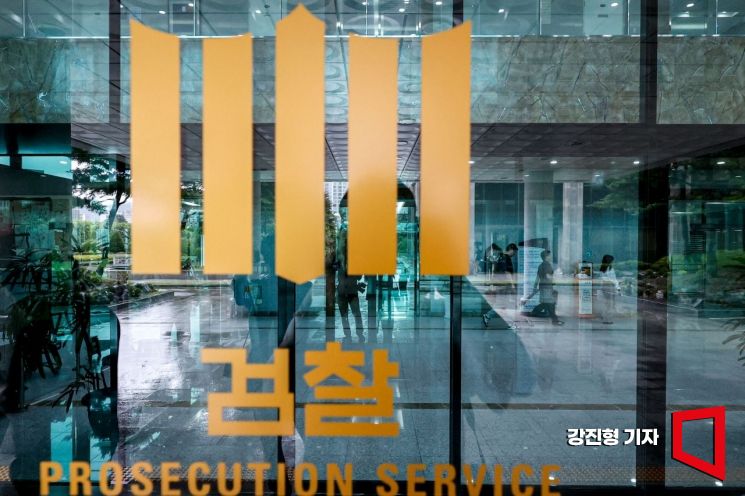
The prosecution has decided not to appeal the first-instance prison sentences handed down to the defendants in the Daejang-dong development corruption case. It is highly unusual for the prosecution to forgo an appeal even though the sentences were lighter than what was sought. The investigation team is protesting, claiming that the Supreme Prosecutors' Office and the leadership of the Seoul Central District Prosecutors' Office blocked the submission of an appeal, which is expected to cause significant controversy.
According to the legal community on November 8, the Seoul Central District Prosecutors' Office did not submit an appeal by midnight on the 7th, the deadline for appealing the first-instance verdicts against Yoo Donggyu, former head of planning at Seongnam Development Corporation, Kim Manbae, and other private business operators, who were indicted on charges including aggravated breach of trust under the Act on the Aggravated Punishment of Specific Economic Crimes.
In criminal cases, if a party wishes to contest a verdict, an appeal must be filed within seven days from the date of sentencing. If the prosecution waives its right to appeal, under the principle of "prohibition of unfavorable changes" in criminal procedure law, the sentence cannot be increased beyond that of the first instance.
The leadership of the Supreme Prosecutors' Office and the Seoul Central District Prosecutors' Office had initially planned to file an appeal, but it has been confirmed that the Ministry of Justice expressed the opinion that an appeal was unnecessary, leading to a decision to prohibit the submission of an appeal.
The investigation team has strongly protested, claiming they were unable to appeal due to unjust instructions from their superiors. In a statement distributed early in the morning, the Daejang-dong investigation and trial team explained, "We believed that additional review by a higher court was necessary regarding legal issues, certain factual misunderstandings, and the unfairness of sentencing, so we completed internal approval procedures, including reporting the intention to appeal to the leadership of the Seoul Central District Prosecutors' Office and the Supreme Prosecutors' Office." They added, "As of the conclusion of the report to the Supreme Prosecutors' Office on November 6, the procedures had been completed without disagreement, and only the submission of the appeal remained."
They continued, "However, in the afternoon of the following day, after all internal approval procedures had been completed, the leadership of the Supreme Prosecutors' Office and the Seoul Central District Prosecutors' Office suddenly instructed the investigation and trial team to withhold the appeal submission for unknown reasons. They told us to wait without any further instruction as the deadline approached, and just before midnight, issued an unprecedented and unjust order of 'prohibition of appeal,' preventing us from submitting the appeal."
This case is also connected to the trial of former President Lee related to the Daejang-dong corruption scandal, which is currently suspended, making political controversy inevitable.
Han Donghoon, former leader of the People Power Party, wrote on Facebook, "If the prosecution leadership blocks or interferes with a rightful appeal, they will inevitably be punished for abuse of authority and dereliction of duty." After the prosecution failed to file an appeal by midnight, he criticized, "At midnight on November 8, the prosecution of the Republic of Korea committed suicide."
Currently, all five defendants, including former head Yoo and Mr. Kim, have filed appeals. The first-instance court sentenced former head Yoo to eight years in prison, a fine of 400 million won, and forfeiture of 810 million won. Kim, the major shareholder of Hwacheon Daeyu, was sentenced to eight years in prison and forfeiture of 42.8 billion won. Nam Wook, owner of Cheonhwa Dongin No. 4, received four years in prison, and Jung Younghak, owner of Cheonhwa Dongin No. 5, was sentenced to five years in prison.
Jung Minyong, who worked as head of the investment business team at the corporation's Strategic Business Office, was sentenced to six years in prison, a fine of 3.8 billion won, and forfeiture of 3.722 billion won.
The court handed down sentences to former head Yoo and attorney Jung, both from the corporation, that were higher than what the prosecution had requested. However, it determined the sentences based on breach of trust in the course of work and breach of trust under the Criminal Act, rather than aggravated breach of trust under the Act on the Aggravated Punishment of Specific Economic Crimes as indicted by the prosecution, citing the inability to accurately calculate the amount of loss.
Under the Act on the Aggravated Punishment of Specific Economic Crimes, aggravated breach of trust involving a gain of between 500 million won and less than 5 billion won is punishable by at least three years in prison, and if the gain is 5 billion won or more, by life imprisonment or at least five years in prison. Under the Criminal Act, breach of trust in the course of work is punishable by up to ten years in prison or a fine of up to 30 million won.
© The Asia Business Daily(www.asiae.co.kr). All rights reserved.

















