Export-Import Bank Economic Research Institute Report
Japan Achieves Industrial Transformation Through Three Rounds of Restructuring
Government Shifts from Forced Restructuring
to a "Supporter" Promoting Voluntary Business Reorganization
"Rela
Amid the sluggish progress of restructuring in the petrochemical industry, there have been calls for the Korean government to learn from Japan’s successful restructuring cases.
Seong Dongwon, Senior Researcher at the Overseas Economic Research Institute of the Export-Import Bank of Korea, expressed this view in a recent report titled “Restructuring of Japan’s Petrochemical Industry and Its Implications.” Seong noted, “Although the government and industry have begun discussions on restructuring, there has been little progress in reaching consensus on concrete directions and implementation plans.” He added, “Japan experienced a similar crisis before Korea and carried out three rounds of intensive restructuring over roughly 40 years. It is necessary to analyze these cases.”
Japan succeeded in improving its industrial structure through bold facility reductions and business realignment during two oil shocks, economic recessions, and intensifying global competition. Specifically, the industry structure shifted from a focus on commodity products to high-value-added specialty products.
In the 1980s, when a surge in raw material prices and economic stagnation caused a sharp drop in demand for petrochemical products, the Japanese government implemented a strong facility reduction policy. The government set specific reduction targets for major items such as ethylene and directly ordered the closure of major companies’ naphtha cracking centers (NCCs), enforcing compulsory restructuring. As a result, Japan succeeded in eliminating surplus facilities equivalent to 2.2 million tons per year, or 36% of the country’s total ethylene production capacity. However, fundamental improvements, such as mergers between companies or business portfolio enhancements, were not achieved.
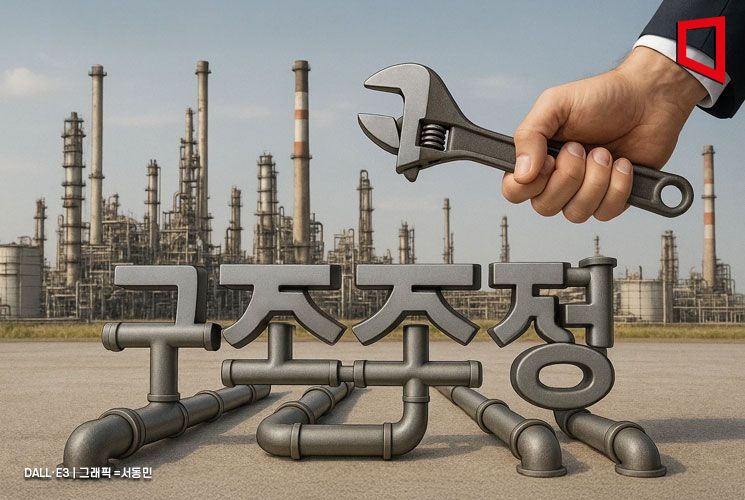
In the early 1990s, amid a prolonged recession and intensifying overseas competition, the Japanese government initiated another round of restructuring. This time, the approach shifted from government-led compulsory restructuring to “supportive policies” that encouraged corporate autonomy. The government focused on creating an institutional environment for companies to pursue restructuring independently, simplifying merger and spin-off procedures, fast-tracking Fair Trade Act reviews, and significantly reducing various taxes incurred during business realignment, such as registration and real estate acquisition taxes. Based on this support, product-based business integration progressed rapidly, excessive competition eased, and leading companies emerged by product category, resulting in a more efficient market structure, according to Seong.
In the 2010s, the Japanese government once again supported business realignment in response to global oversupply and the push for carbon neutrality. This time, even stronger incentives were provided to encourage companies to proactively pursue restructuring. The government presented a specific guideline of “leaving only one ethylene company per prefecture” and, as in the 1990s, implemented tax reductions. Additionally, to resolve regulatory uncertainties, a system was introduced allowing companies to inquire in advance about potential conflicts with existing laws and receive government responses.
Under this clear government support system, Japanese companies were able to make strategic decisions tailored to their circumstances and visions. They went beyond simple facility reductions, decisively exiting future-uncertain commodity businesses and reinvesting in growth sectors. Major Japanese petrochemical companies reduced ethylene production from 7.4 million to 6.2 million tons per year. Mitsubishi Chemical Group strengthened its portfolio in high-performance businesses such as specialty materials and carbon fiber composites, while Sumitomo Chemical reallocated resources secured from downsizing its petrochemical business to healthcare and battery materials.
Seong emphasized, “The government should benchmark Japan’s petrochemical industry restructuring process and implement policies tailored to Korea’s circumstances. While maintaining the current policy stance of supporting autonomous business realignment by companies, the intensity and speed of support should be increased.” He also mentioned that the Japanese government temporarily eased monopoly regulations under the Fair Trade Act, highlighting the need to consider bold regulatory relaxation. Furthermore, Seong added, “Japan provided permanent exemptions from debt ratio and equity ratio regulations as incentives for companies that achieved proven results in business realignment. Such exceptional support is necessary to enable bold corporate investments.”
© The Asia Business Daily(www.asiae.co.kr). All rights reserved.
![Clutching a Stolen Dior Bag, Saying "I Hate Being Poor but Real"... The Grotesque Con of a "Human Knockoff" [Slate]](https://cwcontent.asiae.co.kr/asiaresize/183/2026021902243444107_1771435474.jpg)
















