One-Year Extension of 24% Additional Tariffs on US Imports
Export Ban on 33 US Defense Companies Also Suspended
Meeting Held with Visiting US Agricultural Trade Delegation in China
The Chinese government has decided to lift the retaliatory tariffs it imposed in response to the United States' "fentanyl tariffs" under the US-China trade war agreement, and will also postpone the implementation of up to 24% additional tariffs on US imports for one year.
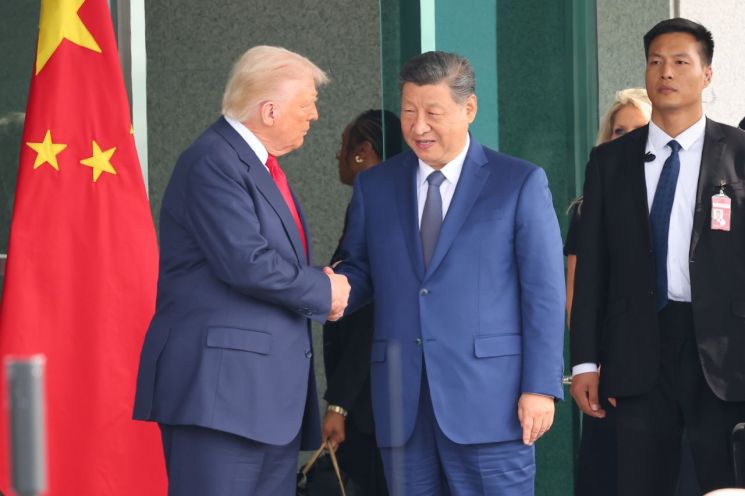
On November 5, the Tariff Policy Commission of the State Council of China announced that it will suspend, effective at 1:01 p.m. (China time) on November 10, the additional 15% tariffs it imposed last March on US-origin chicken, wheat, corn, and cotton, as well as the 10% additional tariffs on sorghum, soybeans, pork, beef, seafood, and other products.
This measure follows the agreement reached at the US-China summit held in Busan last October, where both countries agreed to refrain from escalating the trade war. Previously, US President Donald Trump agreed during the summit to reduce the "fentanyl tariffs" from 20% to 10%.
The Tariff Policy Commission stated, "This decision is intended to implement the substantive agreement achieved in the US-China economic and trade negotiations," adding, "The suspension of some additional tariffs by both countries will promote the healthy and stable development of US-China economic and trade relations, benefit the people of both nations, and contribute to the prosperity of the global economy."
The Chinese government also decided to further postpone the implementation of the already deferred 24% additional tariffs on US imports for another year, starting from November 10.
Additionally, China will extend for one year the suspension of export bans on dual-use (military and civilian) materials such as critical minerals to 31 US defense companies, a measure that was originally imposed in March and April in response to US arms sales to Taiwan. At that time, China had placed these companies on its "unreliable entities" list, prohibiting Chinese firms from conducting business with them.
Meanwhile, China recently discussed key issues with a US agricultural trade delegation visiting China. Li Chenggang, China’s International Trade Representative and Vice Minister of Commerce, met with the US delegation in Beijing the previous day and stated, "The US and China are important agricultural trade partners for each other," adding, "Both countries have respective strengths in resources, markets, capital, and technology, making them highly complementary and offering significant potential for cooperation."
According to the Chinese Ministry of Commerce, the US delegation also stated, "China is an important export market for US agricultural products, and the US agricultural sector values its partnership with China and is working to broaden the scope of cooperation."
© The Asia Business Daily(www.asiae.co.kr). All rights reserved.

















